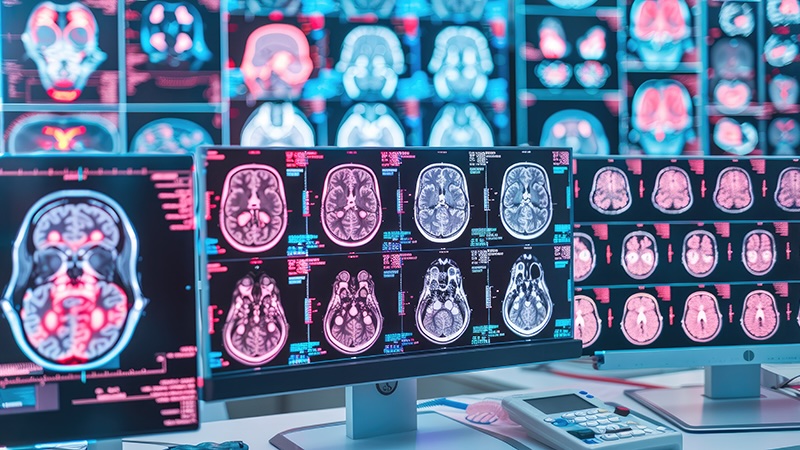
Medical imaging is rapidly advancing with AI integration, enhancing diagnostics across ultrasound, X-ray, and endoscopy. The challenge for device makers is balancing high performance with low latency, energy efficiency, and long product lifecycles. Traditionally, achieving this level of AI performance required adding discrete GPU cards, driving up costs, complexity, and power consumption.
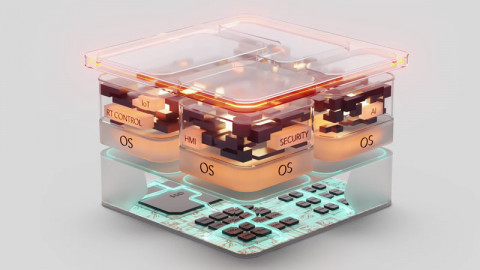
Today, Computer-on-Modules with processors that combine CPU, GPU, and integrated NPU acceleration provide an alternative. These platforms deliver the compute power needed for real-time AI inference and advanced 3D visualization directly on the module. The CPU ensures reliable control and system functions, the GPU supports visualization and heavy workloads, while the NPU offers highly efficient AI inferencing. With this balance, many medical imaging applications no longer require external GPU cards, enabling smaller, more energy-efficient, and cost-effective designs.
COM-based architectures also offer scalability across x86 and ARM ecosystems, giving developers the flexibility to select the right performance class for their application. Long-term availability and pin-compatible upgrade paths extend device lifecycles and speed time to market.
By leveraging COMs with integrated heterogeneous compute, medical device manufacturers can deliver smarter imaging systems that provide real-time diagnostic assistance, improved image quality, and faster clinical workflows, all while reducing size, power, and cost.

 Facebook
 Google
 GitHub
 Linkedin