
 Facebook
 Google
 GitHub
 Linkedin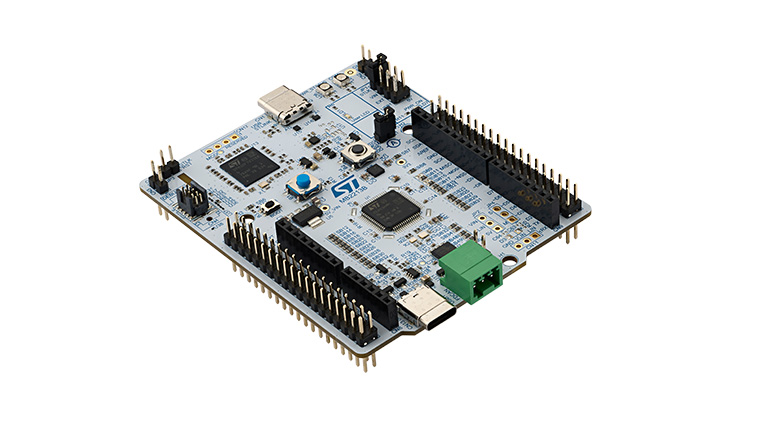
Enter to Win an STM32C5 Nucleo-64 Development Board
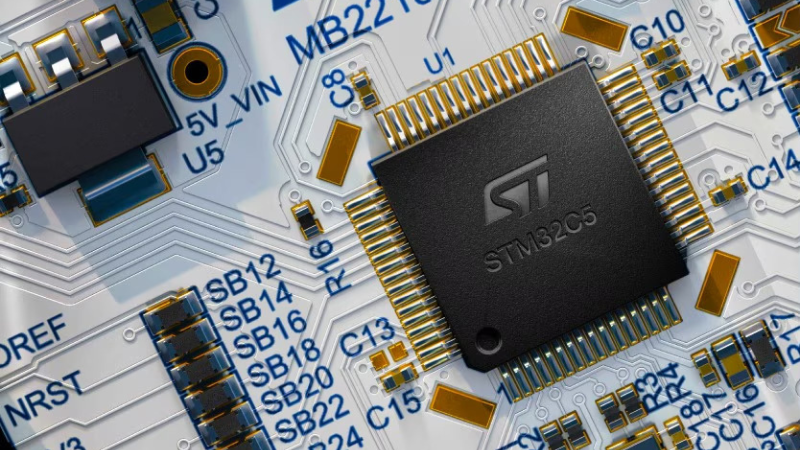
Avnet SILICA and STMicroelectronics are offering engineers and developers the chance to win an STM32 Nucleo-64 development board featuring the STM32C542RC microcontroller. Built for rapid prototyping and embedded evaluation, the board provides a flexible way to test new concepts, expand functionality, and accelerate development.
The STM32C5 series combines a 144 MHz Arm® Cortex®-M33 core with DSP and floating-point unit support, delivering up to 593 CoreMark performance while supporting low-power operation. It also includes connectivity options such as Ethernet, USB, I3C, FDCAN, and OCTOSPI, making it well suited for industrial, consumer, and IoT applications.
With Arduino® Uno V3 connectivity and ST morpho expansion headers, developers can easily add shields and peripherals to support a wide range of use cases. On-board ST-LINK debugging and programming further simplifies setup by eliminating the need for separate hardware.
The board is supported by the STM32Cube ecosystem, including software libraries, middleware, and example projects that help streamline application development and migration across STM32 platforms.
Register now for your chance to qualify and explore a flexible STM32C5 platform built for performance, expansion, and efficient embedded development.

It’ll be great to use the FPU, TRNG, and the AES accelerator for my next projects. The full complement of peripherals (esp the 12 channels of ADC, the two-channel DAC, the OpAmp and the comparators) is amazing.
It will be great to use this board for Secure Embedded Smart Grid Monitoring Node Based on STM32C5
The STM32C5 is well suited for a compact real-time monitoring and anomaly-detection node because the flyer highlights a 144 MHz Arm Cortex-M33 core with FPU and DSP, up to 593 CoreMark, and up to 1 MB Flash / 256 KB SRAM, which are useful for local signal processing, embedded decision logic, and lightweight anomaly detection.
Project objective
Build an embedded node that measures electrical signals, computes indicators in real time, detects abnormal operating conditions, and sends secure alerts to a PC, gateway, or industrial network.
Typical monitored quantities:
Voltage
Current
RMS values
Frequency
Overload
Overvoltage / undervoltage
Sensor or grid anomaly
Temperature of the acquisition or power stage
Core STM32C5 functions to cite in the project
STM32C5 function from the flyer How to use it in the project
Arm Cortex-M33 at 144 MHz with FPU and DSP Real-time RMS calculation, filtering, FFT-lite, frequency estimation, anomaly score computation
Up to 593 CoreMark Enough processing capability for richer embedded monitoring algorithms
Up to 1 MB Flash and 256 KB SRAM Store firmware, calibration tables, thresholds, logs, and lightweight ML/rule-based models
Up to 3 ADCs Acquire voltage, current, temperature, and auxiliary analog sensors
2 DACs Generate test signals, reference voltages, or analog diagnostic outputs
2 comparators and OPAMP Implement signal conditioning, threshold detection, and analog protection stages
Ethernet Send data to a supervision dashboard or local server
USB Debug, configure, and stream measurements to a PC
FDCAN Communicate with industrial controllers or other embedded nodes
I3C Interface modern digital sensors
OCTOSPI Add external memory for fast logging or larger firmware/data storage
2.7–3.6 V operation and <100 µA/MHz dynamic power Support low-power embedded monitoring nodes
Ambient temperature up to 125°C Suitable for harsh industrial or energy environments
PSA L3 / SESIP3 target certification Use the board for security-oriented embedded applications
Optional SCA-resistant hardware crypto with key storage Protect keys, authenticate firmware, and secure communications
Symmetric and asymmetric crypto acceleration Encrypt transmitted data and verify firmware or messages efficiently
STM32Cube ecosystem Accelerate development using STM32CubeIDE, CubeMX, HAL/LL drivers, middleware, and examples
These functions are explicitly listed in the STM32C5 flyer: ADC/DAC/COMP/OPAMP for acquisition and conditioning, Ethernet/USB/I3C/FDCAN/OCTOSPI for connectivity and expansion, and cryptographic/security features for secure embedded applications.
| STM32C5 function from the flyer | How to use it in the project |
|—————————————————————————————- |———————————————————————————————————————————————- |
| **Arm Cortex-M33 at 144 MHz with FPU and DSP** | Real-time RMS calculation, filtering, FFT-lite, frequency estimation, anomaly score computation |
| **Up to 593 CoreMark** | Enough processing capability for richer embedded monitoring algorithms |
| **Up to 1 MB Flash and 256 KB SRAM** | Store firmware, calibration tables, thresholds, logs, and lightweight ML/rule-based models |
| **Up to 3 ADCs** | Acquire voltage, current, temperature, and auxiliary analog sensors |
| **2 DACs** | Generate test signals, reference voltages, or analog diagnostic outputs |
| **2 comparators and OPAMP** | Implement signal conditioning, threshold detection, and analog protection stages |
| **Ethernet** | Send data to a supervision dashboard or local server |
| **USB** | Debug, configure, and stream measurements to a PC |
| **FDCAN** | Communicate with industrial controllers or other embedded nodes |
| **I3C** | Interface modern digital sensors |
| **OCTOSPI** | Add external memory for fast logging or larger firmware/data storage |
| **2.7–3.6 V operation and <100 µA/MHz dynamic power** | Support low-power embedded monitoring nodes |
| **Ambient temperature up to 125°C** | Suitable for harsh industrial or energy environments |
| **PSA L3 / SESIP3 target certification** | Use the board for security-oriented embedded applications |
| **Optional SCA-resistant hardware crypto with key storage** | Protect keys, authenticate firmware, and secure communications |
| **Symmetric and asymmetric crypto acceleration** | Encrypt transmitted data and verify firmware or messages efficiently |
| **STM32Cube ecosystem** | Accelerate development using STM32CubeIDE, CubeMX, HAL/LL drivers, middleware, and examples |