
 Facebook
 Google
 GitHub
 Linkedin
Industry White Paper
Designing for Change: Why Configurable Power Supplies Win in Multi-Rail Systems
When do configurable power supplies make more sense than fixed or custom designs for multi-rail systems? This practical guide for design engineers covers platform architecture, real-world cost trade-offs, and measured IEC 60601-1 leakage-current margins.
White Paper Overview
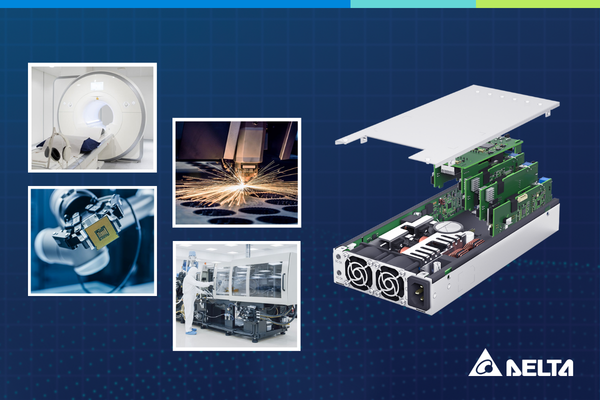
Modern medical, industrial, and semiconductor systems increasingly demand several isolated voltage rails, strict safety certification, and low leakage—all from a single unit, and all while the design keeps evolving. Fixed-output supplies force a compromise on at least one rail; a full custom supply meets every spec but adds months of NRE and qualification. Configurable power supplies close that gap, giving engineers much of the flexibility of a custom design from proven, pre-qualified building blocks.
This white paper is a practical guide for design engineers weighing that trade-off. It explains how a configurable platform is built, when it beats standard or custom alternatives, and where the real cost differences show up across qualification, inventory, integration, and procurement. It also examines measured performance from a real CB test report—including leakage-current margins against IEC 60601-1—so you can see what "low leakage" looks like in practice rather than on a datasheet.
Using the Delta MEG-A series as a worked example, the paper shows how engineers specify a power architecture rail by rail on a pre-qualified platform, then adapt it for future product revisions without starting a custom design from scratch. Download this white paper to learn how configurable power supplies can cut your qualification effort, simplify multi-rail designs, and give your system room to evolve.


Please please we need to help each other to make like betta. As God made it.
we need to grow
To know more about the world system, its Very important.