
 Facebook
 Google
 GitHub
 Linkedin
Industry White Paper
Gen 6 250V MOSFET
This article explores the difference between sixth-generation MOSFETs and more traditional approaches to power MOSFETs. Following, is a discussion about their performance compared to similar MOSFETs—additionally delving into how they are used and the product lineup.
MOSFETs can be found in almost every electrical device. Despite their ubiquity, the technology beyond MOSFETs continuously evolves. A standout example of this evolution is Rohm’s new 6th generation 200V and 250V power MOSFETs, shown in Figure 1.
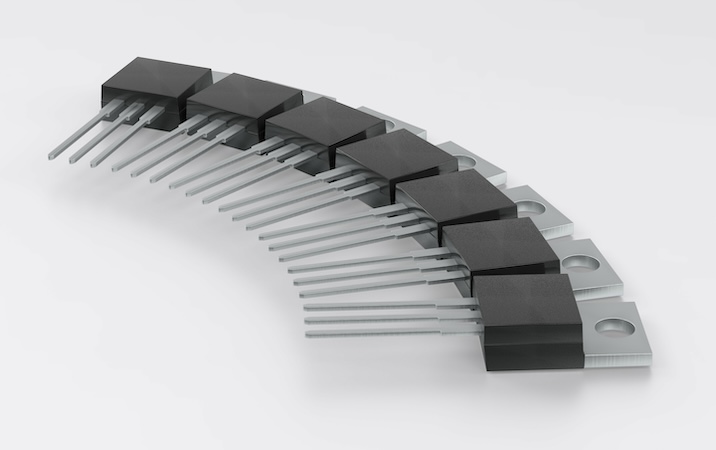
Image used courtesy of Adobe Stock
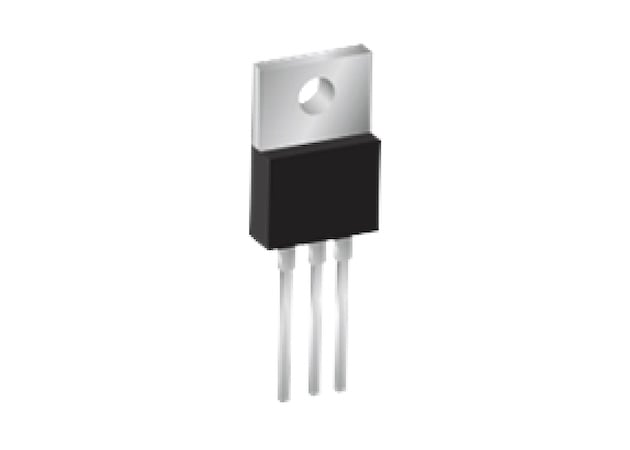
Figure 1. The 6th Generation 250V Rohm MOSFET.
This article explores the difference between sixth-generation MOSFETs and more traditional approaches to power MOSFETs. Following, is a discussion about their performance compared to similar MOSFETs—additionally delving into how they are used and the product lineup.
6th Generation 200V and 250V MOSFET
Rohm’s latest 6th generation 200V and 250V MOSFETs have been engineered for outstanding performance. These Rohm MOSFETs are based on 100V and 150V trench technology, engineered with an emphasis on enhanced power efficiency, lower Rds(on), and higher switching speeds compared with previous 200V and 250V portfolios. As shown below in Figure 2, there have been considerable improvements through the years as the 200V and 250V MOSFETs have evolved. Included in this evolution is more power-dense, compact packaging.
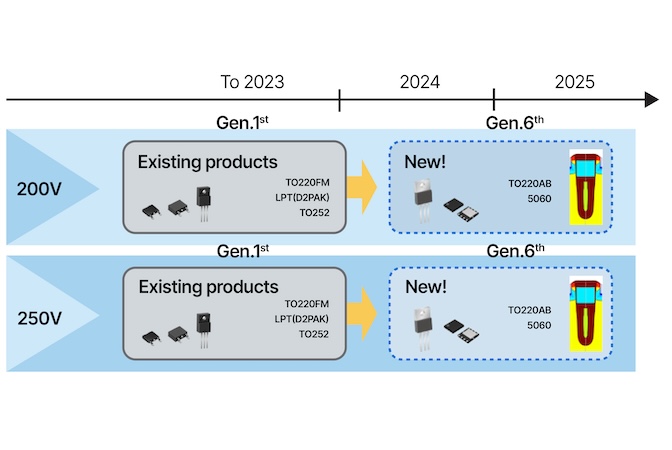
Figure 2. Comparing first-generation and sixth-generation Rohm MOSFET technology.
Split-Gate Trench
Unlike traditional single-trench gate solutions, Rohm’s sixth-generation MOSFETs feature a split-gate trench. A trench gate MOSFET has a gate embedded into a vertical trench, etched into the silicon substrate. The design places the gate electrode in the trench, causing the plate to wrap around the channel between the source and the drain. This allows the channel to be controlled from multiple sides, thus increasing the effective gate width, current handling capability, and on-resistance—when compared to DMOS (Double Diffused MOSFET).
These benefits are made possible because the trench gate design achieves wider overlap between the gate and the channel, supporting faster switching speeds and reducing the size of the cell structure. As used in the new 200V and 250V 6th generation MOSFETs, the split gate design (displayed in Figure 3) has been engineered for advanced power electronics.
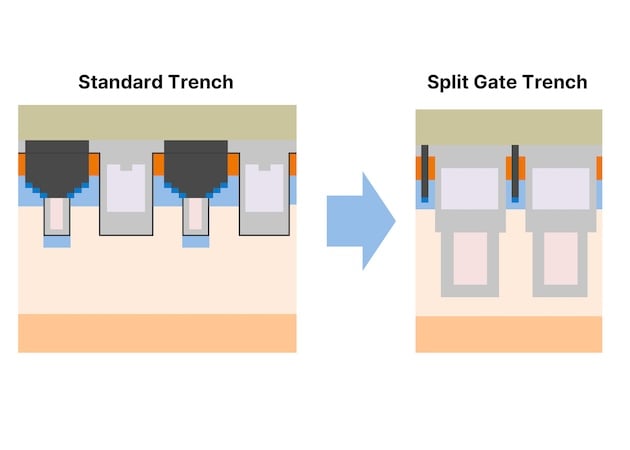
Figure 3. Comparing standard trench technology to split-gate technology.
The use of a split-gate trench increases the number of current carrying channels per unit area, thus reducing resistance. It also provides an optimized cell structure (drain, source, gate, and body terminals) with a thinner die and lower drift resistance. Furthermore, the manufacturing method used for making a split-gate trench leads to more reliable performance.
Performance
Before delving into performance specifications, we will begin with a short overview. Rds(on) represents the resistance between the source and drain of a MOSFET when VGS (gate-to-source voltage) is applied. As the VGS increases, Rds(on) typically decreases. In terms of performance, the Gen 6 200V and 250V MOSFETs are more cost-effective, exhibit an improved Rds(on) x Active area, and provide reduced Rds(on). In addition, it is important to consider the total gate charge, Qg. This charge is a key aspect of efficiency in power MOSFETs.
The minimum Rds(on) achieved a 58% reduction for the 250V MOSFETs and 60% reduction in 200V MOSFETs, as illustrated in Figure 4. Note that a lower Rds(on) typically results in lower conduction losses, reduced power dissipation, and higher levels of efficiency—which can be critical in high current applications. This reduction in losses also improves the thermal performance of these MOSFETs.
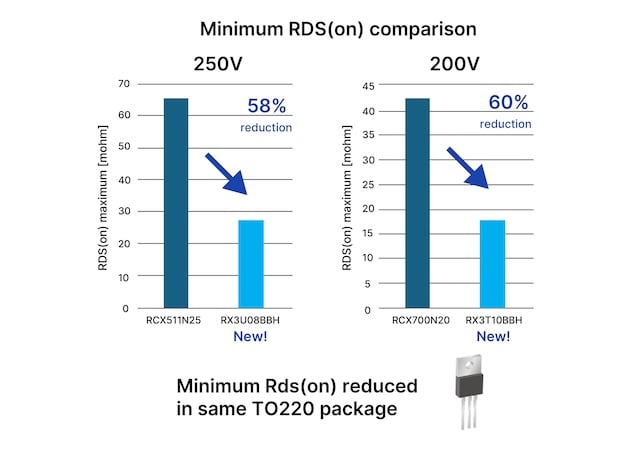
Figure 4. Illustration of the change in Rds(on) for equivalent MOSFETs in a TO220 package.
Because the 6th generation MOSFETs have a reduced gate charge and overall better performance, these MOSFETs also require less power to drive the gate, leading to better efficiency.
Applications
Rohm’s 6th generation 250V MOSFET s can be used in many applications, including:
- DC-DC converters
- Synchronous rectifications
- Inverters
- Telecoms
- Projectors
For example, commercial applications include power tools, charge stations, and vacuum cleaners, while industrial applications include motors, base station/telecom, and power supplies. However, these MOSFETs are not intended for use in automotive applications.
Product Lineup
The product lineup shown in Figure 5 includes both the 200V and 250V options. They are available in TO-220AB (9.9x29.0x4.5mm) and HSOP8 (6.0x5.0x1.0mm) packaging. The maximum Rds(on) varies according to the packaging, with higher values for the HSOP8 packaging.
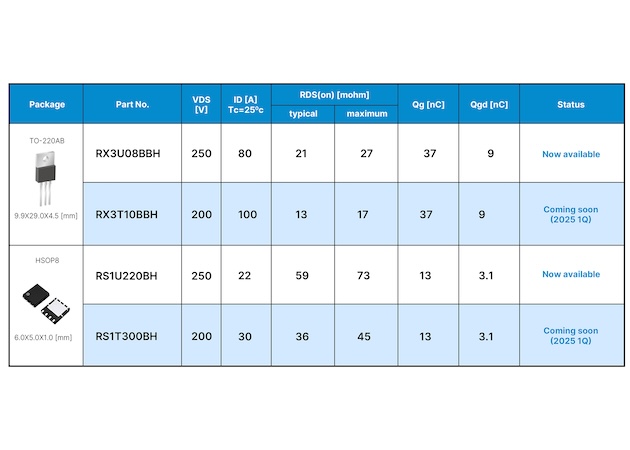
Figure 5. Product lineup for Rohm’s new 250V and 200V 6th generation MOSFETs.
Currently, only the 250V models are available, with the 200V models expected to be available in the first quarter of 2025.
Product Performance in Real-World Application
Figure 6 represents the efficiency of the Gen 6 MOSFET in synchronous rectification, reaching a maximum efficiency slightly greater than 89%, which compares well with its best-in-class competitor. In fact, its efficiency ranging from 5W to 47W of output power is extremely close to that same competitor, emphasizing how efficient the MOSFET is.
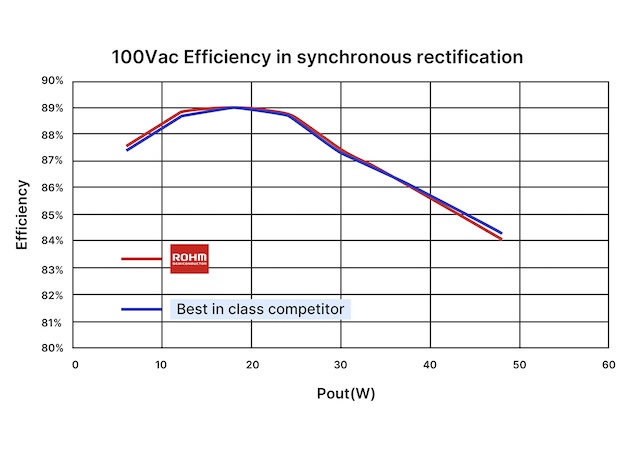
Figure 6. 100VAC efficiency in synchronous rectification for the new Gen 6 250V MOSFET.
Conclusion
Rohm’s new 6th generation power 250V and 200V MOSFETs offer reduced Rds(on) voltage and increased efficiency thanks to an innovative approach to split-gate trench design. These power MOSFETs are ideal for use in commercial and industrial applications, offering the durability and performance needed for even the most demanding of applications. To learn how these MOSFETs can positively impact your design, contact Rohm today.
This Industry White Paper was written by Heath Hiroyuki Ogurisu, ROHM Semiconductor.

