
 Facebook
 Google
 GitHub
 Linkedin
Industry White Paper
MOSFET with Copper Clip
This article discusses how Rohm has balanced these two parameters without compromising efficiency or performance, as evidenced by the RS6xxxx/RH6xxxx power MOSFET series, utilizing copper clip technology.
Power MOSFETs are used in any number of applications, ranging from power supplies to consumer electronics to street lighting. The technology behind power MOSFETs continues to progress to meet the need for power MOSFETs that are more efficient and power dense than their predecessors.

Image used courtesy of Adobe Stock
Two key parameters characterize general MOSFETs: the ON resistance, expressed as RDS(on), which is inversely proportional to chip size, and the gate-drain charge (Qgd), which increases proportionally with chip size. One of the keys to designing cutting-edge power MOSFETs lies in striking an effective balance between these two characteristics, maintaining a compact size and efficiency without increasing RDS(on) or decreasing Qgd.
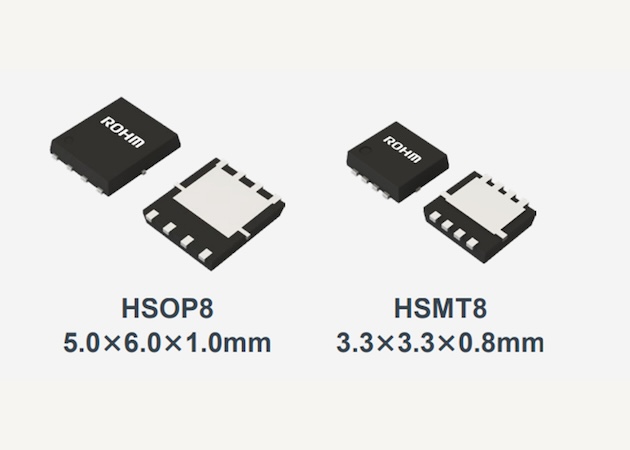
Figure 1. The Rohm RS6xxxx/RH6xxxx series of copper-clip power MOSFETs. Source
This article discusses how Rohm has balanced these two parameters without compromising efficiency or performance, as evidenced by the RS6xxxx/RH6xxxx power MOSFET series, utilizing copper clip technology.
What Is A Copper Clip?
Rohm’s new approach to engineering power MOSFETs uses a copper clip instead of the traditional aluminum wire or ribbon bonds to connect the semiconductor die to the external package. Figure 2 shows the difference between the conventional bonding approach, using an Aluminum (Al) ribbon or wire and Rohm’s innovative new approach that implements a Copper (Cu) clip bonding. This Cu clip bond — connecting a MOSFET's source and drain terminals — provides a redirect electrical path and thermal path, leading to lower resistance and reduced losses.
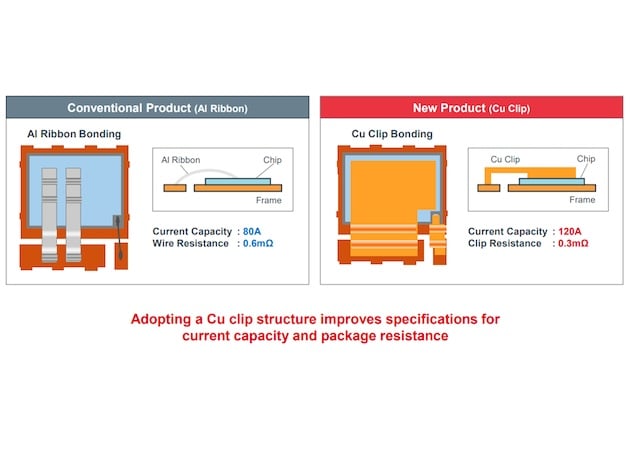
Figure 2. The difference between aluminum ribbon bonding and copper clip bonding. Source.
For Al ribbon bonding, for example, the current capacity is 80A, the wire resistance is 0.6mΩ. The Rohm Cu clip approach achieves a current capacity of 120A, half the clip resistance at just 0.3mΩ.
Why Use Copper Clips?
The use of clips has benefits, including a larger contact area that allows for higher current-carrying capacity than ribbon or wire, along with a reduction in resistance. Copper clips in particular exhibit a reduction in total RDS(on) (which reduces conduction losses), and an increase in drain current capacity. They also meet the demand for higher power-dense solutions, as illustrated in Figure 3, which shows increased current capacity and reduced package RDS(on).
Copper clips possess reduced package resistance—the additional resistance introduced by the physical package used to connect the MOSFET to a circuit board, including the wire, ribbon, or clip bonds and contact pad. The copper clip design also provides better thermal radiation and conduction properties for cooling.
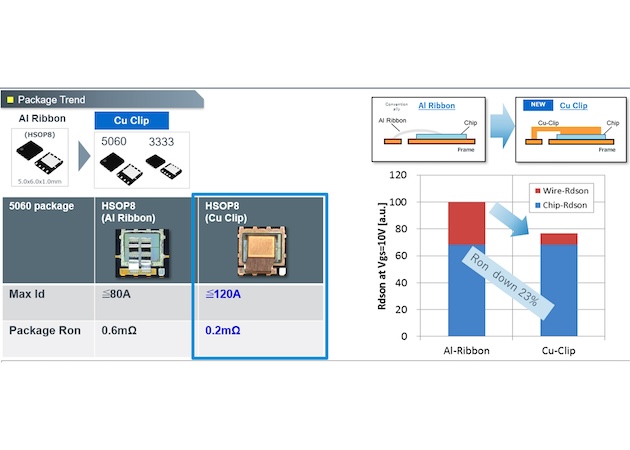
Figure 3. General comparison between an aluminum ribbon and a copper clip.
Rohm was able to reduce RDS(on) by 23% by leveraging the benefits of a Copper clip, and the MOSFET performance improved.
Equivalent power MOSFETs with Aluminum clips and Copper clips were compared, and Copper clips outperformed the Aluminum clips in several areas, as illustrated in Figure 4, including the following:
- RDS(on) that is 23% lower
- 50% higher drain current
- 50% reduction in package resistance
For example, the drain current is limited to 80A in the Al wire and ribbon options but 120A with the Cu clip. The Al wire option has a package resistance of 0.8mΩ, the ribbon has 0.6 mΩ, and the Cu Clip has only 0.2 mΩ. The package resistance and drain current contribute to the Cu clip MOSFETs industry-leading 95% efficiency and high-current capabilities, respectively.
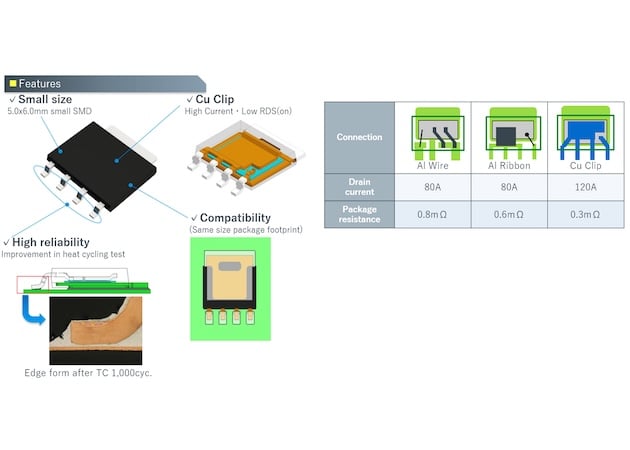
Figure 4. HPLF5060 (MO-235) Small and High-Power Package details.
Finally, copper offers several benefits compared to aluminum, such as its ability to handle current and its small size and packaging support. It also resists parasitic inductance, an unwanted effect of inductance that occurs in all electronic devices and causes issues such as crosstalk, noise coupling, and EMI. Finally, copper’s thermal and electrical conductivity make thermal issues easier to mitigate and support reduced resistance levels, respectively.
Introducing ROHM Copper Clip Power MOSFETs
ROHM has developed industrial grade Nch Cu-clip MOSFETs for the (40V/60V/80V/100V/150V) RS6xxxxBx / RH6xxxxBx series using HSOP8/HSMT8 package featuring low-resistance copper clip connections to achieve a beneficial tradeoff between RDS(on) and gate charge.
A total of 15 part numbers are available, with MOSFETs available in 30V to 150V with the following packaging options:
- HSMT8: 3.3mm x 3.3mm
- HSOP8: 5.0mm x 6.0mm flat lead
- DFN5060T8LSHAAE: 5.0mm x 6.0mm leadless
The automotive-grade MOSFETs are available in 40V to 100V with these packaging options:
- DFN3333: 3.3mm x 3.3mm
- HPLF5060: 5.0mm x 6.0mm gull-wing lead
Figure 5 summarizes these product offerings. Note that two different types of packaging are available.
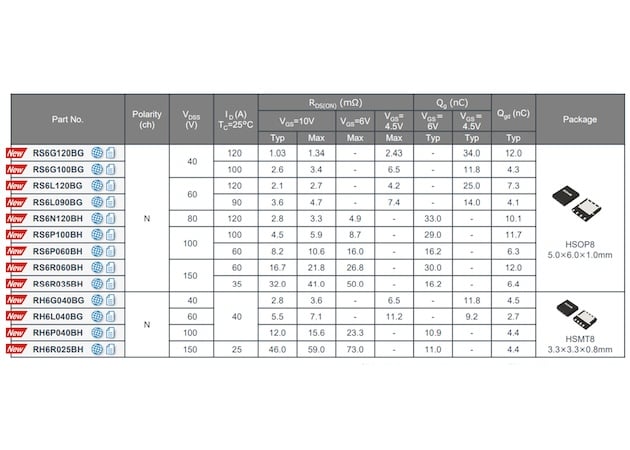
Figure 5. RH6xxxxBx / RH6xxxxBx product offerings. Source.
Benefits of ROHM Copper Clip Power MOSFETs
Using copper clip MOSFETS has a host of benefits. Figure 6 shows how the RDS(on) is 50% lower than the equivalent power MOSFET. This improvement contributes to efficiency, performance, and power density. This design also contributes to reduced parasitics, improved thermal performance, and enhanced mechanical durability.
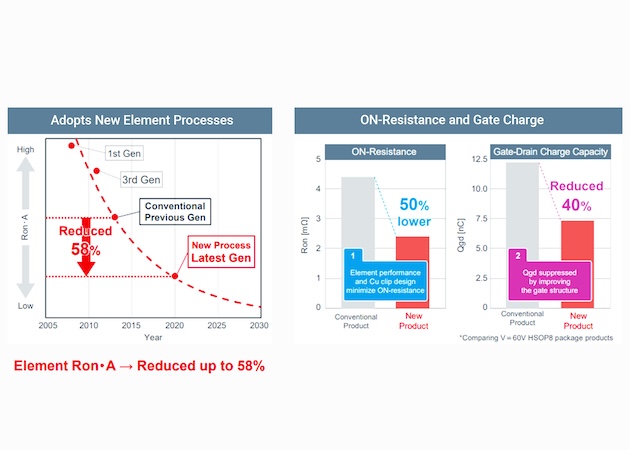
Figure 6. On-resistance and gate-drain charge capacity compared. Source.
Efficiency improvements are also significant. Figure 7 illustrates that the MOSFET achieves an industry-leading efficiency of approximately 95% (peak) in the output current range during steady-state operation. The test conditions included an evaluation board with a full bridge configuration at 48V input, 12V output, and 300W. The new and standard 100V MOSFETs were mounted on the same board for evaluation.
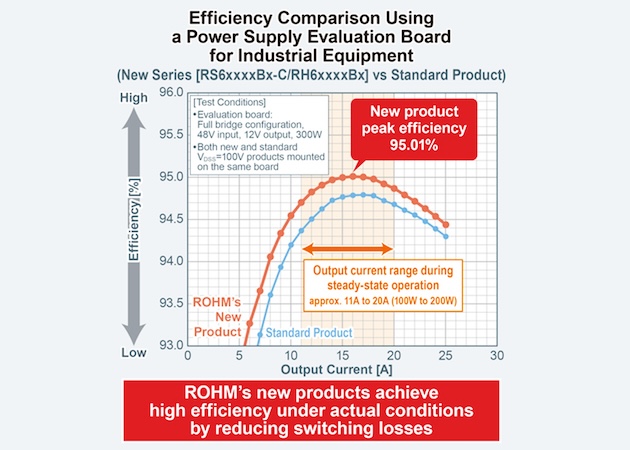
Figure 7. Efficiency improvements achieved using Rohm’s copper clip MOSFETs. Source.
Applications
These Rohm power MOSFETs are ideal for drive applications that operate on 24V/36V/48V power supplies and for anything that requires low RDS(on) MOSFETs.
- Server power supplies
- Power tools
- Home appliances
- Vehicles
- Motors for industrial and consumer products
Conclusion
Rohm's RS6xxxx/RH6xxxx series, featuring copper clip bonding, delivers better efficiency and performance compared to traditional MOSFETs that use aluminum wire or ribbon for bonding. Copper clip bonding lowers ON resistance (RDS(on)), increases current-carrying capacity, a higher drain current, and better heat dissipation than aluminum alternatives. Rohm’s copper clip MOSFETs are ideal for high-power applications such as server power supplies, power tools, and vehicles.
Contact Rohm today to learn more about their MOSFETs with Copper Clips and other offerings.
This Industry White Paper was written by Heath Hiroyuki Ogurisu, ROHM Semiconductor.

