
 Facebook
 Google
 GitHub
 Linkedin
Industry White Paper
Understanding High Speed ADC Testing and Evaluation
High-speed ADCs are critical in communications, data acquisition, and signal processing systems, and require precise testing to ensure low noise, high accuracy, and reliable performance. This application note from Analog Devices explains dynamic and static test methods, including FFT analysis, dither testing, noise power ratio, and full-power bandwidth measurements, while highlighting the use of the HSC-ADC-EVALC platform with VisualAnalog and SPIController software.
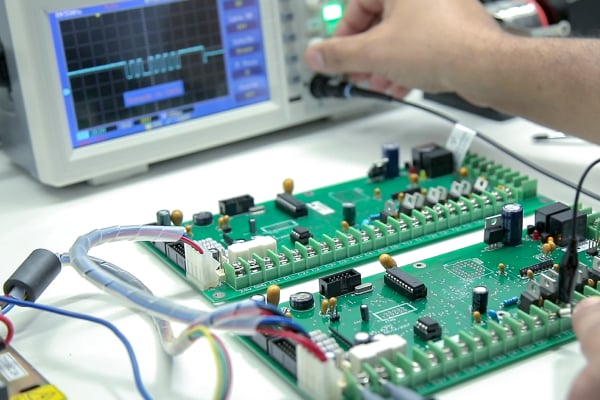
Application Note Overview
Used in high-speed data acquisition, communication, and signal processing systems, high-speed ADCs require precise testing and evaluation to ensure signal integrity, low noise, and accurate conversion. This application note from Analog Devices details both characterization and production test methods, including dynamic and static measurements, FFT analysis, dither testing, and evaluation platform usage, with guidance on proper signal sources, clocking, filters, and power supplies.
Download this application note to learn how to use the HSC-ADC-EVALC evaluation platform with VisualAnalog and SPIController software to capture and analyze ADC performance. Key techniques include single-tone and two-tone FFTs, noise power ratio (NPR), full-power bandwidth measurement, harmonic analysis, and intermodulation distortion evaluation, along with best practices for clean clocking, low-noise power, and optimal filter selection to maximize SNR, SINAD, and SFDR.
The note further covers analog input characterization, including impedance, voltage standing wave ratio (VSWR), full-scale range, and aperture jitter considerations, as well as strategies for minimizing distortion and measurement error.

