Facebook
 Google
 GitHub
 Linkedin
Designing Ultra-Low-Power Smart Thermostats with Latching Solid-State Relays
A load-powered relay architecture allows smart HVAC controllers to operate without batteries or a common wire while enabling compact, silent switching.
Modern HVAC control systems must deliver increasingly advanced functionality while consuming less space and power. Homeowners expect sleek, unobtrusive thermostats that blend with modern interiors, while building managers seek maintenance-free systems that minimize battery replacements. Installers, meanwhile, need solutions compatible with existing wiring—especially in older buildings where running new cables can be difficult and expensive.
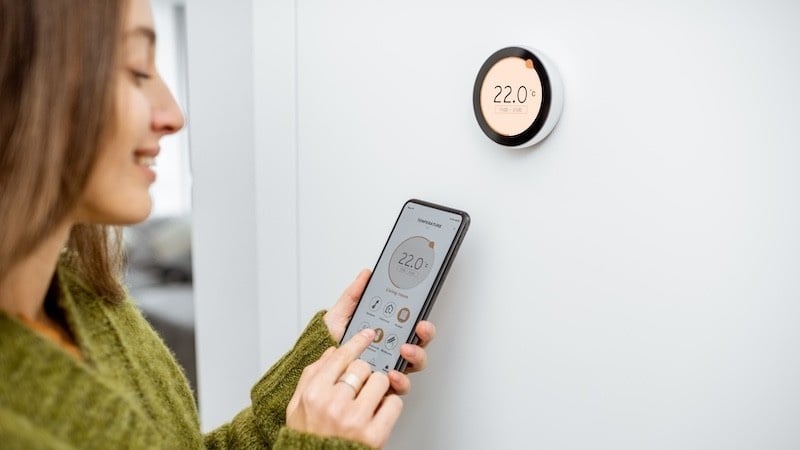
Figure 1. Today’s consumers want smart thermostats that blend in easily with home interiors. Image from Adobe stock (licensed).
These requirements create several engineering challenges. Traditional mechanical relays occupy valuable PCB space and produce audible clicking sounds that many users find objectionable. Battery-powered thermostats require periodic maintenance, and many legacy HVAC systems lack the common “C” wire needed to provide continuous power to modern smart thermostats.
As a result, engineers must design systems capable of operating with minimal available power while maintaining reliable switching. In battery-powered devices, every microampere affects operational lifetime. In two-wire installations without a dedicated power connection, the control electronics must obtain energy through alternative means.
These competing requirements—reduced size, lower power consumption, simpler installation, and improved reliability—have driven switching technology beyond conventional electromechanical relays toward compact solid-state solutions better suited to modern control systems.
Solid-State Latching Relays for Low-Power Control
Littelfuse addresses these design challenges with the CPC1601M, a 60 V, 2 A normally open (1-Form-A) solid-state latching relay that combines innovative load-powered operation with ultra-compact packaging. The device integrates power management, logic control, and DMOS switching elements into a 3 × 3 mm DFN package that occupies a minimal PCB footprint. Figure 1 illustrates the details of the CPC1601M and its compact packaging.
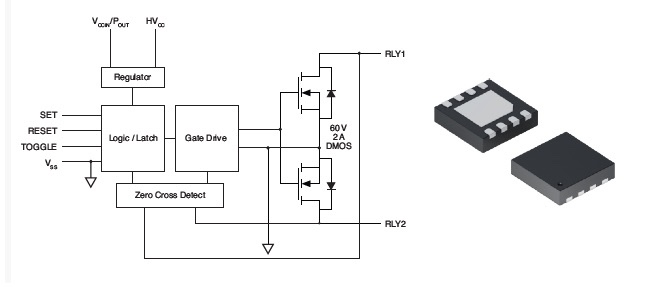
Figure 2. CPC1601M solid-state relay block diagram and its 3 mm × 3 mm DFN package
The CPC1601M distinguishes itself through several key innovations. Its latching architecture requires only a brief pulse to change states, eliminating continuous hold current that drains batteries in conventional relay designs. The device maintains its ON or OFF state indefinitely without consuming power, making it ideal for battery-operated thermostats and remotely located sensors.
Engineers control the relay through standard TTL/CMOS-compatible inputs. Three control pins, SET, RESET, and TOGGLE, provide flexible switching options. A single pulse to the SET input turns on the DMOS FETS, closing the CPC1601M’s “contacts.” A pulse to the RESET input opens them. The TOGGLE input alternately switches states with each pulse, simplifying microcontroller interface code. This single-pulse operation draws less than 1 μA from the system supply in standby mode, preserving battery charge for months or years of operation.
The relay handles continuous maximum load currents of 2 A at an operating temperature from -40 °C to +85 °C. Its low, typical, on-resistance of 308 mΩ minimizes power dissipation and allows direct switching of contactor coils to power heating elements and other HVAC loads. The solid-state design eliminates mechanical wear, contact bounce, and audible noise, delivering silent operation and extended service life.
Blocking voltage capability reaches 60 V DC, accommodating standard 24 VAC transformer secondaries commonly found in HVAC systems. Switching speeds under 1 microsecond ensure responsive control with minimal turn-on and turn-off delays.
The device operates across a 3 V to 5.5 V supply voltage range, compatible with microcontrollers, coin cell batteries, and standard logic power rails. Its small package dimensions enable ultra-thin thermostat profiles that meet aesthetic requirements for wall-mounted controls.
Load-Powered Relay Operation
The CPC1601M's most innovative feature transforms the load itself into a power source. In load-powered mode, the relay harvests operating energy directly from the open-circuit load voltage, consuming zero current from the system supply. This breakthrough eliminates the need for batteries in two-wire installations and extends battery life in portable devices.
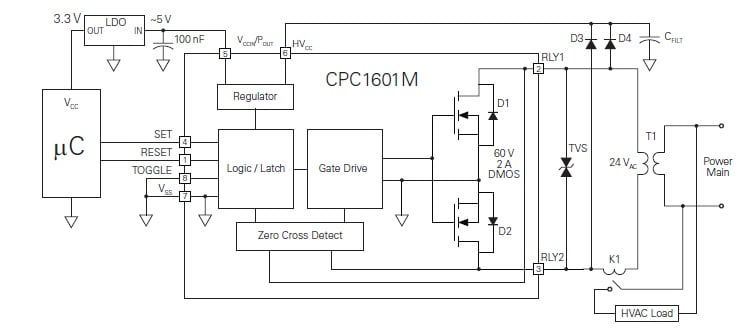
Figure 3. Load-powered mode in an HVAC system
In this example circuit, the load-powered cycle operates as follows: When the relay is in the RESET or open state, the full open-circuit voltage from the 24 VAC transformer appears across the relay terminals. Internal DMOS body diodes, D1 and D2, and external rectifier diodes, D3 and D4, perform full-wave rectification, charging an external filter capacitor, CFILT. This stored energy powers the relay's internal circuitry through the HVCC pin and provides an output voltage at the VCCIN/POUT pin.
The relay continuously monitors the voltage on the filter capacitor. With the capacitor charged to approximately 20 V, the relay can turn on its MOSFETs, energize the KI contactor relay, and allow load current to flow. As the K1 relay draws current, the filter capacitor begins discharging. The relay remains closed while the capacitor voltage drops from 20 V toward 10 V. When the voltage reaches the 10 V threshold, the relay momentarily opens at the next zero-crossing of the AC control current, and the charge cycle repeats.
This periodic opening, typically lasting well under 1 second, proves imperceptible to loads like HVAC contactor coils that have mechanical inertia. The load experiences continuous effective power while the relay harvests energy during brief interruptions. Engineers size the external filter capacitor to balance the load-powered cycle time against ripple requirements. Larger capacitance extends the time between charge cycles, which can be hundreds of milliseconds—short enough to keep loads energized continuously while long enough to maintain adequate voltage regulation.
In load-powered mode, the VCCIN/POUT pin delivers up to 10 mW at 3 V to 5 V for powering external circuits. This output can drive microcontrollers, sensors, wireless modules, and other auxiliary functions without requiring separate power supplies. Engineers can connect a low-dropout regulator to provide a stable voltage for sensitive components, or power devices directly if their operating voltage range is within the output variation.
The relay automatically detects its power source by monitoring the HVCC input pin. When HVCC receives power from the load, the relay enters load-powered mode. When HVCC remains unconnected, and the VCCIN/POUT receives battery or system power, the relay operates in conventional system power mode. This automatic detection simplifies designs that must support multiple installation configurations.
Load-powered mode offers several advantages for thermostat designs. It eliminates the common "C" wire requirement, simplifying installation in homes with only two-wire thermostats. Installers avoid the need to run new cables through walls or ceiling spaces. The design reduces system component count by eliminating backup batteries and their charging circuits. End users benefit from maintenance-free operation without battery replacement intervals.
Practical Design Considerations
The CPC1601M delivers multiple benefits that simplify design and streamline installation. Its compact 3 × 3 mm DFN package occupies just 9 mm² of PCB area, enabling ultra-thin thermostat profiles that satisfy modern aesthetic requirements. The small footprint allows designers to pack more functionality into space-constrained wall boxes and ceiling sensors.
Solid-state switching eliminates the mechanical contacts, springs, and armatures found in electromagnetic relays. This design change removes clicking sounds that homeowners find objectionable, particularly when thermostats cycle in quiet environments like bedrooms and offices. The absence of moving parts also eliminates wear mechanisms that limit relay life in high-cycle applications. The CPC1601M withstands millions of operations without degradation, reducing warranty costs and maintenance calls.
The latching mechanism fundamentally changes power consumption patterns. Conventional relays draw continuous hold current—often tens of milliamps—to maintain energized coils. This constant drain depletes batteries rapidly and generates waste heat. The CPC1601M requires only a brief pulse to change states, then maintains its position without consuming power. Standby current remains below 1 μA in system-powered mode, extending battery life by orders of magnitude compared to traditional designs.
Zero-cross switching reduces electrical noise and extends contact life when controlling inductive loads. The relay detects near-zero current conditions and switches only when the AC waveform crosses through zero. This timing minimizes inrush currents and arc energy, improving EMI performance and reliability. Engineers enable zero-cross mode through a specific control sequence, giving them flexibility to optimize switching behavior for different load types.
The TTL/CMOS-compatible control inputs interface directly with microcontrollers without level shifters or driver circuits. Input thresholds of 1.4 V logic high and 0.5 V logic low provide noise immunity while accepting standard 3.3 V and 5 V logic levels. The inputs place minimal load on the microcontroller's I/O pins, preserving the drive current budget for other functions.
Installation simplicity ranks among the relay's strongest advantages. In load-powered mode, the two-wire configuration requires no common lead, no external power supply, and no batteries. Installers connect only the transformer secondary and load wires to existing terminals, matching the wiring of the mechanical thermostats they replace. This plug-and-play approach eliminates installation errors and reduces service calls.
Galvanic isolation remains available for applications that require electrical separation between the control and load circuits. Engineers achieve isolation by adding a few passive components that capacitively couple PWM signals across the isolation barrier. This option supports dual-transformer systems and other installations where referenced ground connections prove problematic.
Application Opportunities in Building Control
The CPC1601M targets multiple markets where compact size, low power, and reliable switching provide competitive advantages. Smart thermostats represent the primary application, particularly for retrofit installations in older buildings. The relay enables WiFi-connected, smart thermostats to operate from existing two-wire installations without adding a common wire. Homeowners gain smart home integration without rewiring costs. Thermostat manufacturers differentiate their products through simpler installation and slimmer industrial design.
While smart thermostats are the most visible application, ultra-low-power solid-state relays are useful in many other systems requiring compact, efficient switching.
Smart Thermostats—In retrofit HVAC installations, load-powered relays allow smart thermostats to operate without adding a common wire. This enables modern connected features—such as Wi-Fi control and energy monitoring—without modifying existing wiring.
Fire Alarm Systems—Battery-powered fire alarm panels must remain operational during extended outages. The low standby current of latching solid-state relays can significantly extend backup battery runtime.
Security Systems—Access control systems and intrusion detection equipment frequently use relays to control door locks, alarms, or lighting. Solid-state relays provide silent operation and improved reliability.
Building Automation—Zone controllers and distributed building-automation modules benefit from the relay’s dual-mode operation. Systems can operate from centralized power supplies or harvest energy locally when needed.
Industrial Control—Programmable logic controllers, distributed I/O modules, and industrial instrumentation systems often require compact switching devices capable of operating in vibration-prone environments. Solid-state relays provide durability and fast switching performance.
Utility Metering and Demand Response—Smart utility meters use relays to control loads such as water heaters or HVAC systems during peak demand events. Low-power relays help preserve meter battery life while enabling reliable load switching.
Data Acquisition and Instrumentation—Precision measurement systems use relays to switch sensor inputs or measurement ranges. Low on-resistance minimizes voltage drop and measurement errors.
All these applications share common requirements that the CPC1601M addresses: minimal power consumption, compact size, silent operation, and high reliability. The relay's flexibility to operate in either system-powered or load-powered mode makes it adaptable across diverse installation environments and power supply configurations.
Moving Toward Maintenance-Free HVAC Controls
The CPC1601M solid-state latching relay represents a significant advance in control system switching technology. By combining load-powered operation with ultra-compact packaging and sub-microamp standby current, it removes traditional barriers to designing battery-free, maintenance-free HVAC controls and building automation devices.
Engineers gain practical solutions to real-world design challenges. The relay eliminates common wire requirements in thermostat installations, simplifying retrofits and reducing installation costs. Its latching architecture extends battery life from months to years, virtually eliminating maintenance calls. The 3 × 3 mm package enables slim, modern industrial designs that satisfy aesthetic requirements. Solid-state switching removes clicking noise and mechanical wear that plague electromagnetic relays.
These advantages align with broader industry trends toward energy efficiency and sustainable design. Building codes increasingly emphasize energy management and demand response capabilities. Homeowners seek smart home integration and intelligent HVAC control. Manufacturers differentiate products through enhanced functionality and simpler user experience. The CPC1601M supports all these objectives while reducing system complexity and component count.
The relay's dual-mode operation—system-powered or load-powered—provides unusual flexibility. A single device suits applications from coin-cell-powered sensors to line-powered zone controllers. This versatility reduces inventory complexity and simplifies product platform strategies. Engineers design once and deploy across multiple market segments with minimal modification.
Looking forward, the demand for compact, efficient switching solutions will only intensify. IoT devices proliferate throughout buildings, each requiring reliable control of loads while consuming minimal power. Wireless sensor-based controls often require battery power where every microampere matters. Smart building platforms demand higher device density in space-constrained installations. The CPC1601M positions designers to address these evolving requirements.
For applications ranging from residential thermostats to commercial building automation, from security systems to utility load control, the CPC1601M delivers the combination of size, power efficiency, and functionality that defines next-generation control systems. It proves that innovative solid-state technology can eliminate traditional design compromises and enable the smarter, greener appliances that markets demand.
Additional information on the CPC1601M solid-state latching relay is available at Littelfuse.com.
CPC1601M You Tube Video:
All images used courtesy of Littelfuse, unless otherwise noted.