Facebook
 Google
 GitHub
 Linkedin
How Hybrid-Driver TWS Earbuds Are Reengineering Consumer Audio Hardware
Learn the hybrid design configurations used in today’s TWS earbuds, along with the engineering challenges that OEMs face when designing hybrid models.
Consumer demand for high-end listening experiences has driven the wireless earbud market to evolve rapidly in recent years. Hybrid designs utilize two types of drivers in each earbud to enhance audio quality, features, and comfort. These designs are gaining popularity among original equipment manufacturers (OEMs) as they strive to exceed consumer expectations and remain competitive in the market.
Consumer audio, specifically True Wireless Stereo (TWS) earbuds, is increasingly implementing hybrid designs. TWS earbuds are undergoing significant reengineering with the rise of hybrid designs, which not only affects how manufacturers construct wireless earbud models but also creates significantly better sound experiences for consumers.
In this article, I outline the various hybrid design configurations used in TWS earbuds today, sharing the benefits and challenges of each combination of drivers. Additionally, I delve into the engineering challenges that OEMs face when designing hybrid models and offer solutions for consideration.
Four Hybrid Driver Configurations Reshaping TWS Audio
Hybrid driver designs are reshaping how audio hardware is built and experienced. By integrating multiple driver types, manufacturers can achieve greater audio clarity, improved frequency response, and enhanced efficiency compared to single-driver solutions.
All hybrid configurations share key advantages: impactful bass from dedicated woofers, clear treble reproduction from specialized tweeters, and improved overall clarity, brightness, and detail. Additionally, tweeters can often be positioned optimally for both audio output and ANC compatibility. Here are the leading hybrid configurations gaining traction in today's TWS products.
- Dual Dynamic Drivers—This configuration uses two dynamic drivers within each earbud, typically combining both drivers in a single unit. The tweeter portion has a low impedance and narrow bandwidth, with limited port and location options compared to other tweeter types.
- Dynamic Driver Woofer & Planar Magnetic Tweeter—Planar magnetic tweeters offer good frequency response characteristics but operate at low impedance levels. A potential drawback is that the rear vent requirement may cause response issues in compact TWS designs.
- Dynamic Driver Woofer & MEMS Tweeter—MEMS tweeters provide a thin profile and extended bandwidth capabilities. However, they have limited maximum SPL output and require special electrical considerations including DC bias, high voltage, and active crossover implementation. Like planar magnetic drivers, rear venting requirements may impact frequency response, and port options are limited.
- Dynamic Driver Woofer & BA Tweeter—Balanced armature tweeters deliver the highest maximum output levels with good efficiency and flexible port and sensitivity options. They integrate well near the ear tip and their high-frequency impedance characteristics work particularly well with switching class D amplifiers to reduce power consumption. The main limitation is their rectangular form factor, which doesn't allow for coin-shaped designs.
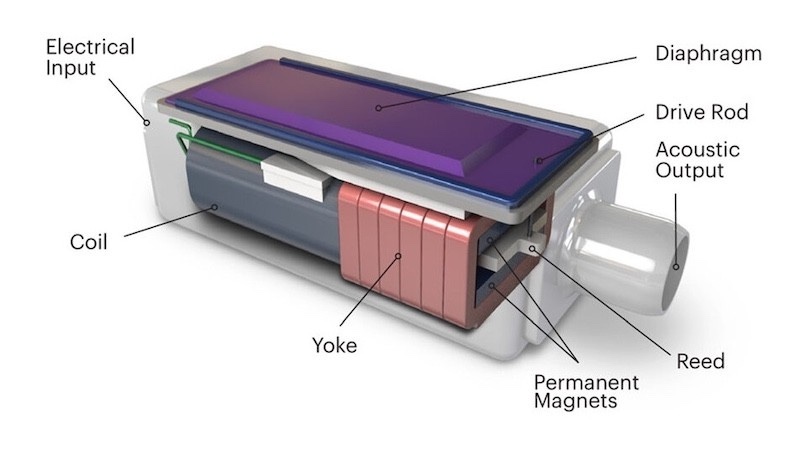
Figure 1. Balanced armature construction. Image used courtesy of Knowles.
While each configuration offers distinct advantages, the engineering realities of TWS design, particularly size constraints and power efficiency, have led to balanced armature and dynamic driver hybrids being the preferred choice for most premium manufacturers.
BA Advantage: Hearing Aid Tech Powering Premium Earbuds
Among these hybrid approaches, the combination of balanced armature tweeters with dynamic drivers has emerged as the most commercially viable solution, driving significant adoption across premium TWS products. Originally developed for hearing aids, BAs are compact, power-efficient, and capable of delivering superior audio clarity, especially in the high-frequency range.
Unlike other tweeter technologies, BAs offer a wide range of customization options, including port placement, coil impedance, and diaphragm configuration. This flexibility allows engineers to integrate BAs more easily into compact earbud designs.
BAs are also capable of delivering high output levels across a wide frequency range from 4 kHz up to 40 kHz, ensuring exceptional clarity and detail. Their constrained motion diaphragm design further reduces distortion spikes, allowing for precise sound reproduction at lower power levels.
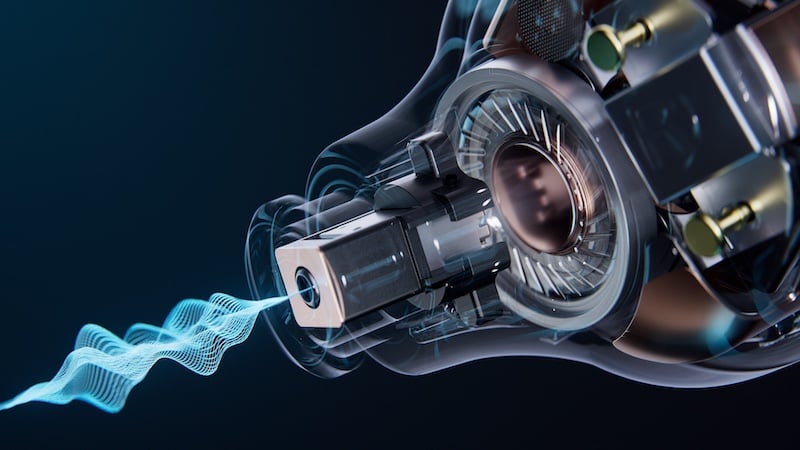
Figure 2. Cutout design view of JLab’s Epic Lab Edition earbuds. Image used courtesy of JLab.
For example, the JLab Epic Lab Edition earbuds feature Knowles BAs, which provide expanded treble response beyond 10 kHz and are tuned to the Knowles Preferred Listening Response Curve to enhance the sound’s depth and richness for a more satisfying listening experience.
The Knowles Curve, published in the AES Journal, demonstrates that listeners across age ranges and hearing abilities prefer this expanded treble response beyond 10 kHz to deliver the best and most satisfying music listening experience. This scientific foundation enhances the sound's depth and richness for a more satisfying listening experience.
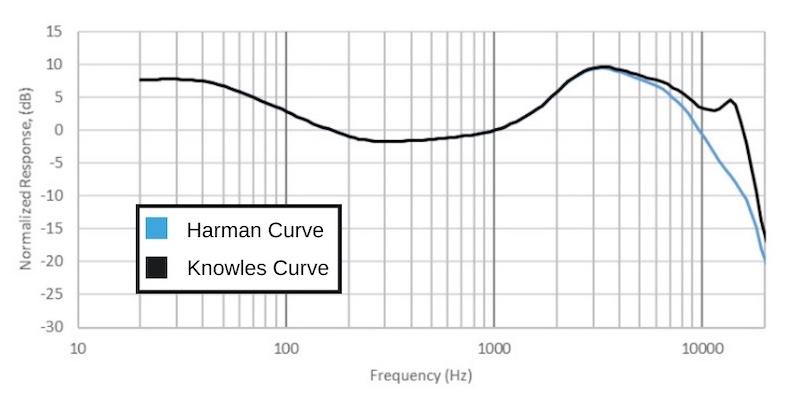
Figure 3. Comparison of the recommended response curves for earphones. Image used courtesy of Knowles.
BAs are among the most efficient transducers available for audio generation, offering a high acoustic output with minimal electrical input. This efficiency translates into significantly lower power consumption, which is crucial in battery-powered devices like TWS earbuds. In a hybrid configuration, a single BA tweeter paired with a dynamic woofer can maintain high-fidelity audio performance while drawing substantially less current than a setup with two dynamic drivers.
Despite these clear advantages, implementing hybrid designs in practice presents OEMs with a complex set of engineering trade-offs that require careful consideration.
Three Engineering Hurdles Facing TWS Designers
While hybrid configurations offer clear advantages, they introduce several engineering hurdles that OEMs must address.
Limited Space
The biggest challenge is physical space. TWS earbuds must accommodate multiple drivers, batteries, microphones, and other components, all within a form factor small enough to fit comfortably in the ear. Hybrid systems, particularly those using multiple dynamic drivers or planar magnetics, push the limits of space optimization.
Different driver approaches address this constraint in various ways. BA tweeters help ease this limitation through their small size and flexible design parameters, enabling better placement of crossover components and microphones while improving acoustic performance. Alternatively, dual dynamic driver configurations can maximize space efficiency by integrating both drivers into a single housing unit, reducing the overall footprint compared to separate driver assemblies.
Power vs. Performance Trade-offs
TWS earbuds must also strike a balance between high performance and low power consumption. Supporting features like ANC, voice assistants, and high-resolution audio increase power demands. Hybrid systems exacerbate this challenge, as managing multiple drivers can quickly drain the battery.
BAs offer a particularly effective solution to this challenge. Their low-power operation and high sensitivity extend battery life without sacrificing performance, making BA-based hybrids especially favored for achieving long-lasting, premium audio experiences in power-constrained TWS designs.
Crossover Circuit Complexity
In TWS earbuds, designing compact and efficient crossover circuits that divide audio signals between the drivers to ensure each operates optimally is extremely challenging due to space limitations and component tolerances.
One option is analog crossovers, which use passive components like capacitors and inductors, but they face several practical limitations. Tolerance issues arise because precision value capacitors are expensive, and capacitance values only come in coarse increments, making exact frequency targeting difficult.
Filter performance will vary if load impedance varies, creating consistency challenges. The sharpness of the filtering is also limited, since the inductors needed for sharper filters are impractically large and expensive for earphones. Additionally, the crossover design can't be altered after earphone assembly, which slows the design iteration process significantly.
Digital crossovers offer more control and consistency, but they require additional DSP resources and introduce potential latency issues, which can be particularly problematic for ANC tuning and real-time audio processing. Meanwhile, improper crossover design can also result in phase misalignment between drivers, causing frequency anomalies, comb filtering, or distorted soundstage.
These artifacts can interfere with ANC performance, where timing and phase accuracy are critical. To address these issues, OEMs must carefully coordinate driver design, crossover architecture, and ANC algorithms in tandem. This often involves iterative prototyping and testing across software, hardware, and acoustic engineering teams.
Different driver technologies work better with different crossover approaches. BAs can be integrated seamlessly into both passive crossover designs like in the JLab Epic Lab Edition earbuds and active crossover designs used in the Edifier Neo Buds Pro 2 earbuds. Their predictable impedance characteristics and well-defined frequency responses make them easier to model and tune within crossover networks, whether analog or digital. In passive designs, this predictability reduces variability across production runs, improving consistency. In active systems, BAs require less DSP correction, minimizing processing demands and preserving battery life, which are two key considerations in TWS development. This adaptability allows OEMs to fine-tune hybrid configurations more efficiently while maintaining the precision required for optimal ANC and high-fidelity sound reproduction.
Planar magnetic drivers have also been successfully implemented in passive crossover designs, offering their own advantages in terms of frequency response characteristics when properly integrated into analog crossover networks.
These engineering challenges explain why the specific pairing of dynamic woofers with balanced armature tweeters has become the industry's preferred hybrid solution.
The Hybrid Advantage: BA + Dynamic Driver Solutions
Hybrid designs that pair dynamic woofers with balanced armature tweeters offer a robust solution to the challenges listed above. Dynamic drivers are excellent for producing the bass response needed for ANC performance, while BAs contribute crystal-clear treble and midrange output.
This configuration delivers full-spectrum audio fidelity without compromising battery life or comfort. The practical benefits extend beyond pure acoustics to industrial design flexibility. Their small size makes it easier to accommodate features like larger batteries, extra sensors, or ANC microphones that are essential for differentiating TWS products in a competitive market.
BAs also help brands achieve high-frequency extension without relying heavily on digital equalization. For example, the Knowles RAN BA driver supports output up to 40 kHz, enabling JAS Hi-Res Audio certification. It also offers high sensitivity, making it an ideal choice for personalized audio applications where precision and low distortion are key.
In open wireless stereo (OWS) earbuds, which are an emerging TWS category focused on comfort and environmental awareness, hybrid driver configurations are particularly beneficial. These designs often struggle with sound leakage and poor isolation, particularly at lower frequencies, which are more difficult to contain.
The compact size of BAs enables engineers to optimize woofer selection, focusing on low-frequency output, and utilize the mid to high-frequency output from the BA tweeter to preserve audio quality in OWS designs.
As the TWS market matures and consumer expectations continue to evolve, these hybrid innovations represent more than incremental improvements—they're reshaping the fundamental approach to portable audio design.
What's Next: Hybrid Designs Set the Premium Audio Standard
The hybrid revolution in TWS audio represents more than an incremental upgrade, it's a fundamental shift in how manufacturers approach portable sound engineering. As consumer expectations converge on studio-quality audio in ultra-compact form factors, hybrid configurations have emerged as the only viable path forward for premium products.
By pairing dynamic drivers with technologies like balanced armatures, OEMs can deliver richer, more nuanced sound while supporting features like ANC and high-resolution audio. However, these benefits come with significant engineering challenges, particularly in areas such as system integration, battery life, and crossover circuit design.
The market signals indicate the consumers’ willingness to pay a premium for superior audio quality, but only when it comes without compromising comfort, battery life, or feature richness. Balanced armature and dynamic driver hybrids offer the most proven path to achieving this balance, but execution excellence will separate market leaders from followers.
Thoughtful System-Level Design
As consumer expectations continue to rise, success will depend on thoughtful system-level design and close coordination between acoustics, electronics, and software. For manufacturers, this means investing in more precise tuning, leveraging components that offer flexibility and efficiency, and aligning product design with both technical and user-experience goals.
Ultimately, hybrid configurations, especially those using BAs, provide a viable path to delivering premium audio in smaller, more efficient packages. As the market evolves, the brands that master this balance of performance and practicality will define the premium audio standard for the next generation of TWS.