Facebook
 Google
 GitHub
 Linkedin
Narrowband IoT: Power-Efficient Connectivity for IoT and Smart Cities
Learn how Narrowband (NB)-IoT offers power-efficient, scalable connectivity for IoT and smart cities. It addresses challenges of power, coverage, and cost for massive device deployments.
The Internet of Things (IoT) has established itself as a principal technology linking devices across consumer, industrial, healthcare, and smart city sectors. Analysts project that by 2030, over 25 billion devices will require reliable and scalable network access.
The challenge is to connect these devices in a cost-effective, power-efficient, and robust manner. Conventional wireless technologies like Wi-Fi, Bluetooth, Zigbee, and LTE/5G fail to fully address these specific needs.
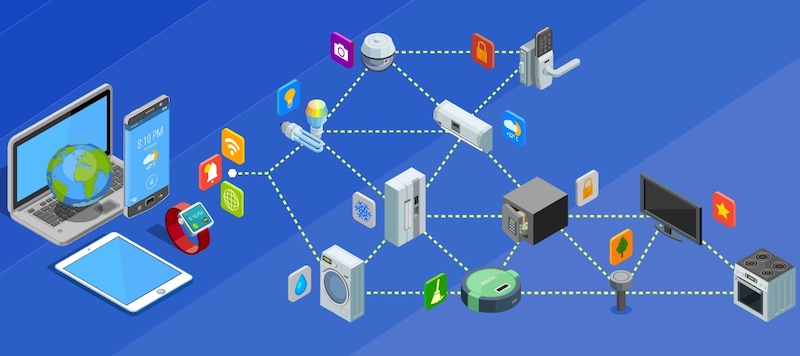
Scalability is a real challenge when it comes to wireless networking.
NB-IoT addresses this gap. Defined by 3GPP in LTE Release 13 and optimized in subsequent releases, NB-IoT is a low-power, wide-area network (LPWAN) operating on licensed spectrum. It is specifically designed to support massive machine-type communication (mMTC). It is already enabling deployments in smart cities, utilities, logistics, agriculture, and healthcare.
Connectivity Challenges in Scaling IoT
Scaling IoT deployments presents several critical challenges:
- Power Consumption: Many IoT devices are battery-powered, often in locations where replacing a battery is expensive or impractical. These devices require a battery life of 5–10 years under realistic transmission cycles.
- Coverage: Devices are often installed in basements, tunnels, or rural locations where technologies like Wi-Fi and Bluetooth Low Energy (BLE) cannot provide a reliable connection. Extensive range and deep indoor penetration are therefore critical.
- Cost and Scalability: Urban deployments can involve hundreds of thousands of endpoints. Device modules must be inexpensive (in the single-digit dollar range), and networks must support tens of thousands of simultaneous connections per base station.
Wi-Fi is too power-intensive for long-term battery operation; BLE and Zigbee have limited range; and while high-performance, LTE/5G are not optimized for the low-data, infrequent transmissions typical of many IoT applications.
Technical Foundations of NB-IoT
NB-IoT builds on existing LTE infrastructure but simplifies it to reduce complexity and power usage. It operates in three modes:
- Standalone: Deployed in re-farmed GSM spectrum.
- In-band: Deployed within the resource blocks of an existing LTE carrier.
- Guard-band: Deployed in the unused guard band between LTE carriers.
NB-IoT radios are simpler and cheaper, with a narrow channel bandwidth of 180 kHz. Key features include:
- Extended Coverage: Enhanced link budgets allow operation in challenging locations like basements and remote areas.
- Power-Saving Modes (PSM and eDRX): Devices can remain registered on the network but sleep for extended periods, waking only to transmit. This reduces idle power consumption to microampere levels and can extend battery life to 10+ years.
- Efficient Scheduling: Narrowband uplinks with signal repetition ensure the robust transmission of small data payloads (bytes to kilobytes). Latency ranges from hundreds of milliseconds to several seconds, which is suitable for most telemetry applications.
- Device Density: A single NB-IoT cell can support up to 50,000 devices, enabling dense urban deployments.
- Security: NB-IoT inherits the robust 3GPP security framework, including SIM-based authentication, encryption, and integrity protection.
- Throughput: Data rates are in the tens of kbps, optimized for small, infrequent data transmissions.
Real-World Applications
Several types of applications rely on IoT, including Smart Metering, Agriculture, Smart Infrastructure, and more.
Smart Metering
Utilities are among the largest adopters. NB-IoT-enabled water and gas meters replace manual readings, transmitting data reliably even from deep indoor locations like basements. This enhances billing accuracy, facilitates leak detection, and minimizes manual labor. Millions of NB-IoT meters have already been deployed by Vodafone and other European operators.
Asset Tracking and Logistics
NB-IoT sensors track the location and condition of shipments, including environmental monitoring. These sensors offer significantly longer battery life compared to GPS-only solutions. For example, China Mobile deployed NB-IoT in thousands of cold-chain trucks, reducing spoilage by over 15%.
Environmental Monitoring
Cities are implementing NB-IoT sensors to monitor air quality, noise pollution, and water levels. In India, NB-IoT water-level sensors provide early flood warnings, demonstrating the technology's potential for low-maintenance, municipal-scale deployments.
Smart Infrastructure
NB-IoT is being integrated into smart streetlights, parking meters, and waste bins. In Vienna, smart streetlights use NB-IoT to adjust lighting based on activity, reducing electricity consumption by 30%. Smart waste bins notify collection services when they are full, optimizing routes and saving fuel.
Healthcare and Wearables
NB-IoT can connect devices such as remote glucose monitors, pacemakers, and personal emergency buttons. Rural telemedicine pilot projects are using NB-IoT to monitor patients in areas without reliable broadband, reducing the need for in-person visits.
Agriculture
Soil moisture sensors guide farmers on irrigation schedules, minimizing water use and boosting crop yields. Livestock collars track the real-time location and health of animals, enabling more effective herd management.
Comparison with Other LPWANs
LoRaWAN and Sigfox are prominent LPWAN technologies that operate in unlicensed spectrum. LoRaWAN is well-suited for private network deployments, while Sigfox offers broad coverage through its network operators. However, both can be susceptible to interference and may have limitations regarding uplink capacity and long-term operator support compared to licensed-spectrum technologies.
In contrast, NB-IoT operates on licensed spectrum, offering carrier-grade reliability, global standardization, and long-term support from mobile network operators, aligning it with the evolution of LTE-M and 5G. Consequently, NB-IoT is ideal for carrier-managed public networks, while LoRaWAN often provides more flexibility for private, enterprise-owned networks.
Engineering Design Consideration
NB-IoT complements rather than replaces other wireless standards like BLE, Wi-Fi, or Thread, and it often coexists with them in hybrid deployments. Engineers must weigh NB-IoT’s benefits against its constraints:
- Latency: Delays of several seconds are unsuitable for applications requiring real-time control.
- Mobility: Support for cell-to-cell handoffs is limited, making NB-IoT best for stationary or low-mobility devices.
- Throughput: Data rates are limited to tens of kbps, making it unviable for high-data applications.
- Operator Dependence: Coverage and feature availability vary by carrier and region.
Effective NB-IoT deployment requires careful attention to:
- Battery Chemistry: Requires careful selection, such as long-life lithium-thionyl chloride batteries or supercapacitors to support transmission power bursts.
- Antenna Design: While small antennas are feasible, deployments in underground locations or metal enclosures require careful tuning for optimal performance.
- Module Selection: Engineers must match module capabilities and supported frequency bands to the network operator’s infrastructure.
- Firmware Updates: Over-the-air (OTA) updates must be incremental and efficient to conserve energy and bandwidth.
If you are creating new NB-IoT ICs or modules, T2M has silicon-proven IP that can improve your time to market and reduce development risk.
Regulatory and Deployment Considerations
NB-IoT operates in licensed spectrum, requiring collaboration with mobile network operators. Engineers must understand spectrum allocation, local regulations, and deployment permissions. Spectrum licensing ensures predictable performance and reduces interference, a key advantage over unlicensed LPWAN alternatives. Moreover, carrier agreements and service-level guarantees are critical for mission-critical, city-wide deployments in sectors like utilities, healthcare, and industry.
Integration with Emerging Technologies
NB-IoT is increasingly being combined with other technologies to create powerful hybrid solutions:
- Hybrid Connectivity: Devices can combine NB-IoT for cloud access with short-range protocols like BLE, Matter, or Thread for local device interoperability.
- Edge Intelligence: NB-IoT devices integrated with low-power AI accelerators can process data locally. For example, an industrial vibration sensor could analyze patterns on-site and transmit only anomaly alerts, saving significant bandwidth.
- Satellite Integration: NB-IoT modules are being tested with low-Earth orbit (LEO) satellites to provide connectivity for maritime, mining, and remote agricultural applications.
- Security Evolution: Research into post-quantum cryptography aims to develop lightweight, quantum-resistant algorithms that can run on NB-IoT devices, future-proofing networks against emerging threats.
- Industry 4.0: NB-IoT's scalability and power efficiency enable dense networks of condition-monitoring sensors, energy meters, and logistics tags in smart factories.
Future Outlook
The inclusion of NB-IoT in the 5G mMTC roadmap ensures its continued support and evolution. Its integration with hybrid networks, edge computing, satellite connectivity, and Industry 4.0 makes it a foundational technology for scalable, low-power IoT ecosystems. As cities and industries adopt smarter infrastructure, NB-IoT is positioned to be a robust and cost-effective connectivity solution for decades to come.
NB-IoT for Large Scale IoT Implementations
NB-IoT is specifically designed to meet the fundamental requirements of large-scale IoT applications: power efficiency, extensive coverage, massive scalability, and robust security. It fills a critical gap between traditional wireless protocols and proprietary LPWANs by offering a carrier-grade, globally standardized solution.
Its practical adaptability in smart metering, environmental monitoring, logistics, healthcare, and agriculture demonstrates its effectiveness across diverse use cases. While limited in latency, mobility, and throughput, NB-IoT serves as a vital and complementary technology for building massive, energy-efficient, and secure IoT networks.
As billions of devices come online, understanding NB-IoT's trade-offs, deployment techniques, and integration potential is essential for engineers developing stable, future-proof systems. If you are interested in discussing ASIC design solutions for NB-IoT, please contact T2M.
Statistic Source: The statement “Analysts project that by 2030, over 25 billion devices will require reliable and scalable network access” is based on estimates by Statista and validated by GSMA Intelligence and IoT Analytics, which project similar figures for connected devices growth by 2030.
All images/graphics used in the article were originally created by T2M Technology India Pvt. Ltd.
Related Content