Facebook
 Google
 GitHub
 Linkedin
3 Acquisitions Show Heavy Investment in AI, IoT, and High-End Processors
Siemens, Nordic Semiconductor, and SkyWater Technology have each completed strategic acquisitions across software, cloud, and foundry capacity.
Three recent, high-impact acquisitions show how software, silicon, and system lifecycle services are converging across key verticals. First, Siemens has taken a major step into life sciences with a $5.1 billion acquisition. Nordic Semiconductor positioned itself as a full-stack player in IoT device management. Finally, Skywater Technology is expanding its domestic foundry footprint with a new site in Texas, aimed squarely at critical infrastructure and defense needs.
Siemens Adds Dotmatics for AI-Powered Scientific R&D Stack
Siemens has completed its acquisition of Boston-based Dotmatics, a scientific informatics company whose AI-native platform is already used by more than two million researchers. The $5.1 billion deal significantly expands Siemens’ PLM software into the life sciences domain and adds a suite of widely adopted tools into its growing Siemens Xcelerator software portfolio.
Dotmatics' flagship product, Luma, is an AI-native scientific intelligence platform designed to unify scientific workflows across a “make-test-decide” model. It aggregates structured and unstructured R&D data, such as molecular structures, assay results, and analytical outputs, into a single, queryable layer. That capability will now be integrated with Siemens’ digital twin infrastructure, giving customers a continuous data thread from lab discovery through manufacturing scale-up.
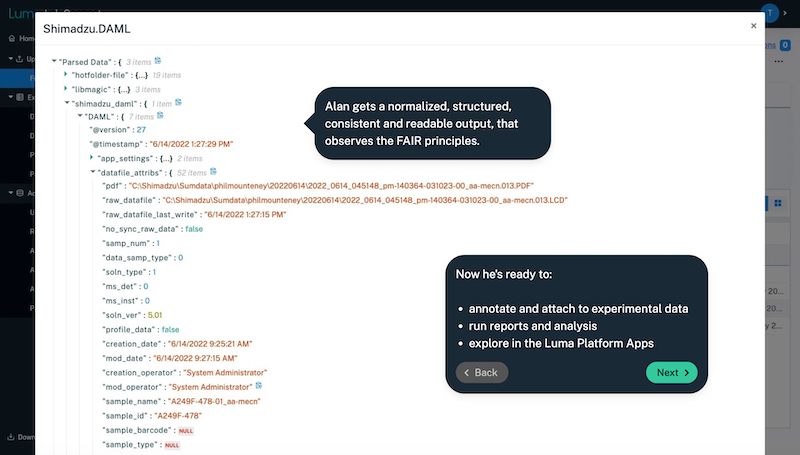
In this demo, Dotmatics' Luma platform helps "Alan," a lab manager with over 1,500 connected instruments, use Luma Lab Connect to manage LCMS data from a Shimadzu device in his lab. Image used courtesy Dotmatics
The goal is to tackle the growing data complexity in drug development pipelines, which routinely take over a decade and cost billions to bring a single new therapy to market. Siemens claims the combination could reduce time-to-clinic while supporting multi-modality drug programs, including cell and gene therapies.
For engineers, this points to a growing overlap between AI-assisted scientific modeling and traditional PLM. Siemens’ push into life sciences may also influence requirements around secure data handling, multi-domain simulation, and the use of edge AI in regulated production environments.
Nordic Semiconductor Acquires Memfault
Nordic Semiconductor has acquired embedded observability startup Memfault in a $120 million deal aimed at delivering a vertically integrated chip-to-cloud solution for connected products. This is a strategic pivot for Nordic, long known for its ultra-low-power wireless SoCs, toward a full lifecycle management model for IoT device makers.
Memfault’s software stack includes features like crash reporting, real-time fleet health monitoring, remote debugging, and OTA firmware delivery. These tools support embedded Linux, Android, and MCU-class devices and are already in use across consumer, industrial, and healthtech deployments by customers such as Whoop, Bose, Panasonic, and Lyft.

François Baldassari (left), CEO of Memfault, and Vegard Wollan (right), CEO of Nordic Semiconductor. Image used courtesy of Nordic Semiconductor
The acquisition also folds Memfault’s functionality directly into Nordic’s nRF Cloud Device Management offering. For developers, this means a simplified path from silicon provisioning to fleet monitoring without custom infrastructure. Nordic says the integration will allow product teams to push security updates, monitor in-field metrics, and track performance regressions across hardware variants from a single platform.
Notably, the timing aligns with the growing complexity of IoT systems, particularly as edge AI and cybersecurity standards become mandated. Memfault’s tooling will support compliance efforts tied to the EU Cyber Resilience Act and other international mandates for device transparency.
Skywater Finalizes Fab 25 Deal, Adds U.S. Capacity for Mature Nodes
Skywater Technology has closed its $93 million acquisition of Infineon’s Fab 25, a 200-mm wafer facility in Austin, Texas. The fab adds roughly 400,000 annual wafer starts to Skywater’s portfolio and immediately triples its output capacity, making the company the largest exclusively U.S.-based, pure-play semiconductor foundry focused on mature nodes.
Fab 25 was previously a captive IDM fab for Infineon but will now operate as an open-access foundry under Skywater’s Technology-as-a-Service model. It complements the company’s existing Minnesota and Florida sites and brings with it proven process capabilities for copper interconnects, high-voltage BCD processes, and production at 65-nm and 130-nm nodes.
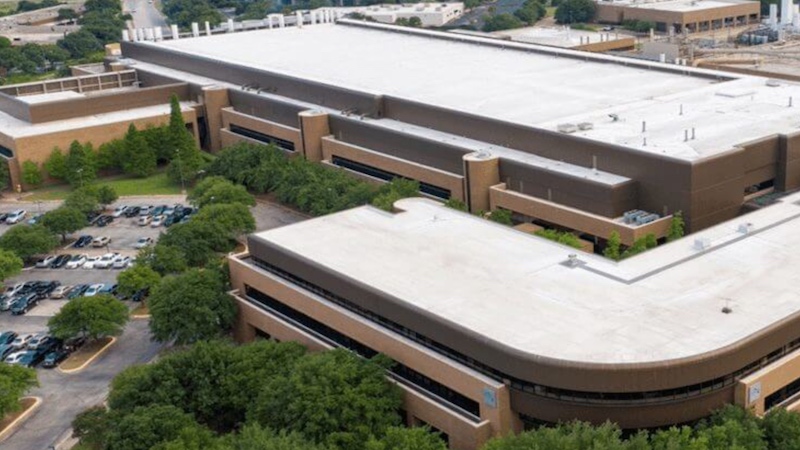
Infineon’s Fab 25 in Austin, Texas. Image used courtesy of Skywater Technology
This acquisition is aligned with CHIPS Act incentives for onshoring semiconductor capacity and comes with a long-term supply agreement with Infineon to keep a portion of the site’s output flowing to its former owner. Skywater will absorb around 1,000 employees and plans to begin onboarding new customers immediately.
The importance of this move goes beyond wafer volume. Mature-node technologies, which are often overlooked in high-end processor coverage, still account for the bulk of silicon used in automotive ECUs, power ICs, mixed-signal ASICs, and aerospace components. Fab 25 now enables Skywater to serve dual-source domestic manufacturing needs across these sectors, particularly for applications where secure and trusted fabrication is required under DoD mandates.
Related Content