Facebook
 Google
 GitHub
 Linkedin
An AI Revolution in Power Management Design for Embedded Systems
Learn how PMIC.AI leverages custom LLM technology to transform how engineers design power supplies that meet the increasing complexity of multi-rail SoC systems.
In the rapidly evolving world of embedded systems, power management has emerged as a critical challenge. As devices integrate an ever-expanding array of functionalities, from Wi-Fi and Bluetooth to advanced AI capabilities, traditional design approaches are struggling to keep pace.
The Power Management Landscape
Modern embedded systems are facing unprecedented challenges. For example, a single SoC may have 4 to 25+ power rails, with each requiring separate discrete devices. In addition, designers must deal with:
- Shrinking PCB real estate
- Increasingly complex power sequencing
- Evolving SoC power specs with each generation
- Accelerating time-to-market pressures
These challenges demand a fundamentally new approach to power management design both from a hardware and a tool chain perspective. As the industry moves towards more complex systems, programmable Power Management Integrated Circuits (PMICs) are replacing discrete devices to address these challenges.
An AI-powered Power Design Assistant
The goal of AnDAPT’s PMIC.AI is to transform how engineers conceptualize and implement power architectures. When presented with an SoC’s power requirements, PMIC.AI doesn’t just process data, it thinks like an expert power design engineer. The system rapidly assesses input voltages, rail specifications, and sequencing requirements, applying sophisticated algorithms to generate optimal design solutions.
The system’s core capabilities include:
- Automated power tree analysis to streamline power architecture design.
- Intelligent rail sequencing optimizes power-up, power-down, and rail combination sequencing.
- Advanced compensator selection improves stability with AI-driven tuning.
- Neural network-based component recommendations provide optimized part suggestions.
- Single-click design visualization quickly generates and refines power designs.
PMIC.AI is built on OpenAI’s O1 Large Language Model and enhanced with Retrieval Augmented Generation (RAG).
A Design Example Using PMIC.AI
In the following subsections, we will describe four simple steps for using PMIC.AI to create a custom power solution:
- Input power requirements.
- Create the power solution.
- View the chip architecture.
- Download the design files.
Step 1: Input Power Requirements
The user begins by filling in the requirements for an SoC power tree, as shown in Figure 1. Version 1 of PMIC.AI supports the definition of the number of power rails, their respective voltages, load current, turn-ON sequence (turn-OFF sequence is the opposite), and input voltage.
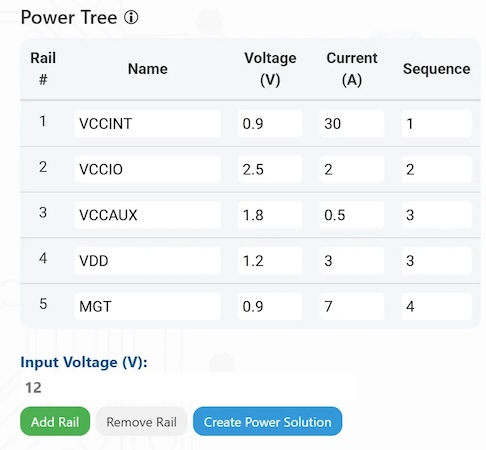
Figure 1. The user inputs the SoC power rail requirements.
Step 2: Create the Power Solution
Next, clicking the “Create Power Solution” button generates an efficiency-optimized power solution, including the selection of power topologies, as shown in Figure 2. This initial design can be compiled, downloaded, or modified further.
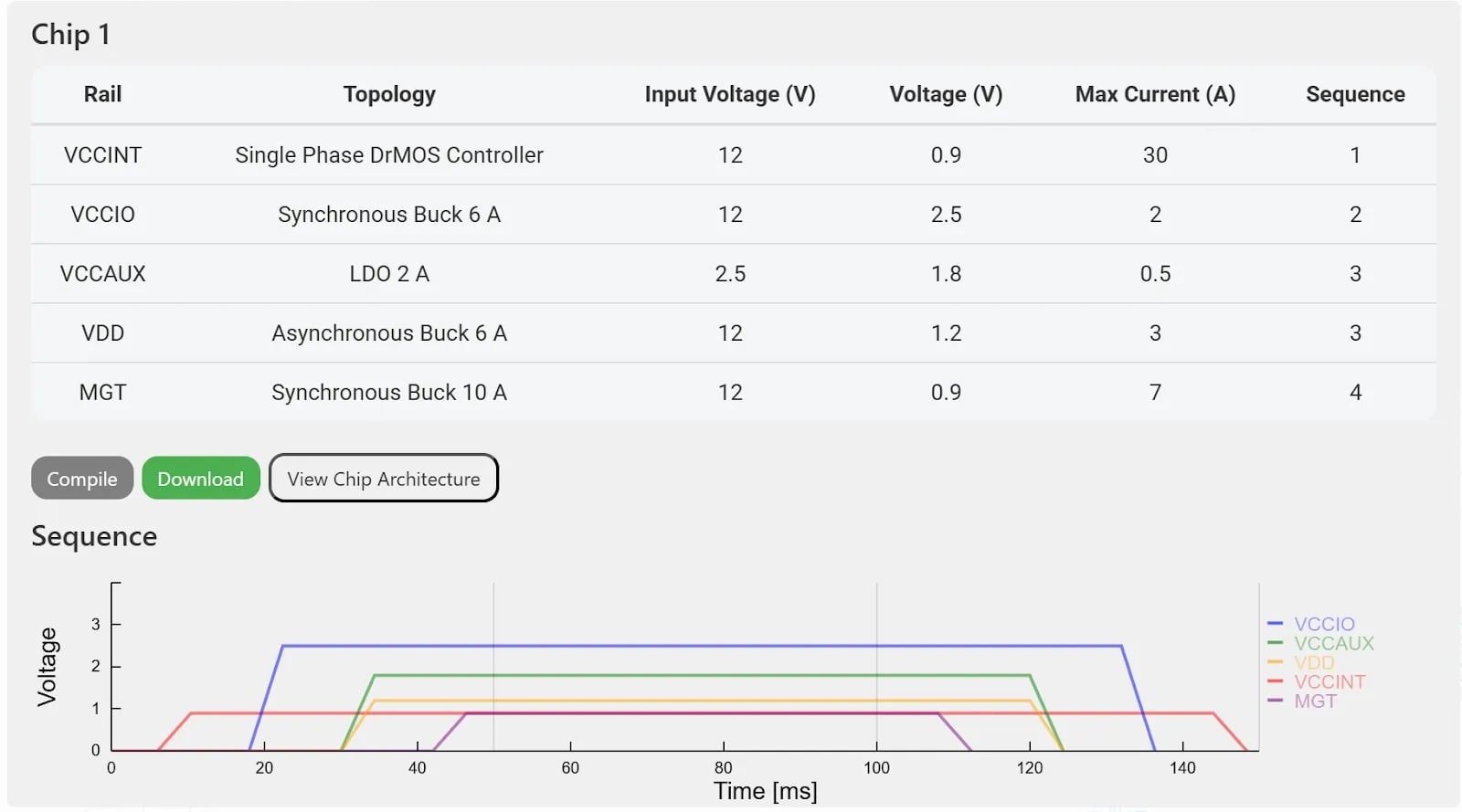
Figure 2. Power solution from PMIC.AI covering all power tree rails. [click to enlarge]
The software automatically selects the configuration best suited for each rail, making intelligent topology choices such as a 6 A synchronous buck converter, a 2 A low dropout (LDO) regulator, and a DrMOS controller with an external DrMOS chip.
In addition, it will output important parameters such as switching frequency, compensator coefficients, and rise time. PMIC.AI will all set indicators like power good and fault flags such as UVLO, OVP, and OCP.
Designers can also view the Bode plots, as shown in Figure 3, to ensure regulator stability and modify parameters if needed.
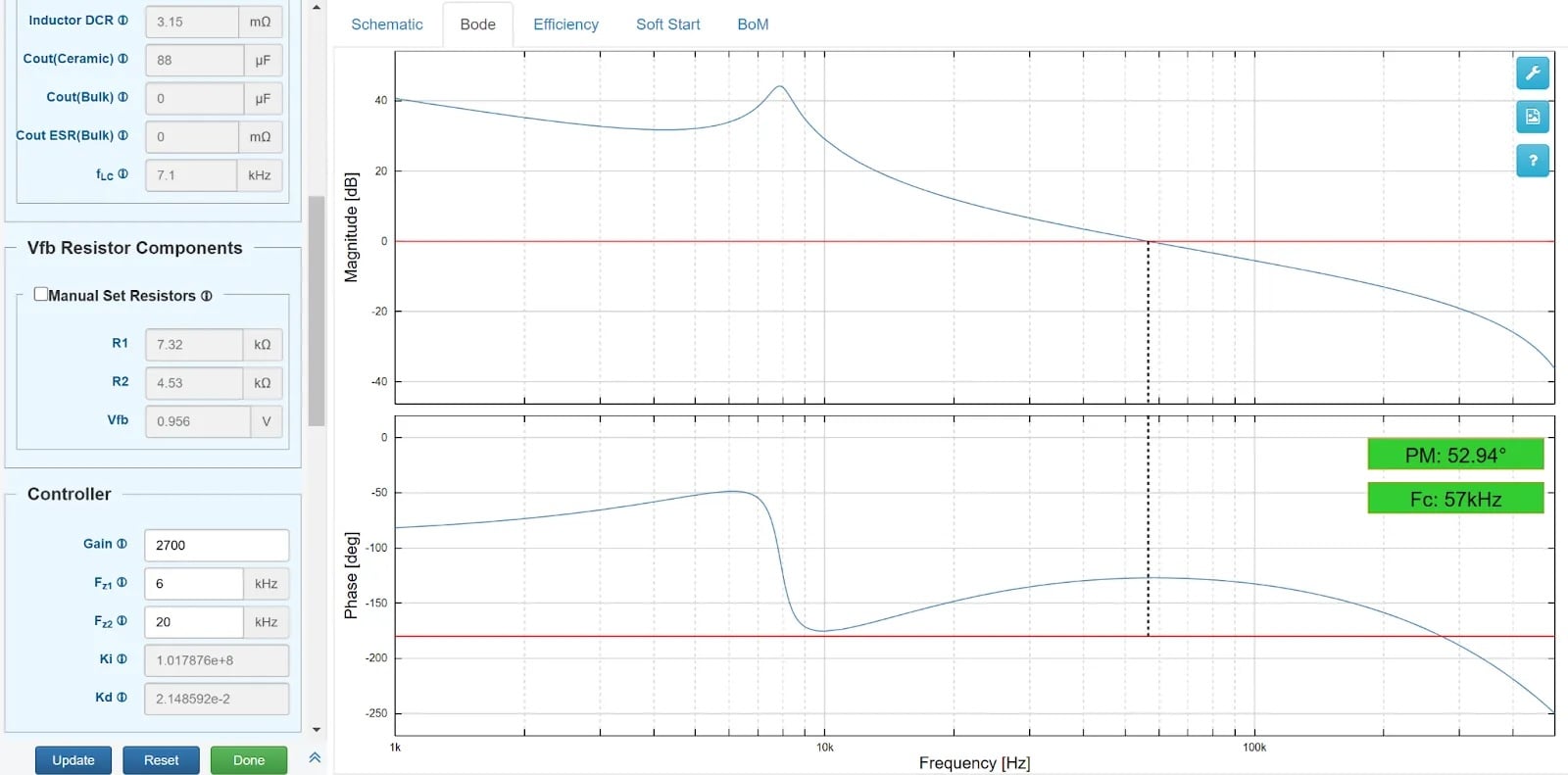
Figure 3. Compensation for the voltage regulators is set by PMIC.AI to ensure stability. [click to enlarge]
Step 3: View Chip Architecture
Users can dive deeper into their custom power solution by clicking “View Chip Architecture.” As shown in Figure 4, this creates a system design based on AnDAPT’s Adaptive Multi-Rail Power (AmP) platform.

Figure 4. Custom power system design including chip configuration and external passives. [click to enlarge]
Step 4: Download Design Files
Clicking “Compile” in the screen shown above in Figure 2 allows the user to download programming files for the AmP chip (AmP8DB6QF65). The block diagram of thie AmP IC is illustrated in Figure 5.
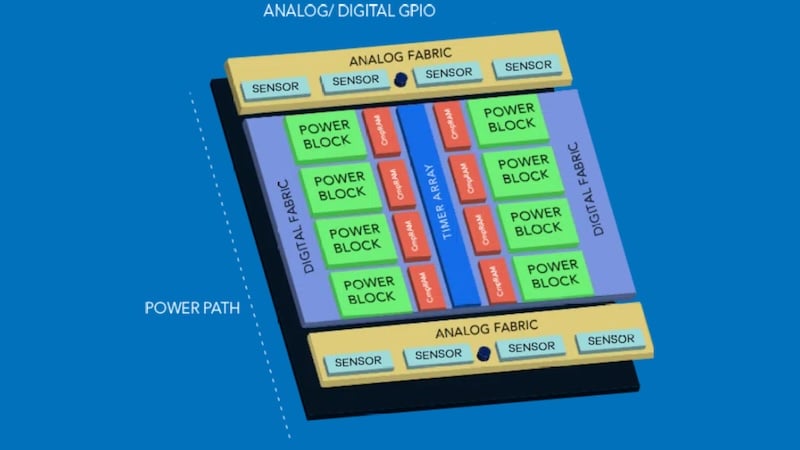
Figure 5. Adaptive Multi-Rail Power (AMP) platform for creating a custom PMIC.
The download files include checksum, .hax, and .hex files. In addition, a custom datasheet, BoM, and programming files are available for download. The AmP programming guide explains how to complete the programming operation.
Retrieval-Augmented Generation (RAG) and Fine-Tuning
PMIC.AI leverages advanced AI techniques, including Retrieval-Augmented Generation (RAG) and fine-tuning, to provide cutting-edge power management solutions. RAG empowers PMIC.AI to combine real-time data retrieval with generative AI models. It applies up-to-date contextual, authoritative, and proprietary knowledge lenses to the LLM response, enhancing accuracy and efficiency in tackling complex power design challenges.
The RAG process in PMIC.AI works as follows:
- Data Retrieval: The system retrieves relevant information from external sources like power design databases and component specifications.
- Contextual Integration: Retrieved data is processed and integrated into AnDAPT’s AmP chip architecture capabilities and proprietary knowledge database to provide context for the AI model.
- AI Generation: Based on the retrieved context, PMIC.AI generates outputs such as power tree designs, component recommendations, and optimization strategies.
Fine-tuning further enhances PMIC.AI’s performance by adapting the pre-trained model to specific power management tasks. This process involves:
- Selecting a pre-trained model aligned with power management domains.
- Preparing a dataset specific to power design tasks.
- Modifying the model architecture to suit specialized power management requirements.
- Training the model on the new dataset to adjust its parameters.
- Evaluating and optimizing performance for power design applications.
By combining RAG and fine-tuning, PMIC.AI can access up-to-date power engineering knowledge, adapt to specific design requirements, and generate more accurate and relevant power management solutions.
Mitigating AI Hallucinations
To ensure PMIC.AI’s reliability and accuracy, AnDAPT has implemented several strategies to mitigate AI hallucinations:
- High-Quality Training Data: PMIC.AI is trained on a comprehensive, curated dataset of power management designs, ensuring accurate and relevant outputs.
- Structured Data Templates: The system uses predefined formats for power design specifications, increasing output consistency and reducing errors.
- Clear Constraints: PMIC.AI operates within defined boundaries, using filtering tools and probabilistic thresholds to limit potential hallucinations.
- Advanced Reasoning Techniques: The system employs chain-of-thought reasoning, enabling complex reasoning capabilities through intermediate steps.
- Human Review: Expert engineers regularly review PMIC.AI’s outputs, providing an essential check on the system’s accuracy and reliability.
These strategies work in tandem with RAG and fine-tuning to produce highly accurate and dependable power management solutions, minimizing the risk of AI-generated errors in critical design processes.
PMIC.AI’s architecture goes beyond traditional design tools. By integrating AnDAPT’s proprietary design database with advanced machine learning models, the system can:
- Predict potential design challenges.
- Recommend the most efficient power conversion strategies.
- Optimize thermal performance.
The neural network continuously learns from each design iteration, meaning PMIC.AI’s recommendations become increasingly refined and intelligent over time.
The Future of Embedded Systems Power Design
As technology continues to evolve, PMIC.AI represents more than a tool — it’s a fundamental shift in engineering methodology. By dramatically reducing design cycles and enabling more sophisticated embedded systems, new AI-enabled tools like PMIC.AI will accelerate innovation across the semiconductor industry.
Ready to transform your power management design? Explore PMIC.AI and see how AI and AnDAPT are revolutionizing embedded systems engineering.
All images used courtesy of AnDAPT.
Related Content