Facebook
 Google
 GitHub
 Linkedin
The Evolution of Radar Technology: Shaping Autonomous Driving
Radar technology in vehicles has evolved from the early days of basic bulky sensors to the advanced 4D imaging radar and sensor fusion of today. Learn how the underlying technology is opening new capabilities.
Radar technology, originally developed for military applications, has come a long way since its inception. First designed to measure distance using electromagnetic waves, radar later advanced to determine speed and angle, becoming indispensable across industries like meteorology and maritime operations. Today, it is a cornerstone of autonomous driving technology.
In the automotive sector, radar’s ability to operate reliably in poor weather and low-light conditions has cemented its role in enhancing safety through Advanced Driver Assistance Systems (ADAS). Since its initial integration into vehicles in the 1960s, radar technology has evolved from bulky prototypes to compact, cost-effective sensors, powering features like adaptive cruise control and emergency braking.
As the automotive industry embraces the era of Software Defined Vehicles (SDVs), Automotive Emergency Braking (AEB) features’ importance continues to grow, driving its adoption across a wide range of vehicles.
Evolution of Automotive Radar, From Inception to Mainstream
Automotive radar systems have undergone significant evolution. Early research in the 1960s paved the way for the first road tests in the 1970s. By the 1990s, radar technology became more widespread, particularly in luxury vehicles, where features such as adaptive cruise control (ACC) and forward collision warning (FCW) were introduced.
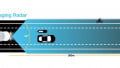
Today, radar sensors are compact and affordable, enabling their integration into vehicles across all price segments. These sensors use electromagnetic waves to detect objects’ distance, speed, and angle, ensuring reliable performance in all weather and lighting conditions. As a result, radar has become a foundational technology for making roads safer (Figure 1.
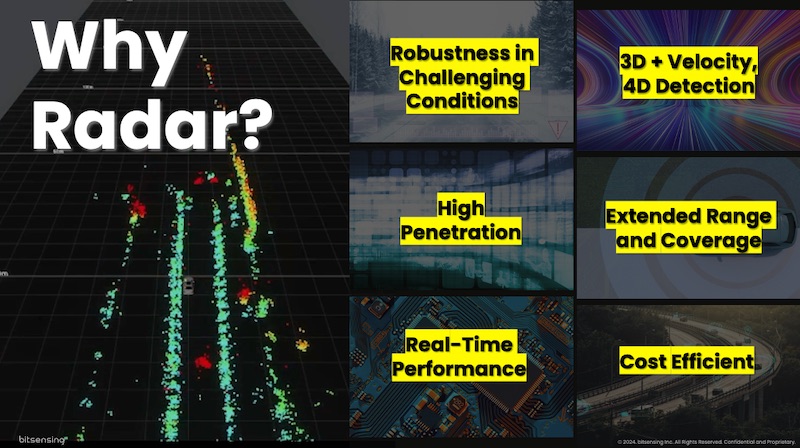
Figure 1. Radar technology enjoys a long and successful record in vehicles, and that trend continues in this era of 4D imaging radar and sensor fusion.
Technology Advances in Radar Systems
Radar technology has progressed through several transformative stages. Initially, 77 GHz radar was used for long-range detection, complemented by 24 GHz sensors for short-range applications. However, as the 79 GHz frequency band became more prevalent, radar systems improved in resolution and reduced interference.
Key advancements include the shift from GaAs-based RFICs to SiGe to CMOS semiconductors, which reduced costs and enabled smaller, more efficient sensors. Solid-state radar systems replaced mechanical scanning, ensuring greater durability in harsh environments.
Additionally, modern radar employs advanced modulation techniques like fast chirp Frequency Modulated Continuous Wave (FMCW), allowing for multi-dimensional data capture with unprecedented precision.
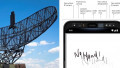
The introduction of 4D imaging radar, which adds vertical angle detection to traditional range, azimuth, and velocity dimensions, has further revolutionized the field (Figure 2). This breakthrough enables high-resolution environmental mapping, crucial for the perception algorithms that drive autonomous vehicles.
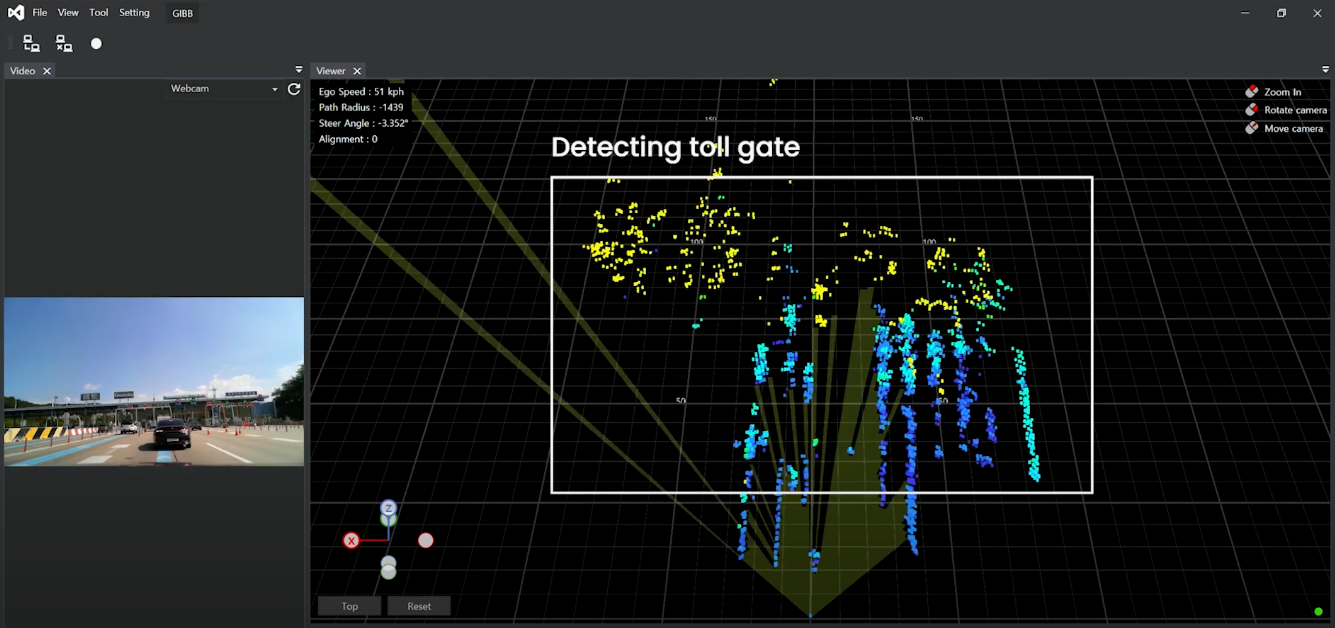
Figure 2. 4D imaging radar enhances the ability to do analysis such as detecting toll gates. (Click on image to enlarge)
Industry Trends and Applications
Radar remains a critical sensor for autonomous driving, even as LIDAR and camera systems gain prominence. Its ability to function without degradation in adverse weather or low light makes radar indispensable for creating safe and reliable autonomous systems. Furthermore, its affordability and robustness position radar as a complementary technology to more expensive LIDAR systems.
4D imaging radar, in particular, is paving the way for enhanced sensor fusion, combining radar data with inputs from cameras and other sensors to deliver a holistic view of the driving environment. This approach supports more sophisticated decision-making, bringing the industry closer to achieving full autonomy.
Overcoming Barriers to Autonomous Driving
While radar technology is advancing rapidly, several challenges remain for widespread adoption of autonomous vehicles. Legal and ethical questions, such as liability in accidents and insurance coverage, need resolution before autonomous driving can become mainstream. Moreover, affordability is a key factor, as cost-effective solutions are essential to making self-driving vehicles accessible to the public.
From a technical perspective, Software Defined Vehicles (SDVs) represent the future of autonomous driving. These vehicles centralize data processing from multiple sensors, enabling more accurate and efficient decision-making. Sensor fusion, which integrates radar with other technologies, is critical to this effort, allowing for robust and reliable performance in complex driving scenarios.
Fusing Imaging Radar with Camera Sensors
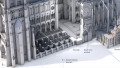
Among the critical advancements enabling the evolution of autonomous driving is sensor fusion, particularly in combining the strengths of imaging radar and camera systems to create a more comprehensive and resilient perception system (Figure 3). The fusion of these sensors represents a transformative step toward achieving safer and more efficient autonomous vehicles.
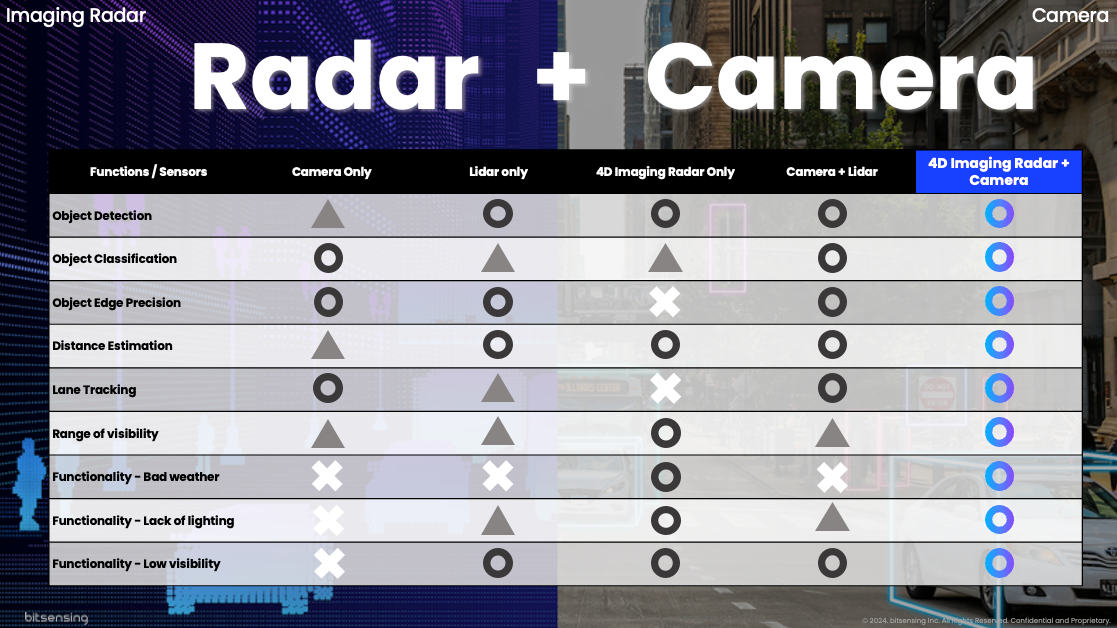
Figure 3. Sensor fusion enables imaging radar and cameras to fill each other's gaps. (Click on image to enlarge)
Advantages of Camera Sensors and Radar Sensors
Camera systems excel in capturing rich visual context, offering high-definition images that detail the environment. From recognizing road signs and traffic lights to identifying objects like pedestrians and cyclists, cameras provide essential visual information that enables autonomous vehicles to interpret the world around them.
Modern camera systems also benefit from cost efficiency, as technological advancements have made them more accessible and widely adopted in current vehicle models. These sensors power common features like lane-keeping assistance and backup cameras, making them a staple of driver-assistance systems.
All that said, cameras face limitations in adverse conditions such as fog, heavy rain, or low light, where visibility is compromised. Despite innovations like infrared illumination for nighttime operations, cameras alone may lack the reliability required for critical autonomous driving functions.
Advantages of Imaging Radar
Imaging radar, on the other hand, brings unique strengths that complement cameras, particularly its ability to operate effectively in challenging weather conditions. Unlike cameras, radar is not dependent on ambient light, ensuring reliable operation day or night.
Imaging radar also excels in generating accurate distance and velocity data, delivering a denser point cloud that provides richer context about the surroundings. This precision makes radar invaluable for detecting and tracking objects in real time, particularly in scenarios where cameras might struggle.
Perhaps most importantly, radar can validate and enhance camera data, creating a fail-safe mechanism that bolsters the reliability of object detection and decision-making processes.
The Case for Fusion: Bridging Gaps and Enhancing Capabilities
The fusion of imaging radar and camera sensors brings together their complementary strengths to create a robust perception system. Cameras excel at recognizing visual details, while radar provides precise distance and velocity measurements, even under adverse conditions. Together, these sensors offer a holistic view of the vehicle’s surroundings, enabling better situational awareness and more accurate decision-making.
Sensor fusion also enhances safety through redundancy. In critical applications like autonomous driving, the failure of one sensor can be mitigated by the other, ensuring continuous operation and reducing the risk of accidents. This collaborative approach minimizes errors and provides the robust reliability needed for autonomous vehicles to navigate complex, real-world environments.
The Future of Sensor Fusion
As sensor fusion technology evolves, the focus is shifting toward more sophisticated integration techniques. While current systems rely on high-level fusion, where data is processed separately and then merged, the future lies in low-level fusion. This involves combining raw data from cameras and radar early in the processing chain, offering a more unified and detailed representation of the environment.
Imaging radar is particularly poised to take on an even greater role as it approaches LiDAR-like accuracy with 4D point cloud data. This advancement not only enhances radar’s ability to compensate for cameras’ vulnerabilities but also reduces the reliance on more expensive and weather-sensitive sensors like LiDAR.
By integrating imaging radar and camera systems, autonomous vehicles are equipped with a sensory system capable of handling diverse and dynamic scenarios. This synergy will be instrumental in pushing the boundaries of autonomous driving, ensuring a future where vehicles can safely and efficiently navigate the complexities of real-world environments.
The Path Forward for Radar Technology
Radar remains a cornerstone of autonomous driving technology, continuously fueling innovation and contributing to safer roads. The ongoing advancements in 4D imaging radar and sensor fusion are poised to significantly enhance the capabilities of autonomous systems, bringing the industry closer to widespread adoption of fully autonomous vehicles.
As the demand for reliable and efficient solutions grows, the development of cutting-edge radar technologies is critical to meeting the needs of next-generation vehicles. By integrating these advancements into comprehensive autonomous driving systems, the future promises a reality where vehicles operate more safely and efficiently, transforming mobility for individuals and communities alike.
All images used courtesy of bitsensing