Facebook
 Google
 GitHub
 Linkedin
Top-Down vs. Bottom-Up: Charting a Path to Sub-GHz Deployment
Making informed choices about network ecosystems, protocols, and hardware is critical when developing large-scale IoT networks. Learn more in this article.
The first wave of the Internet of Things (IoT) was built on short-range technologies like Wi-Fi and Bluetooth, which limited its reach to a single home or building. A different class of connectivity is now emerging through Low-Power Wide-Area Networks (LPWANs) in the sub-GHz spectrum.
This new set of technologies is designed for power-efficient, long-range communication over kilometers and through dense obstacles. Where IoT connectivity once meant connecting a single thermostat, developers now discuss powering large-scale operational networks that link thousands of devices across public infrastructure, agricultural operations, and industrial parks.
The growing adoption of sub-GHz protocols enables these large-scale deployments through a combination of evolved network models, maturing standards, and reductions in long-range connectivity costs. Let's start with the network models.
From Public Infrastructure to Shared Communities
For product developers, this evolution creates a new set of choices. According to a 2023 Omdia research report on LPWANs (available on the Omdia website with a subscription), selecting the right network is the biggest concern of developers.
The selection process begins with understanding the two foundational network ecosystems now taking shape. On any given street, two different IoT networks are operating in parallel: the city's planned public infrastructure overhead, and the shared community network on the doorsteps below. The choice of which ecosystem you want to fit into is a critical first step. It can very quickly narrow down your selection and shape the entire product roadmap.
The Top-Down Model: Planned Public Infrastructure
The top-down model of planned public infrastructure was born from the high costs and scalability challenges of first-generation smart city deployments, which often required separate networks for things like streetlights and electric meters. To address these difficulties, municipalities are making a strategic shift. They are building standardized, interoperable backbones using standards like Wi-SUN—a mesh networking protocol focused on large-scale and multi-vendor interoperability.
While this technology was initially proven in smart utility deployments like water and gas metering, municipalities are now using the same Wi-SUN backbone for a broader range of smart city initiatives. These include:
- Traffic monitoring.
- Intelligent street lighting.
- Smart parking systems.
- Environmental sensors.
All of these provide cities with real-time data to improve public health and safety management. For city planners, widespread adoption represents a clear opportunity to deploy a single, unified network to manage all their services, streamlining operations and dramatically improving the return on investment. Even beyond the municipal sphere, applications are emerging in smart agriculture, industrial solar farm automation, medical asset tracking across healthcare campuses, and smart home networks.
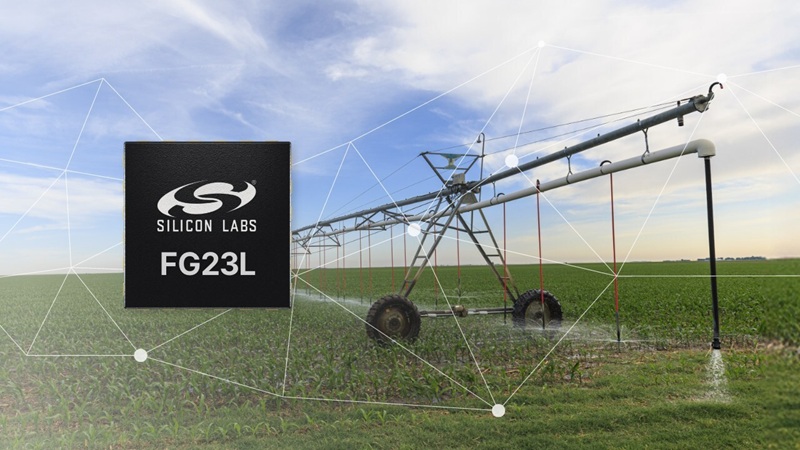
Smart agriculture is an application where technologies like Wi-SUN make sense.
The Bottom-Up Model: Shared Community Networks
While cities engineer networks from the top down, a different model is taking shape naturally within our communities. This bottom-up approach is exemplified by Amazon Sidewalk, a distributed star network that leverages a fabric of consumer devices as gateways. Built-in scalability is achieved by allowing users to opt in and share a small portion of their bandwidth. Each new device that joins organically strengthens and expands the community-wide network.
To build trust in this shared environment, Amazon Sidewalk relies on very robust security. A message is wrapped with an application key, then a network key, and finally a gateway key to ensure privacy.
Evolving Standards and the Interoperability Question
The evolving network landscape is prompting established standards, long trusted within the home, to adapt for long-range applications. Z-Wave, for instance, has evolved beyond its traditional mesh with the introduction of Z-Wave Long Range. By adding a star network topology, Z-Wave Long Range extends its communication range to approximately 1.5 miles and increases network capacity to over 4,000 nodes.
Developers must choose their interoperability path. One approach is to use standards-based protocols like Z-Wave or Wi-SUN. These protocols rely on formal certification programs in which devices are tested and validated to guarantee they work together regardless of manufacturer. This testing process is critical for future-proofing. It also means that choosing a standards-based protocol typically ensures multi-vendor support.
The choice of standard directly impacts the long-term viability of a product. As some standards sunset older generations, devices can end up orphaned in the field. Furthermore, as IoT networks handle more mission-critical applications, security becomes a primary concern. Developers need to weigh the public, certificate-based authentication common in standards against the tightly controlled security of a proprietary solution.
In addition to tighter security, proprietary solutions may also offer deeper optimization for a specific use case. However, they can result in what's known as a walled garden: a closed ecosystem where the owner restricts which devices can connect and therefore limits interoperability.
With network and protocol choices in place, the remaining challenge becomes selecting hardware that can cost-effectively support these sub-GHz implementations at scale. We'll discuss this in the next section.
Breaking the Cost Barrier
Even with the right sub-GHz network and protocol choices, long-range IoT deployments could not achieve scale without making the underlying technology affordable. Instead of over-engineering products with expensive, feature-rich chips, developers can now select from a portfolio of solutions tailored to their specific market.
The Silicon Labs FG23L, for example, integrates a high-performance 78 MHz Cortex-M33 core with a high-efficiency radio, enabling devices to deliver over a 10-year battery life and up to twice the range of comparable solutions. This sub-GHz SoC can also achieve high output power (up to +20 dBm) without an external power amplifier, a design choice that directly reduces the system's bill of materials and complexity.
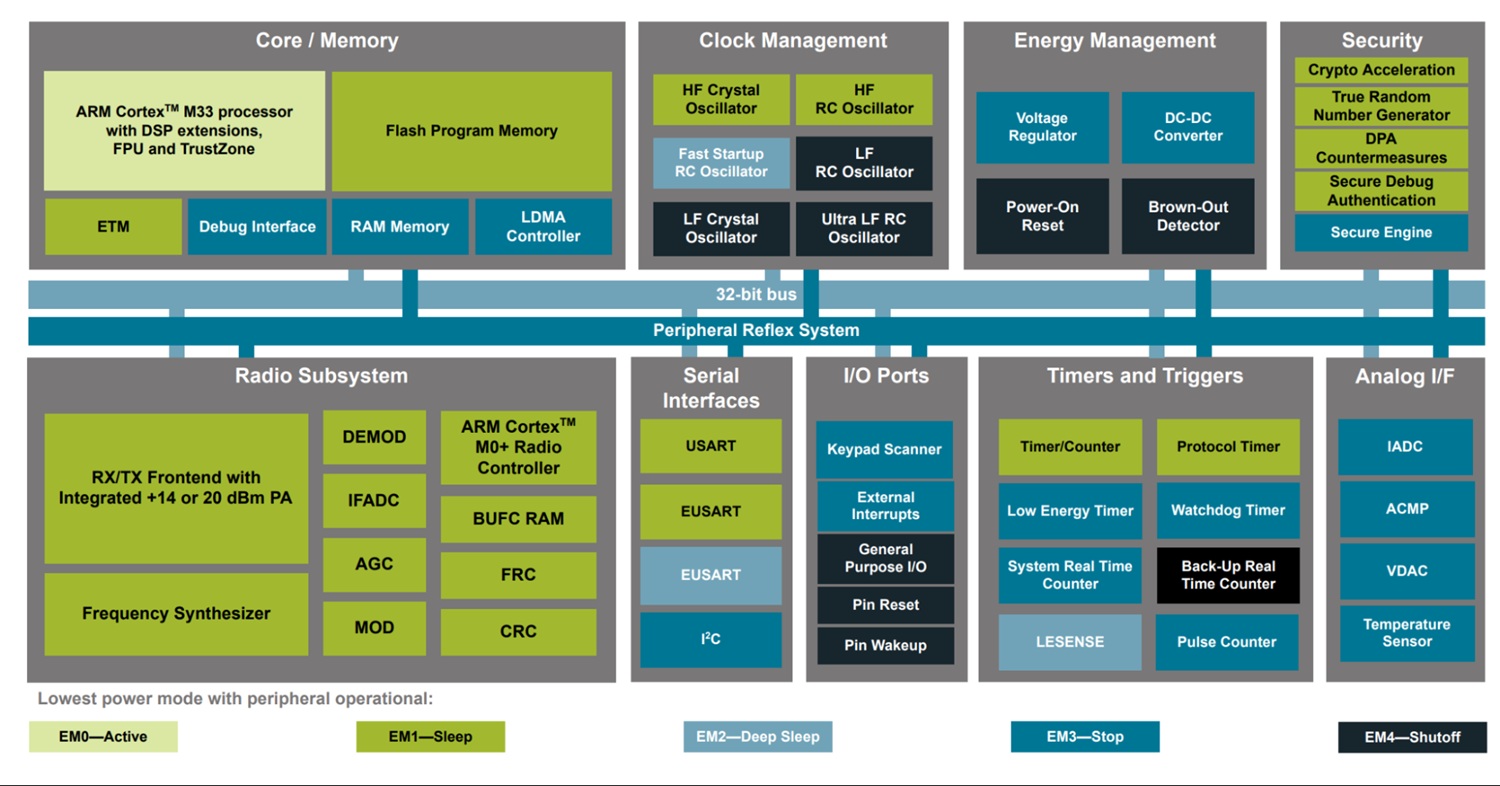
[click to enlarge] Block diagram of the Silicon Labs FG23L.
A key feature of the FG23L series is that different chips share the same pin layout and can be swapped on a single board design. This strategy of scaling a single design for different features and cost requirements is unlocking high-volume markets.
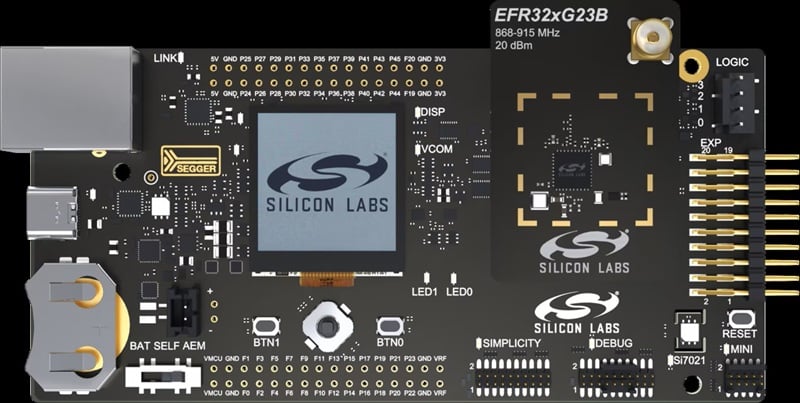
Chips in the FG32L series can be swapped on the same board design.
From a Technical Problem to a Business Solution
The sub-GHz landscape has matured from solving technical challenges to optimizing business outcomes. The availability of cost-optimized hardware introduces the final, practical consideration: aligning the hardware choice with the business case. Success now depends on making informed choices about network ecosystems, balancing standards-based interoperability with proprietary optimization, and selecting cost-effective hardware that can adapt to evolving requirements.
For developers entering this space, the key is not finding the perfect technology, but rather identifying the optimal compromise between ecosystem fit, long-term viability, and market-specific cost targets. This strategic approach to sub-GHz development, where hardware flexibility enables protocol adaptability, is what will ultimately determine which IoT deployments scale from small-scale deployment to mass market adoption.
Learn more about how Silicon Labs' sub-GHz solutions and development tools can help you navigate these choices here.
All images used courtesy of Silicon Labs
Related Content