Facebook
 Google
 GitHub
 Linkedin
Why Smart Meter Accuracy Starts With Embedded Design
Unreliable data is a serious problem for smart meters. This industry article explains why, and presents a solution in the form of embedded software.
Smart meters are key to the global smart energy infrastructure. From utilities to original equipment manufacturers (OEMs), stakeholders across the energy ecosystem count on smart meters to collect, store, and transmit accurate data without failure for up to a two-decade lifespan. When inaccurate or incomplete data slips under the radar, the consequences range from frustrated customers to regulatory non-compliance. Unfortunately, unlike total device failure, it’s relatively easy for unreliable data to go undetected.
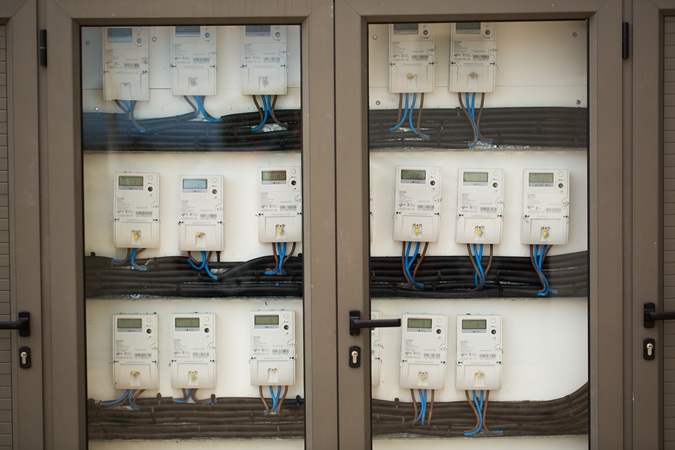
Smart meters are expected to last for close to 20 years. Image used courtesy of Adobe Stock
In this article, we’ll discuss the major causes and primary effects of data failure in smart meters. We’ll then explore a potential solution for the next generation of devices. As we’ll see, design decisions at the software level are often the source of the problem—and they may be the solution as well.
What Causes Data Failure?
At the core of many smart meter failures is the flash memory (typically NAND) that stores metering logs, firmware updates, event records, and diagnostics. As flash has a limited number of write/erase cycles, the memory wears down with every new data entry. Moreover, every write generates obsolete data that must later be cleared in a process called garbage collection. This background operation intensifies wear, especially if standard file systems are used that aren’t optimized for flash memory.
As a result, meters begin to experience silent data corruption after a few years—long before their intended lifespan. In fact, field data has shown that many smart meters fail not because of complete breakdowns, but due to gradual, undetected degradation in data reliability.
In addition to flash wear, smart meters face pressures from power loss and voltage fluctuations. If a meter loses power mid-write, it also risks data corruption.
The Business Impact of Data Inaccuracy
For utilities, the consequences of inaccurate or missing smart meter data are serious. In systems where integrity checks or redundancy aren’t built in at the software level, the corrupted data can go undetected until it creates a customer billing error or causes a failed compliance audit. Frustrated customers who receive inconsistent bills are more likely to contact support centers, increasing operational workload and raising the risk of customer churn. Over time, such issues erode public trust in both the utility and the broader smart infrastructure.
The regulatory stakes are also high. Across markets, national energy regulators enforce rigorous accuracy standards for smart meters, often backed by fines and audits. Smart meter data also underpins utility ESG (environmental, social, and governance) reporting, which records carbon accounting, energy efficiency, and resource conservation. Poor data integrity directly threatens a utility’s ESG performance, potentially affecting investor perception and broader reputational value as well as access to green financing.
From an operational standpoint, identifying and replacing underperforming meters is both time- and cost-intensive. The cost of replacing a smart meter is up to $500 per device; for larger replacement programs, the costs can reach millions of dollars. Dispatching field engineers to investigate suspected faults incurs not only operational costs but also travel expenses, inventory impacts, and administrative overhead, especially when thousands of deployed meters are affected.
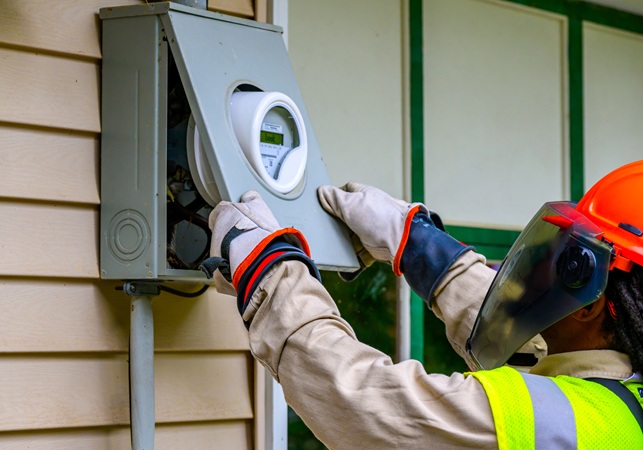
Dispatching field engineers to fix smart meters can quickly grow costly. Image used courtesy of Adobe Stock
Designing the Next Generation of Smart Meters
Many metering vendors attempt to address resilience by increasing hardware capacity, for example by adding larger flash memory to accommodate frequent data backups. However, this approach raises the bill of materials by $1–$5 per device and adds unnecessary hardware complexity. A more efficient alternative is to engineer resilience through software, using lightweight, embedded systems designed to maximize data integrity, fault tolerance, and storage efficiency without inflating hardware costs.
Flash-aware, transactional, copy-on-write file systems are essential here. Tuxera’s solutions manage flash wear, handle high-frequency data logging, and recover rapidly from sudden power losses. Unlike traditional journaling file systems, which require time-consuming replays on every reboot, these file systems can recover in as little as 20 ms while maintaining 100% data integrity, even after enduring a large number of power interruptions. This enables accurate billing and immediate service resumption, no matter how unstable the grid environment may be.
Our file systems achieve this resilience through dynamic transaction points and copy-on-write mechanisms. These techniques safeguard the consistency of both metadata and user data. They ensure that the system can always return to a known good state without lengthy disk checks or manual intervention, minimizing downtime and service disruption.
Importantly, these file systems are designed for minimal resource use. In the highly constrained environments typical of smart meters, solutions like the Tuxera Edge File System can operate with as little as 4 KB of RAM and 11 KB of ROM, delivering robust performance without demanding additional hardware or expanding the device footprint.
Many smart meters run on proprietary or real-time operating systems, including custom variants developed by OEMs. Because of this, file systems must be portable and easily adaptable to diverse platforms. This gives OEMs greater flexibility to modify or upgrade their hardware designs without having to overhaul their file systems or embedded software.
While porting may still be required, using a portable file system reduces reliance on in-house development and minimizes the engineering overhead. By relying on proven, adaptable file system architectures, manufacturers can streamline integration, avoid costly re-architecture, and accelerate time-to-market while maintaining system reliability.
Overall, these software solutions enable smart meter manufacturers to extend device lifespans from 18 years to over 30 years, significantly reduce maintenance costs and unexpected replacements, and ensure consistent, reliable data accuracy throughout the meters’ operational life. This helps utilities and OEMs stay compliant with evolving regulatory demands and meet their long-term ESG commitments.
Key Takeaways
As the energy and water sectors become increasingly digital, resilient embedded design will determine which smart meter manufacturers lead the field. For engineers, this calls for a shift to a systems-level mindset that treats software not as an afterthought but as a core enabler of device performance and longevity.
For business leaders, it means treating data integrity not as a technical challenge but as a business-critical capability. By embedding intelligence into the heart of smart meters, the industry can reduce data errors and deliver on the full promise of infrastructure modernization.