Facebook
 Google
 GitHub
 Linkedin
Amazon Debuts Its First Quantum Computing Chip for Error Correction
Ocelot uses bosonic cat qubits to correct errors with just nine physical qubits per logical qubit—far fewer than traditional surface codes.
Quantum computing has long been held back by a critical issue: error rates. Unlike classical computers, where digital bits are stable, quantum bits (qubits) are fragile and susceptible to decoherence from even the smallest environmental disturbances. Current approaches to building large-scale quantum computers rely on quantum error correction (QEC), but traditional QEC requires a prohibitive number of physical qubits.
Amazon Web Services (AWS) has entered the race with a novel approach: Ocelot, a prototype quantum computing chip developed at the AWS Center for Quantum Computing at Caltech. Ocelot introduces bosonic cat qubits—a special type of qubit that inherently suppresses errors—combined with an innovative hardware-efficient error correction scheme.

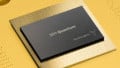
The Ocelot quantum chip.
AWS claims this design could reduce quantum error correction overhead by up to 90% compared to conventional methods, significantly accelerating progress toward fault-tolerant quantum computing.
Built on Bosonic Cat Qubits
Ocelot is built on superconducting bosonic cat qubits, which encode quantum information in a way that naturally suppresses bit-flip errors. The chip consists of five cat qubits that serve as the primary information storage units, leveraging bosonic encoding to minimize bit-flip errors. Five buffer circuits apply two-photon dissipation to stabilize the cat states, preserving coherence. In addition, four ancilla qubits, implemented as transmon qubits, detect and correct phase-flip (Z) errors, ensuring overall stability.

The pair of silicon microchips that compose the Ocelot logical-qubit memory chip.
A key design feature of Ocelot is its chip stack integration. It employs a two-layer bonded silicon microchip design using flip-chip technology, enabling scalable manufacturing while maintaining quantum coherence. Another critical component is its use of superconducting tantalum resonators, developed specifically to enhance coherence times and contribute to high-fidelity quantum operations. By embedding error correction mechanisms into its fundamental architecture, Ocelot reduces the need for excessive physical qubits and paves the way for a more efficient approach to quantum computing.
Overcoming Environmental Sensitivity
Quantum computing is highly susceptible to environmental noise, which can cause errors in qubit states. Ocelot mitigates this challenge through its cat qubit stability, with bosonic encoding inherently suppressing bit-flip errors and significantly reducing external error correction requirements. The implementation of two-photon dissipation further extends coherence time and prevents decoherence. Flip-chip integration helps reduce interference and improves coherence times through advanced packaging techniques, ensuring that environmental disturbances have minimal impact.

Pictorial representation of the logical qubit as implemented in the Ocelot chip.
AWS' approach to quantum error correction differs from traditional surface codes by using a one-dimensional repetition code with a strong noise bias. Unlike conventional methods that require 49 physical qubits to create a single logical qubit, Ocelot's bit-flip (X) errors are inherently suppressed, and phase-flip (Z) errors are corrected using a repetition code. This means that logical qubits in Ocelot require only nine physical qubits—five data qubits and four ancilla qubits—making it significantly more hardware-efficient.
Technical Achievements and Performance Benchmarks
AWS has reported several key technical milestones with Ocelot, demonstrating its effectiveness. One of the most significant achievements is its record-long bit-flip stability. The cat qubits in Ocelot maintain bit-flip stability for nearly one second, far surpassing traditional transmon qubits, which typically have coherence times in the range of 50 to 100 microseconds. Additionally, Ocelot achieves a phase-flip time of approximately 20 microseconds, ensuring that cat qubits remain operational within their coherence window and maintain a balance between bit-flip suppression and phase-flip error correction.
Another critical milestone is the demonstration of the repetition code. A distance-5 repetition code showed a reduction in logical phase-flip error rates, confirming that increasing the code length improves error correction efficiency. Ocelot also achieves a 90% reduction in quantum error correction overhead compared to traditional methods, significantly reducing the number of qubits needed for logical encoding. The bonded-chip architecture further validates the feasibility of integrating multiple Ocelot modules while maintaining quantum coherence, which is essential for scalability.
These performance benchmarks illustrate Ocelot's potential to reshape quantum error correction by making it more hardware-efficient and scalable. By reducing the number of qubits required for fault tolerance, Ocelot could lead to more practical quantum systems that can solve complex computational problems.
The Outlook for Ocelot and AWS Quantum Computing
AWS has outlined a roadmap for advancing Ocelot beyond its current prototype stage. One key focus is expanding the code distance by increasing the number of cat qubits in the repetition code. Doing so will further reduce logical error rates and enhance qubit stability. Another priority is transitioning from a single logical qubit to a multi-logical qubit system, allowing for more complex quantum computations. To achieve this, AWS plans to develop methods for interconnecting logical qubits within a scalable modular architecture.
Improving fabrication techniques will also be crucial for Ocelot’s future development. AWS is working on enhancing superconducting resonators and buffer circuits using materials such as tantalum to extend qubit coherence times. Advances in flux biasing and control electronics could further optimize cat qubit performance. Additionally, AWS is expected to integrate Ocelot into its cloud computing ecosystem through Amazon Braket, enabling researchers and enterprises to experiment with quantum error-corrected computations in real-world applications.
In contrast to competing quantum computing approaches from IBM, Google, and IonQ, Ocelot takes a distinctive path by focusing on cat qubits and bosonic error correction. Unlike IBM and Google, which rely on surface codes requiring large numbers of qubits, or IonQ, which uses trapped-ion qubits, AWS' approach offers a potentially more efficient and scalable alternative. If successfully scaled, Ocelot could accelerate the timeline for practical quantum computing by up to five years, significantly impacting fields such as cryptography, pharmaceuticals, and financial modeling.
All images used courtesy of Amazon.