Facebook
 Google
 GitHub
 Linkedin
A Reflection on Merrill Skolnik, Radar Technology Pioneer
Behind the foundational and advanced radar textbooks of our day stood the brilliant engineer and researcher Merrill Skolnik.
Merrill Skolnik was a prominent American radar researcher and the author of many standard texts in the field. He is best known for his introductory text, “Introduction to Radar Systems,” and for editing the “Radar Handbook”. His work paved the way for significant innovations in electrical engineering education and radar systems.
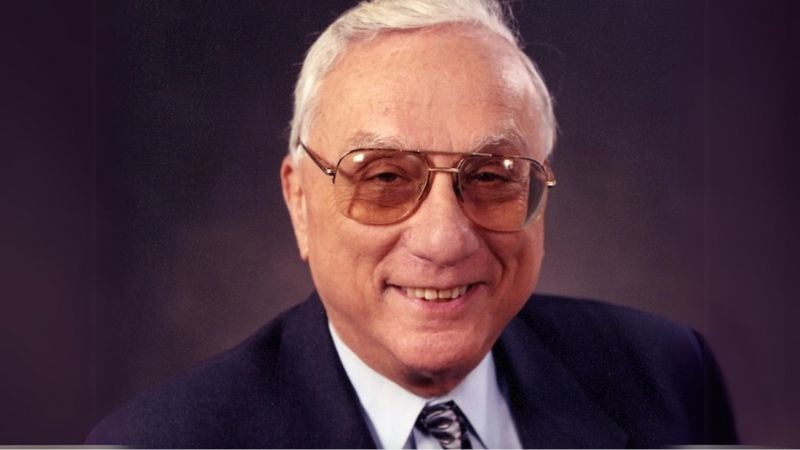
A photograph of Merrill Skolnik. Image (modified) used courtesy of the IEEE History Center
Developing Radar Systems for the U.S. Government
Skolnik was born in East Baltimore and studied engineering at Johns Hopkins University, completing his studies in electrical engineering to a doctorate level.
His undergraduate education began during World War II when the university’s electrical engineering department primarily focused on power systems. However, Skolnik recognized the emerging importance of microwaves and electronics in the post-war era.
To compensate for the limited exposure to these new fields in his formal education, he supplemented his studies by working at the Johns Hopkins Radiation Laboratory. His time in the laboratory helped bridge the gap between the university’s power-focused curriculum and the then relatively nascent field of microwaves and electronics. It provided him with practical exposure to classified work for the U.S. Navy and Air Force, including research on proximity fuses for air defense and electronic countermeasures. This experience laid the groundwork for his lifelong contributions to radar.
“When I was a graduate student in the late 1940s, most of us wanted to work in microwaves when we graduated rather than in power engineering, which was the field of interest of most of the electrical engineering faculty,” Skolnik said in an interview with the IEEE History Center. “Things change and now almost everyone wants to work in computers. With the downsizing in the 1990s, the merger of many defense companies, and the loss of experienced radar engineers, there has been a reduction in what is being done in radar. However, there are some interesting and important areas of activity.”
By the mid-1950s, Skolnik had joined MIT’s Lincoln Laboratory, where he worked on the first operational bistatic radar system for the Distant Early Warning (DEW) line, used to detect potential threats across vast polar regions. He later expanded his expertise at Electronic Communications Inc. and the Institute for Defense Analysis, focusing on missile defense, antenna systems, and phased arrays.
Leading the Radar Division at the Naval Research Laboratory
Skolnik became Superintendent of the Radar Division at the Naval Research Laboratory (NRL) in 1965. There, he was responsible for several innovations that significantly enhanced military radar capabilities, including:
- Over-the-horizon (OTH) radar: This system detects targets like aircraft and ballistic missiles well beyond traditional radar’s range, using high-frequency signals that bounce off the ionosphere.
”In the early 1960s, NRL figured out how to separate the aircraft echoes you want to see from the large ground echoes you don’t want,” Skolnik said. “Other organizations had tried to make a long-range OTH radar, but NRL succeeded.”
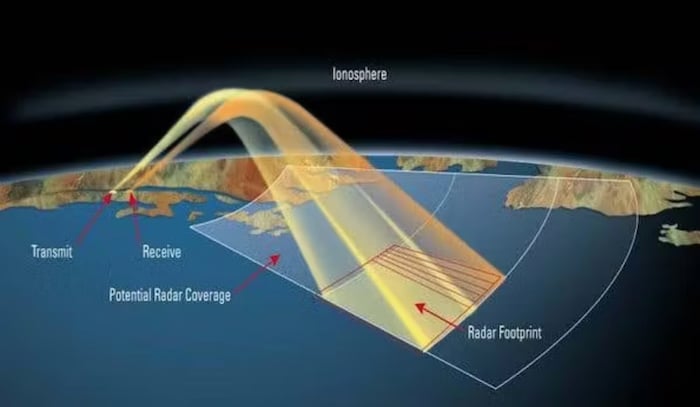
Diagram of an over-the-horizon radar. Image used courtesy of the Military and Aerospace Electronics
- Inverse synthetic aperture radar (ISAR): Originally developed for submarine detection, ISAR provides high-resolution imaging for maritime and air surveillance. They typically operate in the microwave frequency range, enabling all-weather, day-and-night operation.
- Identification friend or foe (IFF) systems: Skolnik refined combat identification technology to develop IFF systems, which use spread spectrum techniques to transmit data on existing 1030- and 1090-MHz ATC frequencies without increasing interference.
- Counter-stealth radar: As stealth aircraft became more advanced, Skolnik's concepts allowed radar systems to detect low-observable targets. His work explored lower-frequency bands (VHF and UHF), which are more effective against stealth aircraft designed primarily to defeat higher-frequency radar.
In 1986, Skolnik was elected a member of the National Academy of Engineering for advancing radar technology and leading radar research and development. Skolnik worked at the NRL until his retirement in 1996.
An Educator at Heart
Skolnik’s influence wasn’t limited to his technical innovations. He was an educator at heart. His book, “Introduction to Radar Systems,” became the go-to text for students interested in radar technology. He also edited the “Radar Handbook,” a comprehensive reference material for professionals, and “Radar Applications,” which explored specialized uses of radar systems. Through these works and over one hundred published articles, book chapters, and presentations, he played a fundamental role in shaping our understanding and application of radar technology.
Over the course of his research, Skolnik developed an advanced comprehension of radar that even experts in the fields grappled to understand. In an interview with the IEEE History Center, Skolnik recounted an experience teaching a radar course at Northeastern University to solely Raytheon employees. Skolnik glossed over the concept of FM/CW systems, assuming that the engineers in attendance who had worked on Raytheon's HAWK air defense system would be well-versed in the technology.
“I said something like, 'FM/CW is the basis for the HAWK air-defense system,'” Skolnik reflected. “The brightest student in the class raised his hand and said, 'I work on the HAWK, but I don't know what [a FM/CW system] is. Could you tell me about it?'”
Skolnik's Lasting Waves in Radar
After retiring from the NRL in 1996, Skolnik remained active in the radar community. He consulted for NRL, edited the Proceedings of the IEEE, and led the IEEE Radar Systems Panel. His contributions earned him numerous accolades, including the IEEE Dennis J. Picard Medal in 2000 for his pioneering radar contributions.
Much of his work is still relevant today. Concepts from OTH radar, for example, were incorporated into Airborne Warning and Control Systems (AWACS), essential for tactical air defense, and his technical insights and theory directly led to the implementation of missile early warning systems, including the RCA 474L Cold War-era Ballistic Missile Early Warning System.
Skolnik died in January 2022 at the age of 94.
“I think radar is a very important system application of electrical engineering. Almost every aspect of electrical engineering enters into radar,” Skolnik said. “There is still a lot more out there that can be done, and I hope that it will eventually happen.”