Facebook
 Google
 GitHub
 Linkedin
Spinning Disks Sputter as AI Heats up Data
AI-driven data demands are outpacing traditional HDDs. System developers must migrate to high-performance, secure, and efficient NVMe SSDs to scale for AI workloads.
As artificial intelligence (AI) raises the temperature of warm data, hard disk drives (HDDs) are struggling to keep up with climate change—they’re no longer able to meet most nearline application storage needs as every data center becomes an AI data center.
Enterprises and AI data centers must begin to migrate to flash-based Solid State Disks (SSDs) for applications that spinning disks have traditionally served.
But performance and capacity requirements aren’t the only reasons nearline application storage should be migrated to SSDs—they also offer features that make storage more intelligent and responsive in AI data centers.
AI Ups the Value of Warm Data
Data centers have traditionally utilized HDDs for both "cold" and "warm" data storage, while SSDs have quickly become the preferred medium for "hot" data. Figure 1 illustrates the relationship between each data type and its corresponding storage option.
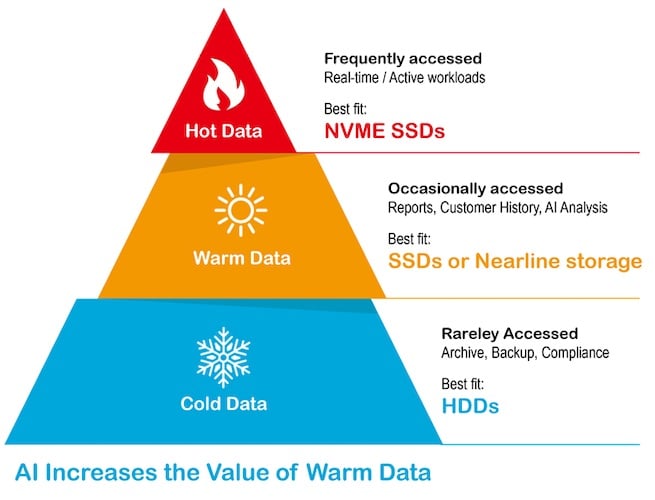
Figure 1. This diagram illustrates that solid-state drives (SSDs) are the most suitable storage option for active AI workloads.
Infrequently accessed or rarely used data is considered cold and relegated to HDDs because HDDs offer a low cost per terabyte. Warm data is accessed more frequently—monthly reports, quarterly financials, and historical records that are needed for long-term analysis or compliance but don’t require immediate, daily access.
The rapid emergence of AI, however, has made HDDs less optimal for warm data tiers—AI and machine learning tools have made it easier to analyze warm data to gain insights that support strategic forecasting and the identification of business opportunities.
But mechanical, spinning disks can’t meet the extreme speed, concurrency, and efficiency demands of modern AI training and inference. Figure 2 shows that random read and write speeds are significantly slower than those of SSDs.
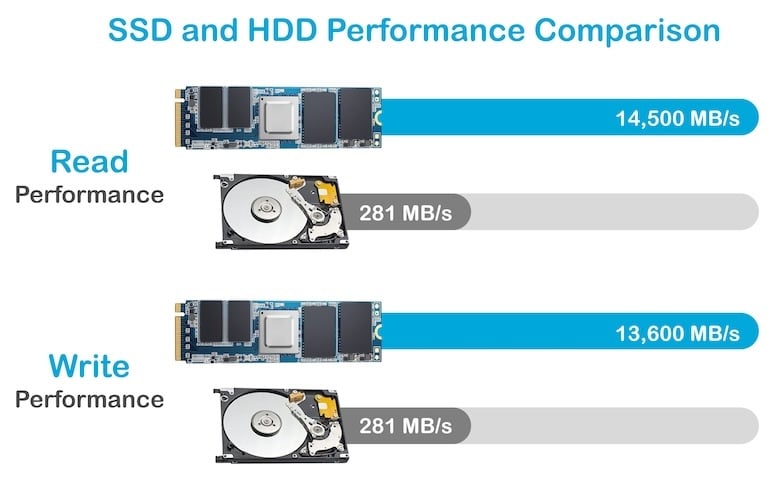
Figure 2. This compares the read and write speeds between SSDs and HDDs.
Enterprise AI applications that draw on warm data can exhibit unpredictable access patterns, and HDDs often lack the latency and throughput to meet operational needs. The result is a noticeably slower user or application experience during queries or data retrieval. Poor random-access performance, low IOPS, and inability to scale ultimately make HDDs inadequate for AI workloads.
Frequent access to HDDs and sustained workloads can increase mechanical wear and operating temperatures—accelerating hardware failure, reducing drive life, and increasing the risk of data loss or downtime if not properly managed. HDDs also consume significantly more power per terabyte than SSDs and require more cooling infrastructure.
AI Workloads Expect More From Nearline Storage
As warm data becomes increasingly more important for AI workloads and analytics, query and transaction-heavy applications need the low latency and high throughput that only an enterprise SSD can deliver.
These AI workloads also demand reliability. Because flash-based SSDs have no moving parts, they have a longer lifespan than spinning disks—the likelihood of mechanical failure is greatly reduced.
SSDs also consume less power and generate less heat. Their lower energy use, reduced cooling requirements, and longer service life lead to lower total cost of ownership (TCO) over time. SSDs are also more scalable due to their space efficiency and form factors that support high-density configurations, improving data center footprint efficiency.
But it’s not just performance and reliability that make SSDs better for nearline storage—they also offer other features that are valuable to enterprises as their businesses become more AI-focused.
AI Raises Security Standards for Warm Data
SSDs have their own intelligence that makes them better suited for enterprise data center AI workloads than HDDs.
Warm data already represents valuable intellectual property—its transformation by AI increases its value, so its integrity must be protected. SSD security features provide robust protection for sensitive data. They help to ensure regulatory compliance, maintain data integrity, and minimize performance overhead in high-throughput environments.
Hardware-based encryption equips SSDs with security features that don’t impact the host CPU or reduce the throughput and latency required by intensive AI and ML tasks. SSDs can also support authentication mechanisms and integrity checks to protect data from unauthorized alteration, malware, or corruption—bolstering the reliability vital to AI applications, which depend on consistent, accurate datasets for training and inference.
Silicon Motion implements SSD security with a complete stack that includes hardware AES-256 encryption, TCG Opal/eDrive support, secure firmware/boot, and end‑to‑end data path protection. Our approach is to lean into hardware‑rooted protections and verified security features for all our SSDs.
Error correction code (ECC) in SSDs also ensures data integrity and reliability for AI workloads—it maintains the accuracy and stability of AI processes by preventing data corruption that could lead to computation failures or inaccurate model training.
Additional protocols and tools available in SSDs offer even more capabilities to help future-proof enterprise data centers as they continue to evolve in the AI era—but not all SSDs are created equal.
NVMe Enhances SSDs' Scalability and Responsiveness
SSDs were originally at the mercy of HDD architecture until the emergence of the Non-Volatile Memory Express (NVMe) protocol.
NVMe SSDs include data protection and wear-leveling mechanisms that enhance their reliability under intense, data-heavy AI workloads. They also enable faster training and inference by reducing bottlenecks, leveraging the Peripheral Component Interconnect Express (PCIe) bus to maximize throughput and minimize wait times for data access—essential for AI processes that require frequent, rapid retrieval of large volumes of data.
NVMe’s parallelism allows multiple simultaneous I/O operations, keeping GPUs utilized and reducing idle time, thereby accelerating the training and deployment of AI models.
NVMe also makes it easier to quickly and dynamically scale up storage by expanding data pools and expanding new volumes—growing datasets across the AI pipeline can be managed efficiently without storage controller bottlenecks. More advanced features of the protocol, such as NVMe-over-Fabrics (NVMe-oF), enable distributed, composable storage architectures that can be easily adjusted to meet the needs of the storage environment, including AI workloads.
Beyond NVMe, the Open Compute Project (OCP) enhances hardware efficiency, scalability, and security, which are crucial for AI workloads. The OCP is also facilitating the development of cooling solutions using open-hardware designs optimized for SSD arrays. The rapid emergence of the Compute Express Link (CXL) protocol will further enhance SSDs' ability to make warm data more accessible to AI workloads by enabling them to act as a memory extension over the PCIe bus.
Enterprise organizations that are increasingly tapping into nearline data for AI workloads should consider these capabilities when migrating from HDDs to SSDs. Future-proofing their storage infrastructure to meet AI demands is just as important as meeting immediate demands.
Silicon Motion distinguishes its SDDs for AI workloads through specialized controller technologies and platform-level solutions that improve performance, efficiency, and data integrity for both enterprise and edge deployments.
Silicon Motion Layers on Additional Capabilities for AI Workloads
Silicon Motion’s MonTitan PCIe Gen5 platform was designed for forward-looking enterprises that recognize the need to adopt SSDs to efficiently mine warm data. It was engineered for high-throughput, low-latency data handling—a necessity for AI training and inference that sets it apart.
Capacity-wise, MonTitan supports 128TB QLC SSDs across a variety of form factors to help manage the vast amount of warm data that’s increasingly fueling AI training and inference datasets. To meet AI performance demands, the platform includes Silicon Motion’s SM8366 and SM8388 PCIe Gen5 x4 NVMe SSD controllers, which offer up to 25% better random read performance, helping reduce training times.
MonTitan‑enabled SSDs have demonstrated better than 14 GB/s sequential read and approximately 3M random read IOPS—which exceeds the performance of other PCIe Gen5 enterprise SSDs. Independent reviews of MonTitan SSDs show significant random-read performance and strong low‑queue‑depth performance.
MonTitan supports OCP and NVMe 2.0 standards, integrating a custom ASIC and NVMe-optimized firmware, while also layering additional intelligent features to help enterprises keep pace with the rapid evolution of AI data centers.
The platform includes Flexible Data Placement (FDP) technology, shown in Figure 3, which optimizes data layout to reduce write amplification and improve endurance and efficiency, addressing the erratic I/O patterns typical of AI workloads—in addition to the features within the NVMe protocol.
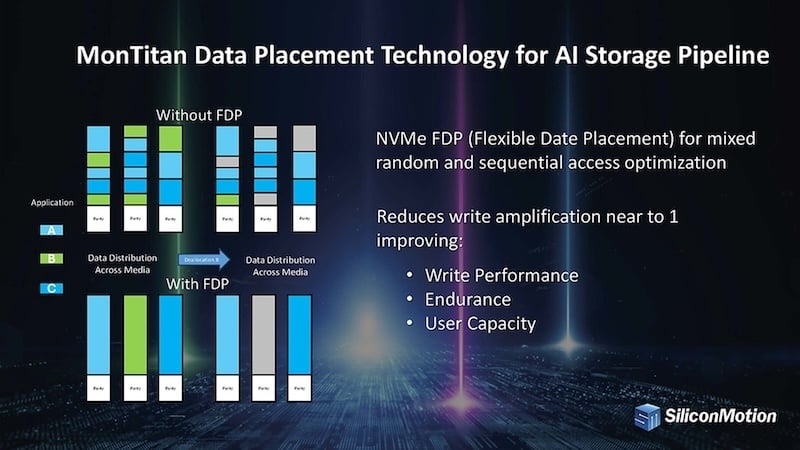
Figure 3. MonTitan’s Flexible Data Placement reduces write amplification.
MonTitan also includes Silicon Motion’s proprietary PerformaShape technology. This firmware-based, multi-stage performance optimization algorithm dynamically adjusts SSD performance to the specific needs of concurrent AI workloads, ensuring consistent and predictable throughput across multiple simultaneous data pipeline stages, such as ingestion, preparation, training, and inference.
While other Gen5 platforms also emphasize extremely low random-write latency and consistent quality of service, MonTitan’s programmability and layered firmware model give NAND vendors and hyperscalers even more room to implement differentiated policies for AI traffic patterns.
A Future-Proof Nearline Storage Platform
By combining open standards and in-house innovation, Silicon Motion’s MonTitan platform is well-suited to support enterprise AI workloads by accelerating warm data access and processing—positioning it as a forward-looking SSD platform for the evolving demands of AI in enterprise data centers.
HDDs will continue to have a role in enterprise data centers. Still, nearline storage must migrate to SSDs as warm application data becomes increasingly useful for AI inference and machine learning.
All images used courtesy of Silicon Motion.