Facebook
 Google
 GitHub
 Linkedin
Three Audio Collaborations Tuning Up the Listening Experience
New audio releases use spatial audio, MEMS, and hybrid designs to improve immersion and sound quality.
Three recent products from Lenovo, Kiwi Ears, and MH Acoustics highlight different approaches to improving how sound is captured and reproduced, whether that means making headset audio feel more natural, combining multiple transducer technologies inside a single IEM, or improving recording quality in large microphone arrays.
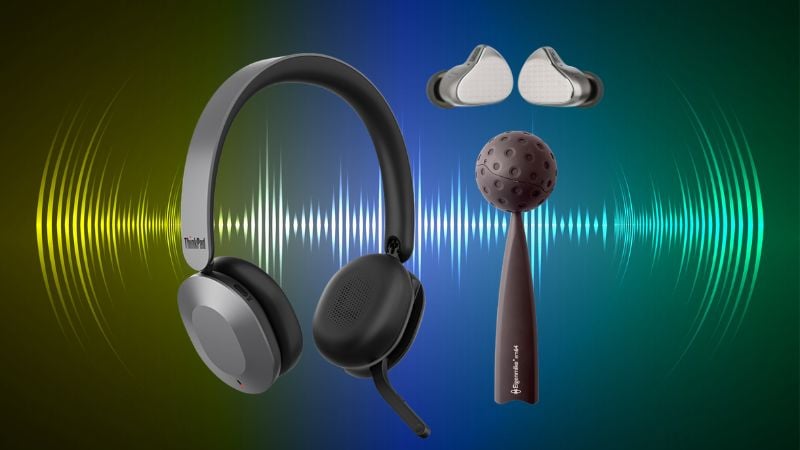
Even though these products target very different applications, there is a common trend running through all three. Instead of relying only on larger drivers or better hardware specs, companies are combining software processing, MEMS technology, and more integrated system designs to improve overall audio performance. The result is hardware designed around the complete listening or recording experience rather than individual components.
ThinkPad Headset Adds Immersive Audio
Lenovo's new ThinkPad Dual-Mode Wireless ANC Foldable Headset 8550 (Aura Edition) integrates Ceva’s RealSpace spatial audio technology, which creates a unique, immersive listening experience across music, video, and gaming applications. In contrast to traditional stereo playback, RealSpace renders audio into a virtual 3D sound field that remains fixed in space as users move their heads.
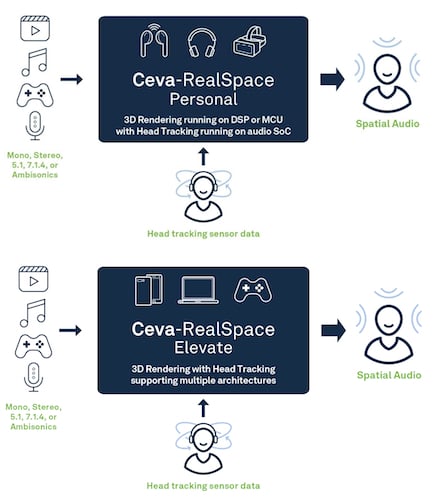
Ceva-RealSpace. Image used courtesy of Ceva
The ThinkPad 8550 headset combines spatial audio processing and low-latency head tracking to create a listening experience that reacts naturally as users move. As a listener turns their head, the audio remains fixed in place rather than shifting with movement, which can make movies, games, and music feel more immersive. The feature also helps expand the headset beyond conference calls and work use, giving users a more consistent audio experience across entertainment applications on PCs, smartphones, and tablets without relying on a specific device ecosystem.
Kiwi Ears Combines Three Driver Technologies Into One
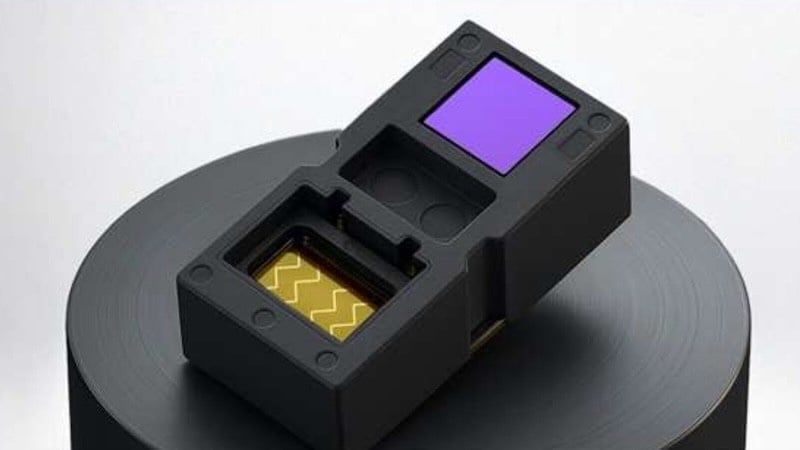
USound announced that its MEMS speaker technology powers the Kiwi Ears Halcyon, described as the first tribrid in-ear monitor design. The Halcyon combines three transducer technologies into a single architecture: a traditional electrodynamic driver, balanced-armature drivers, and MEMS speakers.
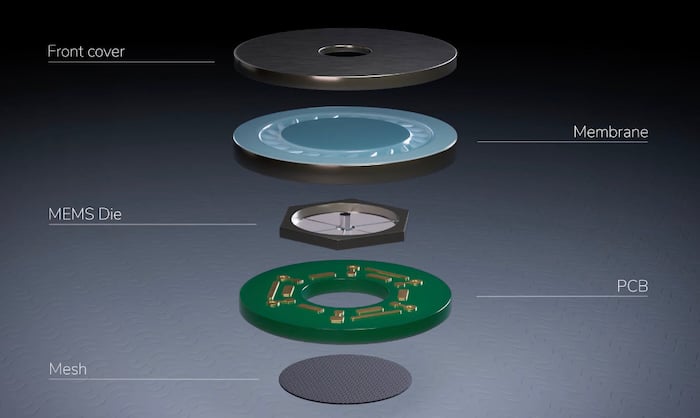
USound’s MEMS technology uses several piezoelectric cantilevers to drive a piston up and down, replacing the traditional coil used in electrodynamic and balanced-armature speakers. Image used courtesy of USound
USound’s threefold design is notable because each driver technology handles a different part of the listening experience. The dynamic driver is responsible for low-frequency response, balanced armatures focus on detail and tuning, and MEMS speakers add fast response and wideband performance. Instead of simply adding more drivers, the goal is to integrate different technologies into a single system in which each contributes its strengths. USound’s MEMS module also helps reduce package size and supports automated assembly processes, allowing more compact designs while simplifying manufacturing.
Optical MEMS Changes Spatial Recording Hardware
Sensibel announced that MH Acoustics integrated its SBM100B optical MEMS microphone into the latest em64d Eigenmike Ambisonic microphone array. The system uses 64 microphones arranged across the surface of the recording platform to capture an entire sound field rather than sound from a single direction.
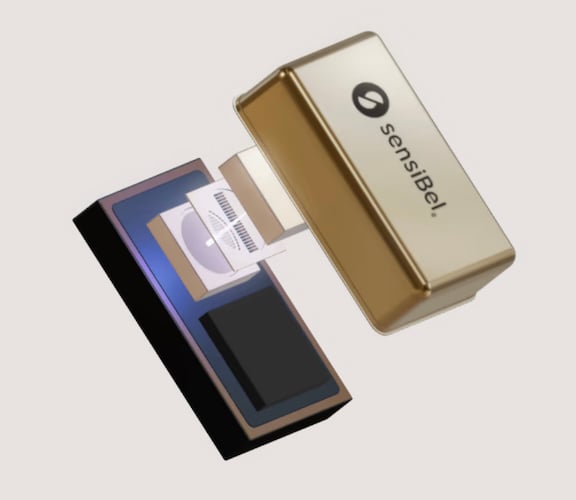
Sensibel's SBM100B series has a 132-dB dynamic range and an 80-dB SNR. Image used courtesy of Sensibel
The switch to optical MEMS technology brings both performance and manufacturing changes to the new SBM100B. According to MH Acoustics, the SBM100B delivers an 8-dB improvement in signal-to-noise ratio and a 16-dB increase in acoustic overload point compared to the electret condenser microphones used previously, reaching 80-dB SNR, 146-dB acoustic overload point, and 132-dB dynamic range.
System-Level Audio Improvements
These releases show that audio design is moving beyond traditional approaches, where performance improvements mainly came from larger speakers or incremental hardware updates. Lenovo focused on making a headset useful beyond conference calls; Kiwi Ears explored what happens when multiple transducer technologies are designed to work together; and MH Acoustics adopted optical MEMS technology to improve spatial recording systems.
Different products, different markets, but all aimed at improving how sound is experienced rather than just increasing specifications on a datasheet.