Facebook
 Google
 GitHub
 Linkedin
The Countdown: Preparing Manufacturing Systems for the Post-Quantum Era
Decades of captured data and IP face future exposure from harvest-now, decrypt-later attacks. Products and systems built today need quantum-resistant security integrated from design through deployment.
The semiconductor industry faces an unprecedented security challenge that demands immediate attention. While quantum computing has long been confined to theoretical discussions and laboratory experiments, recent advancements signal its imminent arrival as a practical reality. For manufacturers producing devices with operational lifespans extending into the next decade and beyond, the time to prepare for quantum-resistant security is now.
The Quantum Threat Is Already Here
The most pressing concern for manufacturers is not when quantum computers will arrive, but rather the "harvest now, decrypt later" attacks already underway. Malicious actors are currently collecting encrypted data from manufacturing systems, supply chain communications, and product designs, then storing it for future decryption when quantum computers become available. This silent, long-term threat means that sensitive intellectual property, customer data, and proprietary manufacturing processes captured today could be exposed tomorrow.
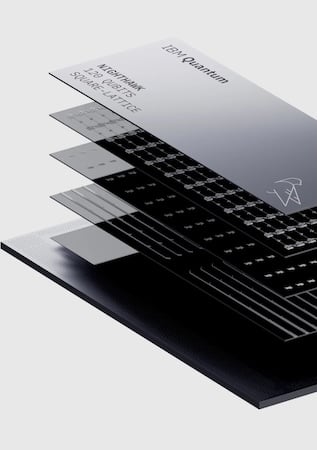
Quantum processors, like the IBM Nighthawk, will eventually be able to crack today’s standard encryption codes. Image used courtesy of IBM.
Current encryption standards—including RSA and ECC algorithms that protect everything from industrial IoT sensors to cloud-based manufacturing execution systems—rely on mathematical problems that today’s computers struggle to solve. Quantum computers, however, can break both integer factorization and discrete logarithms. This capability undercuts the cryptographic foundations of many deployed systems and forces manufacturers to rethink security from the ground up.
Regulatory Deadlines Drive Urgency
The United States government has mandated compliance with post-quantum cryptography by 2027—almost three years earlier than the European Union's requirements. This accelerated timeline reflects the urgency of the threat and puts immediate pressure on manufacturers to begin their quantum-resilient transformation. For the electronics manufacturing sector, this means products designed and built today must incorporate quantum-resistant security to remain compliant and competitive in just over one year.
The requirements extend well beyond routine compliance. Manufacturing systems that process government contracts, critical infrastructure components, or defense-related products face even stricter requirements. The National Institute of Standards and Technology (NIST) has already standardized several post-quantum algorithms, and manufacturers must begin integrating these new standards into their security architectures now to meet approaching deadlines.
Building Security Into Manufacturing DNA
The transformation to quantum-resistant security cannot be treated as a simple software update or patch. It requires fundamental changes to how manufacturers approach security throughout the entire production lifecycle. From the initial design phase through manufacturing, deployment, and field updates, quantum resilience must be embedded into the DNA of manufacturing.
Consider the typical lifespan of manufacturing equipment and the products they produce. Automotive components remain in service for 15 to 20 years. Industrial control systems operate for decades. Space and defense applications may function for 30 years or more. Products manufactured today will still be operational when quantum computers capable of breaking current encryption become widely available. This reality demands that manufacturers implement hybrid cryptographic approaches that combine classical and quantum-resistant algorithms to ensure both immediate security and future protection.
The challenge extends to the manufacturing floor itself. Production systems, quality control equipment, and supply chain management platforms all rely on encrypted communications and secure authentication. These systems cannot be easily replaced or upgraded, making crypto-agility, the ability to adapt to new cryptographic standards without hardware replacement, essential for maintaining operational continuity during the transition to quantum-resistant security.
Securing the Device Ecosystem
Quantum-resilient security must extend across the entire semiconductor ecosystem. From silicon to system integration, each component in the supply chain must incorporate quantum-resistant capabilities.

The entire semiconductor ecosystem must embrace quantum-resilient security. Image used courtesy of Kudelski Labs
This shift requires both hardware-based protection and software systems capable of managing secure updates over a product’s lifetime. The ability to update cryptographic credentials and algorithms post-deployment is essential for maintaining resilience as standards evolve and new vulnerabilities emerge.
Manufacturers are not alone in navigating this transition. Security research organizations and technology developers have been working for years to prepare for this moment. Companies like Kudelski Labs, for example, have focused on creating practical tools and security modules designed for long-lived connected devices. The work of Kudelski Labs is one example of how the industry is moving to support manufacturers with solutions that integrate future-proof cryptography, secure key provisioning, and in-device verification—all capabilities that become essential as product lifespans extend into the quantum era.
Practical Steps for Implementation
Manufacturers should begin their quantum-resistant transformation by conducting comprehensive audits of current cryptographic implementations across all systems and products. To begin, identify which algorithms are vulnerable to quantum attacks and prioritize migration based on product lifecycles and regulatory requirements. Products with extended operational lifespans or those serving critical infrastructure should receive immediate attention.

Critical infrastructure must be prepared for post-quantum hacking. Image is a composite from Adobe Stock.
Implementing hybrid cryptographic solutions allows manufacturers to maintain compatibility with existing systems while adding quantum-resistant protection. This approach enables gradual migration without disrupting current operations or requiring wholesale infrastructure replacement. As quantum-resistant algorithms continue to evolve and improve, maintaining crypto-agility ensures systems can adapt to new standards without costly hardware changes.
Employee training and awareness programs are equally important. Security teams, design engineers, and production staff must understand the quantum threat and their role in maintaining quantum-resistant security. This cultural shift toward quantum awareness ensures that security considerations are integrated into every decision, from component selection to production processes.
Support Systems Emerging Across the Industry
As manufacturers update architectures and processes, the broader ecosystem is evolving to support them. Kudelski Labs is an example of a group developing solutions intended to help device makers secure long-lived products. Their work includes quantum-resilient secure enclaves, hybrid cryptographic implementations, lifecycle-ready credential management tools, and security models designed for automotive, industrial, and critical infrastructure applications. These types of solutions are becoming increasingly important as manufacturers seek practical ways to meet regulatory requirements and ensure devices remain trustworthy well into the next decade.
The Path Forward
The quantum computing revolution is not a distant possibility but an approaching certainty. For semiconductor manufacturers, the question is not whether to prepare for quantum-resistant security but how quickly it can be implemented. With regulatory deadlines approaching and threat actors already collecting encrypted data for future exploitation, the window for action is narrowing.
Success in the post-quantum era requires immediate action, comprehensive planning, and ecosystem-wide collaboration. Manufacturers who begin their quantum-resistant transformation today will not only meet regulatory requirements but also build competitive advantages through enhanced security and customer trust. Those who delay risk exposing decades of intellectual property and customer data while also losing market position to quantum-enabled adversaries.
The countdown to the quantum era has begun. The semiconductor manufacturing industry must act now to ensure its products, processes, and data remain secure in a world where quantum computers redefine the possible.