Facebook
 Google
 GitHub
 Linkedin
Design Wins Roundup: From Real-Time Medical Imaging to Artemis II
Integration and efficiency are reshaping modern system design, from rad-hard ICs in NASA’s Artemis II mission to SoCs turning ID badges into wireless systems.
Semiconductor design has been trending toward greater integration and efficiency. Instead of stacking on extra components, more functionality is being pulled directly into the silicon, helping simplify designs while still hitting performance targets.
Four recent announcements show that trend playing out in different ways: radiation-hardened ICs supporting NASA’s Artemis II mission; a medical image signal processor handling real-time visualization; MEMS speaker technology changing how hearables are built; and a dual-processor SoC turning simple ID badges into connected devices.
Renesas Rad-Hard ICs Support Artemis II Mission
Renesas announced that its radiation-hardened ICs were used in NASA’s Artemis II mission, including avionics, power distribution, and onboard computing within the Orion spacecraft and Space Launch System. These parts are built for deep-space conditions, where radiation and temperature extremes can quickly take out standard electronics.
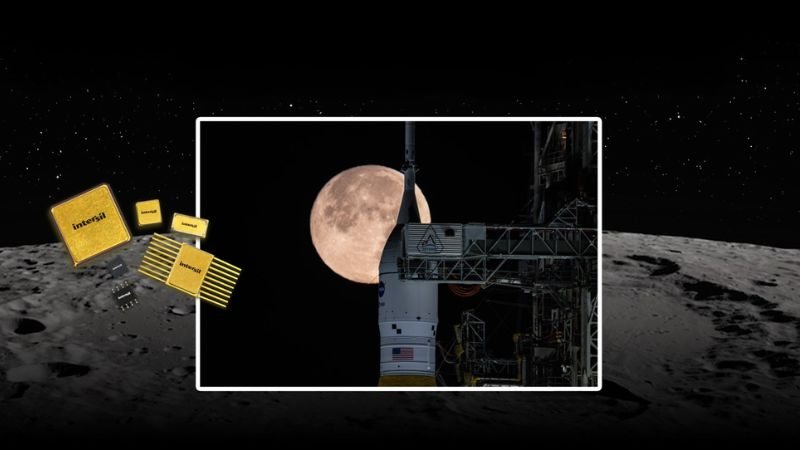
Renesas's Intersil radiation-hardened ICs are used in NASA’s Artemis II mission, supporting avionics and power systems in deep-space conditions. Image used courtesy of Renesas
One of the more important details is that these devices meet the MIL-PRF 38535 Class V/Q standards. That essentially means they’re qualified for high-reliability environments with strict requirements around performance and traceability. In practical terms, it comes down to this: they’re designed to run predictably for long durations in the harsh environments of space and in other high-reliability systems.
Omnivision ISP Targets Real-Time Medical Imaging
Omnivision’s OVMed OH0131 ISP is being integrated into ATL Medical’s Prevoyance imaging system, where it handles real-time image processing from chip-on-tip endoscopic sensors. It’s built specifically for medical environments, where things like glare from fluids, smoke, and uneven lighting can make imaging more difficult than in typical camera applications.
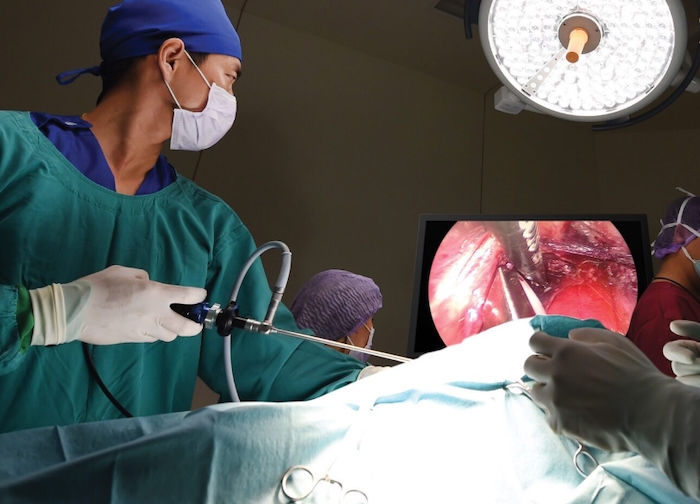
The OH0131 can be used for minimally invasive surgical procedures using real-time endoscopic imaging. Image used courtesy of Omnivision
The OH0131 uses image processing tuned for medical use, adjusting brightness, contrast, and noise while maintaining stable output. The OH0131 also maintains low-latency processing even with high data throughput, providing clinicians with a consistent, real-time image they can rely on during procedures without lag or significant visual distortion.
MEMS Speakers Enable Smaller, More Efficient Hearables
Earweiss’s partnership with USound is centered on bringing MEMS-based speaker technology into next-generation hearables. Instead of using traditional dynamic drivers, these speakers are built using semiconductor manufacturing processes, which improve consistency and make them easier to integrate into smaller designs.
The result is lower power consumption and greater flexibility in how the audio hardware is laid out, giving engineers more options when working in tight spaces and under battery constraints compared to conventional speaker designs.
Nordic SoC Turns ID Badges Into Wireless Systems
Nordic Semiconductor’s nRF54L15 SoC is being used in Holyiot's Inkcard-A1 smart badge, turning what would normally be a simple ID card into a connected wireless device. It pairs an Arm Cortex-M33 with a RISC-V coprocessor, separating general-purpose processing from time-critical tasks so that wireless communication and peripheral control don’t interfere with the main application.
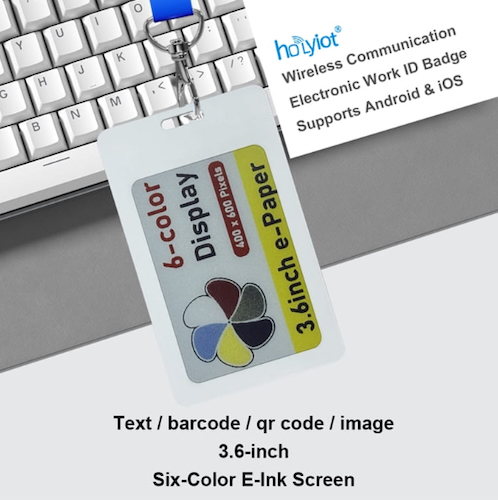
The Holyiot Inkcard-A1 smart badge supports wireless ID, barcode, and image updates via the nRF54L15 SoC. Image used courtesy of Nordic Semiconductor
The SoC uses 1.5 MB of non-volatile memory, 256 KB of RAM, and a low-power 2.4-GHz radio, enabling concurrent handling of wireless communication, display management, and access control tasks. This will allow the device to process and transfer data efficiently while maintaining responsiveness across multiple functions. It also supports update cycles within seconds while also sustaining operation from a relatively small 180-mAh battery.
More Functionality at the Edge
Across all four examples, more functionality is being handled directly at the device level, whether that’s reliability in space systems, real-time processing in medical imaging, smaller form factors in wearables, or added capability in connected devices. The end result is a simpler system design without giving up performance.