Facebook
 Google
 GitHub
 Linkedin
Our 2024 Favorites: Hand-Picked Highlights from the All About Circuits Team
We publish hundreds of articles every year—too many even for our team to read them all. So, we decided to share our favorite 2024 news, technical articles, projects, and podcasts with each other and all of you. Enjoy!
As the leading publisher of electronics engineering content, we work with many great companies and writers. This industry has endless amazing technology and wonderful stories. As we reflect on 2024, our All About Circuits editorial team shares their favorite content and why it was particularly interesting to them. We would also love to know your favorite articles from 2024—let us know in the comments section below.
Jeff Child, Editor-in-Chief
Akeana Exits Stealth With Low- to High-End RISC-V Alternatives to Arm
I have an affinity for coming-out-stealth articles, especially when we can post on the day of the news. But this Akeana story has some special aspects for me. First, it exemplifies the growth of RISC-V technology as they use an innovative way of using configurable design to mix and match features. Second, I got to meet with Bruno Putman, Akeana's VP of sales and business development, at Embedded World and get to know him and about the company months before they came out of stealth. - Jeff Child
.jpg)
The startup, Akeana, announced a breadth of customizable RISC-V-based processor IP solutions backed by $100 million in funding.
From VHDL Code to Real Hardware: Designing a Finite-State Machine
I love our All About Circuits project articles, but this one checks all the boxes for me. It’s an interesting design that teaches you about using VHDL and CLPDs. Plus, it has a rich set of images and resources, including a schematic, video, code snippets, and more. I also LOVE Kristian’s PCBs with our All About Circuits logo. - Jeff Child
Learn how to implement finite-state machines in VHDL by creating a 4-bit binary counter. After compiling, it will run on an Altera CPLD development board connected to a custom PCB with input switches and an LED display.
Hannah DeTavis, Senior Editor
The End of an Era: Zilog Discontinues the Z80 Microprocessor
While many of the first microprocessors have long faded into engineering history, the well-loved Z80 remained a favorite on the market—up until this summer. Zilog finally discontinued the Z80 two years shy of its 50th birthday. I loved reading many of our readers’ fond memories about the microprocessor in the comments! - Hannah DeTavis
This Zilog story was also on my favorites list because I used to work at Zilog wafer fabs in Nampa, Idaho, where my friends and colleagues manufactured millions of Z80 ICs. I also managed the design team creating Zilog’s successor to the Z80, the eZ80 CPU, and its first product, the eZ80190 microprocessor. - Dale Wilson

Two years short of the Z80's 50th birthday, Zilog has called it curtains on the 8-bit MPU. What legacy does this microprocessor leave behind?
One Giant Leap for Engineering Kind: How the Moon Landing Gave Rise to the IC
Engineering ingenuity doesn’t happen in a vacuum. One stunning historical example of this was the birth of the integrated circuit, hurried along by NASA’s ambitions for a lunar landing. This blast to the past was one of my favorites because it reminds me that it’s you, the engineers behind the scenes, who make some of humanity’s greatest feats possible. - Hannah DeTavis

Fairchild's planar dual three-input NOR gate from Block II AGC helped enable the moon landing. Image used courtesy of Wikimedia Commons (Public domain)
Abby Garfinkle, Technical Editor
Diamagnetic, Paramagnetic, and Ferromagnetic Materials Explained
How many times do I get to mention levitating frogs in a professional context? Thanks to this article on magnetic materials, the answer is now greater than zero! - Abby Garfinkle

This article examines three different types of magnetic materials and how they react to an external magnetic field.
Introduction to SLiCAP for Analog Circuit Design
Symbolic SPICE was something new to me. So, editing this article on SLiCAP was fresh and different. - Abby Garfinkle
Our coverage of SLiCAP was also interesting to me for two reasons. One, symbolic SPICE is cool. Two, it helped us discover two French-language sites that were illegally copying all of our All About Circuits and EEPower content! That made this article very memorable to me. - Dale Wilson
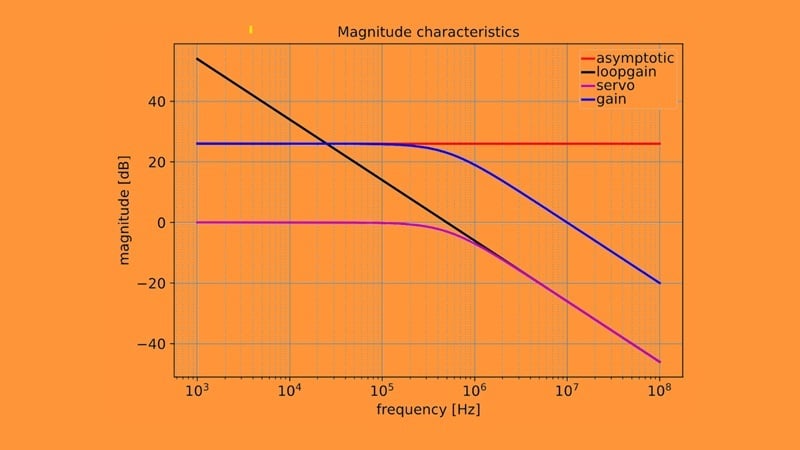
Learn how to design and verify analog circuits using SLiCAP, a Python-based symbolic simulator program.
Dale Wilson, Director of Engineering and Content
Can Silicon Photonics Solve the Bandwidth Bottleneck in AI Data Centers?
One of my tasks is conducting the pre-show interviews and building the discussion outlines used during our Moore’s Lobby podcast recordings. Before joining All About Circuits, I had the privilege of working on several advanced technologies, including some process development for silicon photonics.
So, perhaps unsurprisingly, silicon photonics was the topic of my favorite Moore’s Lobby podcast of the year. Steve Klinger, VP of Product at Lightmatter, explains how they have created a programmable optical fabric to efficiently interconnect chiplets with other silicon ICs. Unfortunately, I missed out on the explosive growth of silicon photonics and did not enjoy $4B+ valuations as experienced by the Lightmatter team. - Dale Wilson
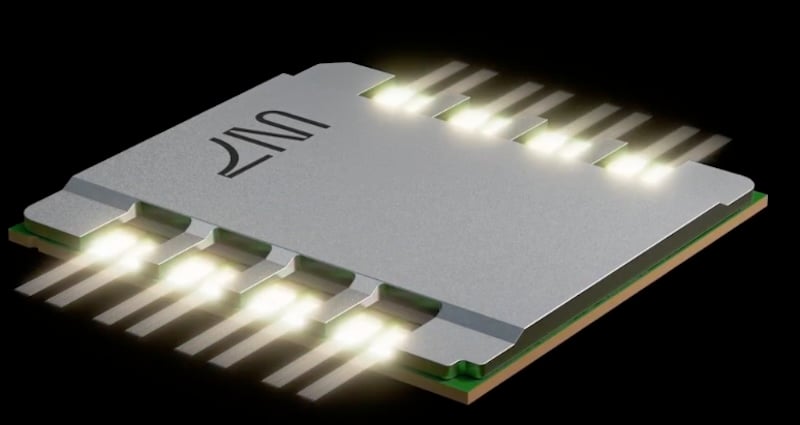
Passage is a wafer-scale, programmable photonic interconnect system for connecting arrays of heterogeneous chips. Image used courtesy of Lightmatter
Getting To Know the Gerber File Format and File Names
As a design engineer, I found the Gerber file format to be frustrating. In 2024, I edited a three-part series of industry articles explaining the Gerber format. I wish I had these articles five years ago because they would have helped avoid a Gerber scaling error that caused a costly project respin. Opening a box of incorrectly sized PCBs is something that you don’t quickly forget! Hopefully, this series will help you avoid that experience. - Dale Wilson

Learn the details of the Gerber file format for PCB layout, including function, common layers, file names, extensions, and revisions to the Gerber standards.
Celebrating Inventor H. Joseph Gerber, the Man Behind the File Format
Speaking of the Gerber file format, I found this profile of H. Joseph Gerber to be fascinating, and think you will, too. - Dale Wilson

Heinz Joseph Gerber escaped from a Nazi labor camp to become one of the most prolific U.S. inventors of the 20th century.
We hope you enjoyed 2024 as much as we did! And now it’s your turn to share your favorite All About Circuits articles, projects, Industry Tech Days sessions, or Moore’s Lobby podcast episodes from 2024.
Related Content