Facebook
 Google
 GitHub
 Linkedin
How Machine Learning Is Shrinking to Fit the Sensor Node
Learn how “right-sized” machine learning enables edge devices to make critical decisions locally, improving reliability and reducing reliance on cloud connectivity in remote, volatile environments.
Not long ago, a sensor’s job was simple: record, timestamp, transmit. It didn’t interpret. It didn’t act. It didn’t decide. That role was reserved for the cloud or the human operator, or both.
But that world is now fading. Today, we’re putting intelligence at the forefront. Real intelligence. Not just filtered thresholds or canned rule sets, but machine learning models running on microcontrollers the size of a postage stamp. And we’re asking them to make calls in places where failure costs more than latency: remote sites, volatile environments, and systems no one touches for months at a time.
This isn’t a gimmick. It’s a shift in how we think about where decisions should happen, and who we trust to make them.
When the Cloud Stops Being Helpful
Let’s start here: What do you want your system to do when no one’s watching?
That’s not a philosophical question. In the field, things go wrong. Power drops. Radios lose their signal. Maintenance gets delayed. And no one is sitting at a dashboard watching a blinking dot on a map. If your sensor can't keep its head on straight when the network disappears, then you’re not building for reality. You're building for a demo.
For years, we treated the cloud as the brain and sensors as dumb inputs. But the physics of industrial environments don’t care about that model. Real-world systems don’t get to pause while waiting for instructions. So instead of pushing every byte upstream and hoping it arrives in time, we’re now asking: What if the node itself could make the call?
What if the vibration spike didn’t have to wait for a server to interpret it? What if the sensor already knew what “normal” felt like and what didn’t?
This is where local inference earns its keep. It's not about fancy models or edge computing hype. It's about giving systems just enough awareness to act without permission. And when you design like that from the start, the architecture changes.
You stop assuming power is constant. You stop counting on the cloud. You build for the grey areas in between, where most problems live.
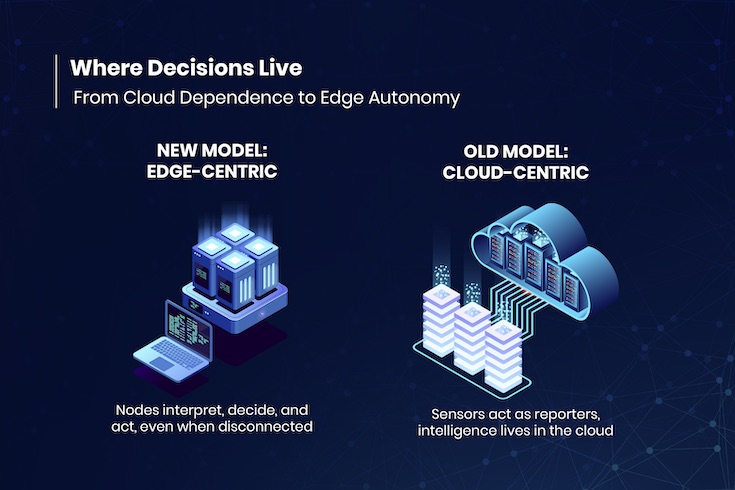
Figure 1. The old could-centric model vs. the new edge-centric approach
Building Smart Enough, Not Smarter Than Necessary
Here’s the thing: adding intelligence to a sensor doesn’t mean cramming in a neural network just because you can. It means giving the sensor the ability to reason, in its limited way, about the world it’s embedded in.
That might mean anomaly detection tuned to local patterns. Or recognizing when a reading is drifting out of spec and logging that, quietly, for when the system can catch up. In many cases, a compact, event-driven classifier is more than enough to improve performance. You're not trying to replicate cloud power. You're building resilience at the edge.
The tech finally makes this possible. We can compress models down to something that runs on a few kilobytes of RAM. Microcontrollers now have the headroom to run inference without blowing the power budget. Combine that with careful power management, and you can build systems that think just enough and last for years on a battery.
But it’s not just about tech. It’s about discipline.
Edge ML doesn’t permit you to skip design thinking. It demands more of it. You have to think through failure modes. What happens when the voltage drops mid-prediction? How does the model handle garbage input? What does recovery look like after a brownout? Can the system still log, still act, still fail safely?
This is where most experiments fall apart. Because edge systems don’t fail like cloud systems. They don’t crash big. They drift. Slowly. Quietly. Until someone finally notices the logs don’t match the behavior, and by then, you’re already in the middle of a much bigger issue.
That’s why we treat model logic like firmware. Versioned. Traceable. Predictable under stress. And always designed with the assumption that no one’s going to be around to fix it when it breaks.
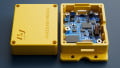
We took this exact approach when developing the Zephyr, a field-deployable wireless instrument gauge. We built it to survive in Class 1 Div 1 hazardous environments with no guaranteed power or connectivity. That meant not streaming everything to the cloud. No constant handshakes.
Just local logic that could hold state, log events, and flag real anomalies when it mattered. It wasn’t about complexity. It was about clarity. And it worked. The system could operate for multiple years on battery, make decisions in isolation, and recover gracefully when things got messy.
But this isn’t about one product. It’s about a mindset.
Whether you’re deploying a pressure sensor on a pipeline or a vibration monitor on an offshore rig, the question is the same: what’s the minimum intelligence this node needs to reduce risk and improve reliability without becoming a maintenance burden?
Because the goal isn’t to build the smartest node. It’s to build the one that still makes sense when everything else is going sideways.
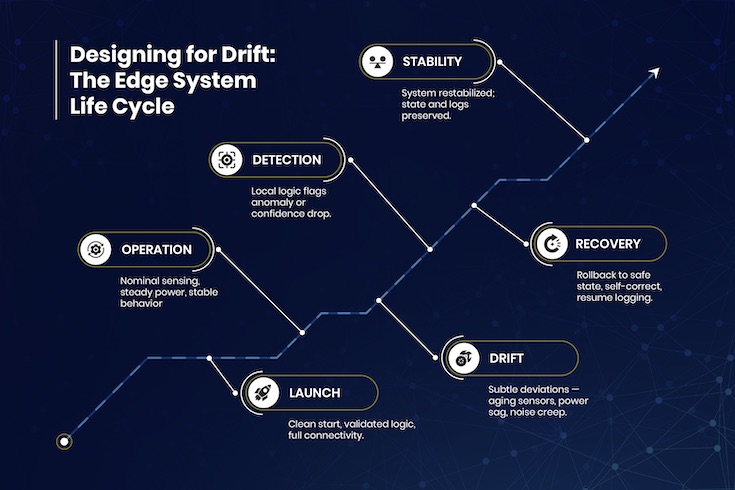
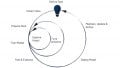
Figure 2. This depicts the edge system life cycle.
The Real Test is What Happens Later
Everyone likes launch day. That clean moment when the system boots up, the lights blink, and the dashboard looks perfect. But launch day is easy. The real test shows up 18 months later, when no one remembers what firmware version is running, the spec sheet is buried in
someone’s inbox, and the only sign something’s going wrong is a blinking LED in a sealed cabinet four time zones away.
That's where edge intelligence proves itself. Not because it's clever, but because it’s consistent. Because it holds up under pressure, in silence, without applause.
Too many people think intelligence means AI. I don’t buy that. Intelligence, in this context, means judgment. It means the ability to handle uncertainty without making things worse. And if your sensor can do that, if it can catch the right signal, ignore the wrong one, and stay calm when the network vanishes, then you've built something that matters.
The best systems I’ve seen don’t get headlines. They just keep working.
All images used courtesy of BlackPearl Technology.