Facebook
 Google
 GitHub
 Linkedin
It’s Been a Busy Summer for Semiconductor Acquisitions
Four deals target edge AI hardware and software, data center cooling, and embedded development tools.
The past month has brought an unusually dense run of semiconductor acquisitions, with Onsemi, Qualcomm, TDK, and Renesas each announcing or closing a deal. Each one targets something different, but there's a common thread running through them all: chipmakers are buying the pieces they lack to serve AI as it spreads from the data center into physical devices.
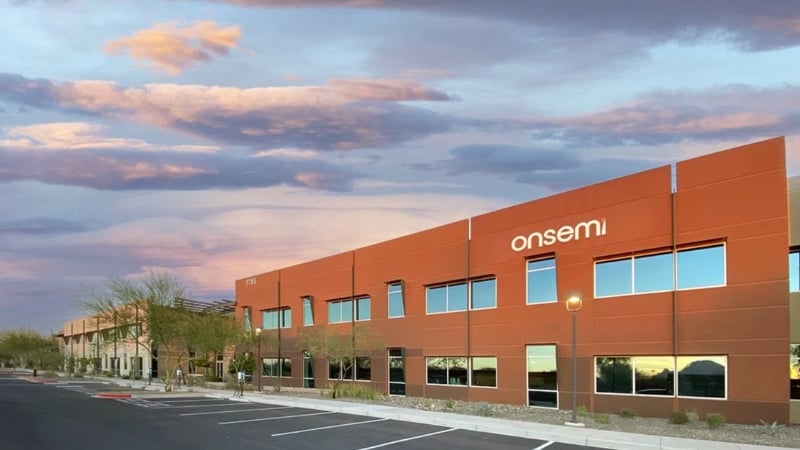
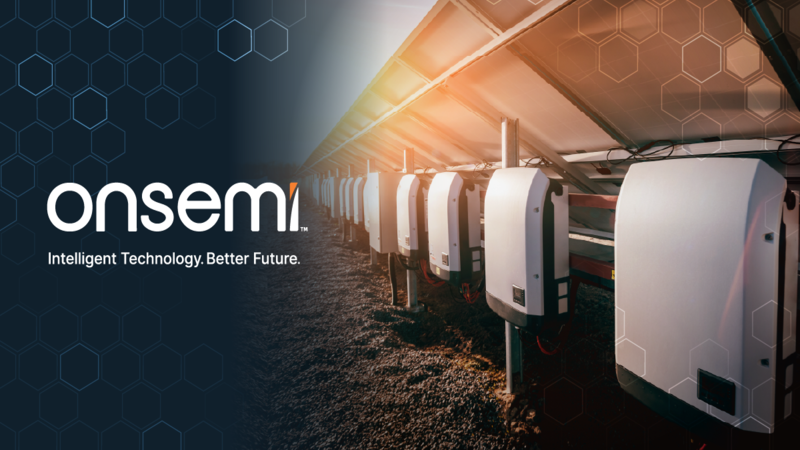
Onsemi's headquarters in Scottsdale, Arizona. Image used courtesy of Onsemi
The four transactions cover edge AI hardware, hardware-agnostic AI software, data center thermal management, and embedded development tools. Their pace underscores how much of the AI build-out is now happening through acquisition, as established suppliers race to cover gaps in software and advanced packaging rather than build those capabilities in-house.
Onsemi Buys Synaptics for $7 Billion
Onsemi agreed to acquire Synaptics in an all-stock deal valued at roughly $7 billion, the largest acquisition in Onsemi's history.
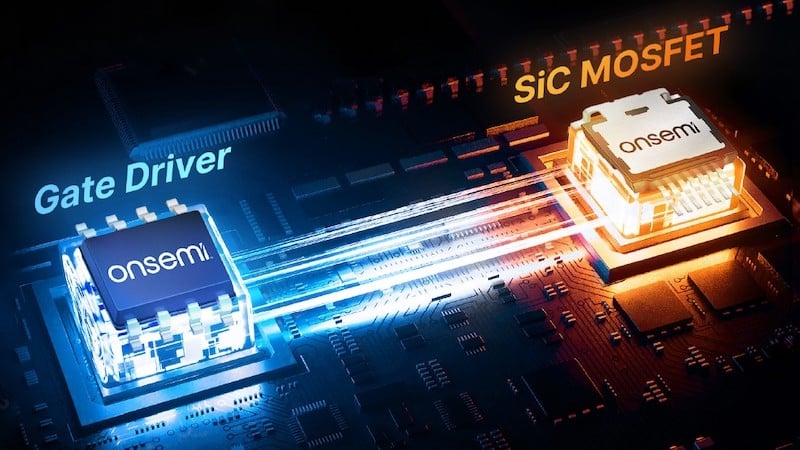
This move aligns with Onsemi's focus on the four pillars of "physical AI": power, sensing, connected compute, and control. The company already sells into power and sensing, and Synaptics supplies the connected compute layer through its Astra platform, which combines AI processors and NPUs with Wi-Fi, Bluetooth, and GPS connectivity, along with an open software stack.

This acquisition supports Onsemi's roadmap to bolster its physical AI offerings. Image used courtesy of Onsemi
Onsemi points to autonomous driving, robotics, and AR/VR as the systems it wants to address with a fuller edge-AI stack. The company expects to close the deal around mid-2027.
Software Moves to the Center at Qualcomm
Two of the month's deals were about software rather than silicon. Qualcomm agreed to acquire Modular, an AI-software company led by compiler veteran Chris Lattner, in a transaction expected to close in the second half of 2026 on undisclosed terms.
Modular, known for its MAX inference platform and Mojo programming language, builds a "write once, run anywhere" compute layer that runs models across CPUs, GPUs, NPUs, and custom ASICs without per-accelerator rewrites.
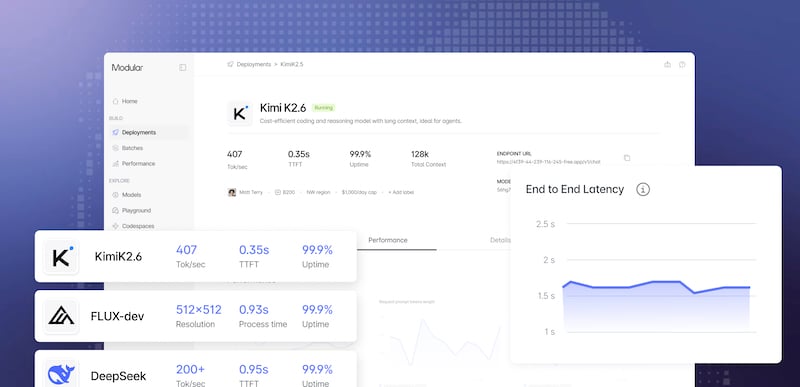
Modular is a unified AI inference platform for portable compute, granting engineers full optimizations from GPU kernel to API endpoint. Image used courtesy of Modular
Qualcomm CEO Cristiano Amon has framed agentic AI as pushing toward disaggregated, multi-vendor architectures that need an open software foundation, and Modular is meant to fill that gap by turning Qualcomm's edge and data center silicon into a more hardware-agnostic platform that competes on performance per watt, the metric that increasingly governs inference cost. The move fits a wider push among chip and systems companies to loosen the software lock-in that has concentrated AI workloads on a single vendor's GPUs.
Renesas Nabs Pictorus
Renesas took a similar step lower in the stack, completing its acquisition of Oakland-based Pictorus, again without disclosed terms.
Pictorus offers a browser-based, model-based design tool: engineers draw a system's behavior as block diagrams, and the platform generates memory-safe Rust code for embedded targets, with interoperability with C, C++, and Python. It slots into Renesas 365, the company's development platform, adding behavioral modeling and simulation to speed firmware work across automotive, robotics, and industrial designs. The category is familiar territory for Simulink users, but Pictorus pitches a cloud-native alternative that generates production code directly from the model.
TDK Targets Data Center Heat with Fabric8Labs
TDK is chasing a more physical problem. It agreed to acquire San Diego-based Fabric8Labs for up to $400 million in cash, structured as an upfront payment plus a multi-year earnout. Fabric8Labs, founded in 2015 with about 150 employees, builds a metal 3D-printing process it calls Electrochemical Additive Manufacturing (ECAM), which uses electrochemistry rather than lasers or powder beds to form fine, complex copper structures.
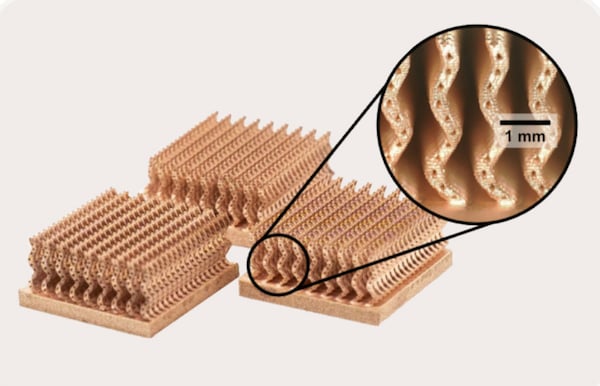
Fabric8Labs' leverages its ECAM manufacturing platform for additive manufacturing in high-performance components. Its use of 33-micron voxels are said to support complex features and boost performance. Image used courtesy of Fabric8Labs
TDK wants that capability for data center cooling. AI servers are pushing thermal loads that conventional heat sinks and cold plates struggle to handle, and ECAM can produce the intricate geometries higher-performance thermal components need. TDK plans to fold Fabric8Labs' output in with its own passive components, power components, and advanced packaging, and says it can scale the business within a few years to supply current and future Tier 1 customers.
TDK Ventures had backed Fabric8Labs since its seed round, making the acquisition a step up from an existing relationship.
Related Content