
 Facebook
 Google
 GitHub
 Linkedin
Basic Electricity
Switches
18 questions By Tony R. Kuphaldt
-
Question 16 of 18
Identify the “normal” status of each switch, whether it is normally-open (N.O.) or normally-closed (N.C.):

Based on the symbols shown, describe what physical condition results in the switch contacts being open, and what condition results in the switch contacts being closed, for each switch.
Reveal answer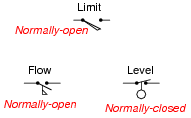
- • Limit switch: untouched = contacts open, mechanical force = contacts closed
- • Flow switch: no fluid flow = contacts open, fluid flow = contacts closed
- • Level switch: dry (hanging in air) = contacts closed, submerged = contacts open
Notes:Discuss with your students the different types of switches shown in this question (not just their normal status, but what physical event actuates each type of switch). There are many, many different types of switches - far more than just the types actuated by a human hand!
-
Question 17 of 18
Identify the “normal” status of each switch, whether it is normally-open (N.O.) or normally-closed (N.C.):

Based on the symbols shown, describe what physical condition results in the switch contacts being open, and what condition results in the switch contacts being closed, for each switch.
Reveal answer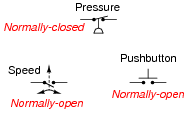
- • Pressure switch: no applied pressure = contacts closed, pressure applied = contacts open
- • Speed switch: no motion = contacts open, motion = contacts closed
- • Pushbutton switch: unpressed = contacts open, pressed = contacts closed
Notes:Discuss with your students the different types of switches shown in this question (not just their normal status, but what physical event actuates each type of switch). There are many, many different types of switches - far more than just the types actuated by a human hand!
-
Question 18 of 18
Find one or two real switches and bring them with you to class for discussion. Identify as much information as you can about your switches prior to discussion:
- • Number of poles
- • Number of throws
- • Voltage rating of contacts
- • Current rating of contacts
- • Contact status for various actuator positions
- • Type (toggle, pushbutton)
Reveal answerIf possible, find a manufacturer’s datasheet for your components (or at least a datasheet for a similar component) to discuss with your classmates.
Notes:The purpose of this question is to get students to kinesthetically interact with the subject matter. It may seem silly to have students engage in a “show and tell” exercise, but I have found that activities such as this greatly help some students. For those learners who are kinesthetic in nature, it is a great help to actually touch real components while they’re learning about their function. Of course, this question also provides an excellent opportunity for them to practice interpreting component markings, poles and throws, use a multimeter, access datasheets, etc.






Question 3: but there is a difference! Electricity flows in from positive side, the location impacts the light switch