Facebook
 Google
 GitHub
 Linkedin
Singular Photonics Launches First SPAD Sensor With In-Pixel Processing
The Edinburgh startup's Litavis chip unifies imaging, timing, and histogramming on a single device.
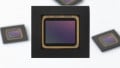
Edinburgh-based startup Singular Photonics has launched Litavis, which the company describes as the world's first single-photon avalanche diode (SPAD) sensor to use in-pixel processing. The 3D-stacked chip combines photon-counting imaging, timing, histogramming, and photon statistics on a single device.

Litavis SPAD sensor.
The launch comes less than two years after the startup emerged from stealth at the University of Edinburgh, where co-founder Professor Robert Henderson designed one of the first SPAD image sensors in nanometer CMOS technology. It also comes alongside an oversubscribed $2.15 million funding round and commercial momentum that has already doubled the company's full-year 2025 sales.
Bringing Processing to the Pixel
SPAD sensors detect individual photons with picosecond-level timing precision, making them significantly more sensitive than conventional CMOS or CCD image sensors. The technology sits at the heart of applications including LiDAR depth sensing and fluorescence lifetime imaging. However, traditional SPAD arrays have a persistent limitation: they generate enormous volumes of raw photon data that must be streamed off-chip for external processing, creating bandwidth bottlenecks that constrain real-time performance and system scalability.
Litavis addresses this challenge by processing photon events directly within the pixel. Built on a backside-illuminated, 3D-stacked CMOS architecture measuring 3.5 mm x 3.5 mm, the sensor delivers continuous 256 × 256-pixel photon-counting imaging in low light. At the same time, it captures time-stamped photon events at picosecond resolution on a 64 x 64 macropixel grid, providing precise timing data alongside the full-resolution image.

Singular Photonics claims Litavis is the first SPAD-based sensor to support simultaneous intensity, timing, and histogramming modes.
The sensor supports multi-event timing, allowing individual time-binning of multiple detected photons within a single excitation cycle. In-pixel histogramming captures temporal statistics beyond standard intensity measurements, supporting applications such as fluorescence lifetime imaging, dynamic light scattering, and quantum sensing. Operating modes include multiple TCSPC and high-throughput TDC configurations, high-dynamic-range photon counting with selectable resolution, and windowed and coincidence-based detection for advanced temporal analysis.
Singular Photonics says Litavis is the first SPAD-based sensor to enable simultaneous intensity, timing, and histogramming modes. Developers can configure all acquisition and timing parameters in software, so they can adapt the same hardware to different use cases without redesigning the underlying system.
From Two Products to Three
When I last covered Singular Photonics in early 2025, the company had just emerged from stealth with two products: Andarta, a compact 5 mm x 5 mm sensor optimized for medical imaging and correlation spectroscopy, and Sirona, a 512-pixel line sensor designed for Raman spectroscopy and fluorescence lifetime imaging. Litavis extends the portfolio into broader multi-modal territory, combining capabilities that previously required separate instruments or custom hardware.

Litavis's photon detection efficiency.
The company's commercial trajectory has kept pace. In August, Singular Photonics closed a $2.15 million round led by ACF Investors, with participation from Wren Capital, Cambridge Angels, Scottish Enterprise, Quantum Exponential, and Old College Capital. The round was oversubscribed, with existing shareholders joining new investors. Dr. Dipesh Patel, former CTO of semiconductor giant Arm, has also joined the board of directors.
A Broadening Market
Litavis targets machine vision, robotics, physical AI, depth sensing, spectroscopy, scientific imaging, medical imaging, quantum technologies, and industrial automation. The global SPAD sensor market was valued at $1.315 billion in 2026 and is projected to reach $6.485 billion by 2035, reflecting a 20.1% compound annual growth rate.
While major players like STMicroelectronics, Sony, and Ams Osram dominate automotive and consumer time-of-flight applications, Singular Photonics occupies a more specialized segment. Its in-pixel processing approach targets systems that need multi-modal sensing and real-time on-chip computation rather than simple depth mapping. The company has already secured a collaboration with instrumentation leader Renishaw in spectroscopy and says it has received pre-order volumes from companies and institutions worldwide.