Facebook
 Google
 GitHub
 Linkedin
Indie Semiconductor Releases First Commercial UV DFB Laser at 399 nm
Geared for quantum systems, Indie engineered the narrow-linewidth laser engineered for ytterbium atom cooling, which eliminates the need for external optical stacks.
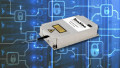
Indie Semiconductor has announced the ELA350028, the first commercially available distributed feedback (DFB) semiconductor laser source in the UV spectrum, operating at 398.9 nanometers. The product targets quantum computing systems that rely on ytterbium ion cooling for precision qubit manipulation.
The announcement marks Indie's expansion into quantum photonics beyond its previously released LXM-U laser and narrowband visible DFB sources. Indie Semiconductor is best known for automotive semiconductors, including power management, communications interfaces, and sensor drivers.
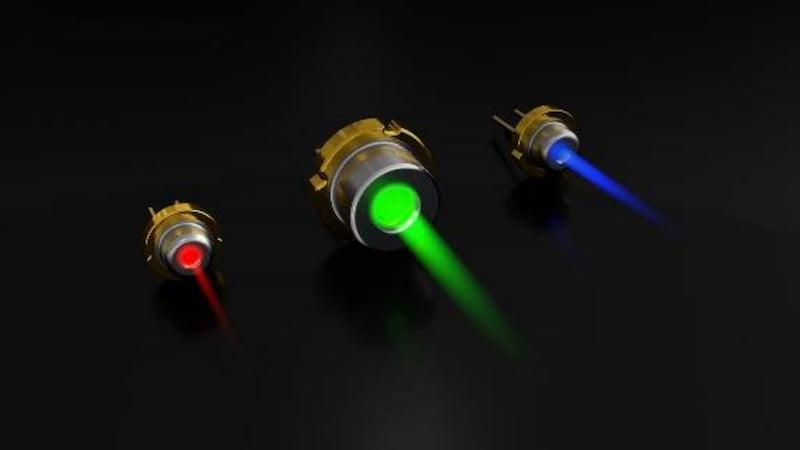
The ELA350028 may find application in quantum computing, ytterbium trapping/cooling, atomic spectroscopy, metrology, and beyond.
This push into quantum photonics, though measured in scope, reflects the company's intent to serve adjacent markets where its semiconductor expertise in high-precision epitaxy and hermetic packaging can be applied to photonics applications.
399 nm for Trapped-Ion Quantum Computing
The 398.9 nanometer wavelength corresponds precisely to the ytterbium-171 resonance line, the key transition for laser cooling in trapped-ion quantum computers. Ytterbium ions, selected for their long coherence times and favorable optical properties, require cooling light at this exact wavelength to reduce thermal motion and prepare qubits for gate operations.
Until now, quantum system designers have relied on two primary approaches to generate light at 399 nm: frequency-doubling visible lasers (typically 798 nm doubled to 399 nm) or building external cavity gratings around conventional semiconductor sources. Both methods introduce significant complexity.
Frequency-doubling requires nonlinear optics, adds 30% to 40% power loss, and generates waste heat that destabilizes the surrounding system. External cavity designs, meanwhile, demand mechanical stability and optical alignment and occupy substantial bench space. This becomes a critical limitation as quantum systems scale toward hundreds of qubits.
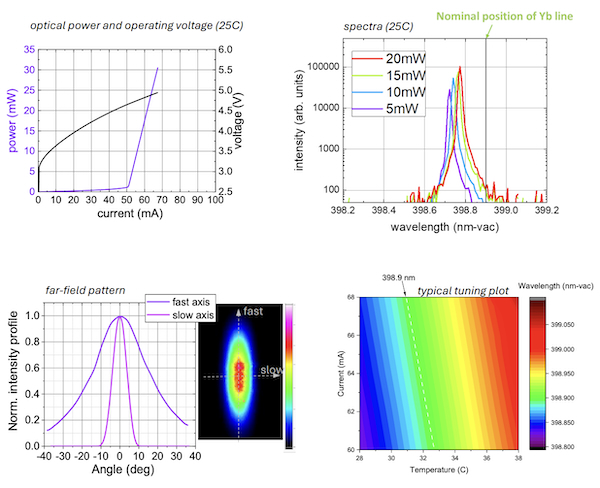
Typical curves of the new ELA350028 20-mW UV DFB laser diode.
The ELA350028 delivers the required wavelength directly from a single semiconductor package, eliminating these constraints. Single-frequency output with sub-megahertz linewidth ensures spectral purity adequate for ion cooling without frequency drift or broadening that would degrade qubit fidelity. The laser operates in single-longitudinal-mode (SLM) to prevent mode hopping. Mode hopping is a dominant noise source in multimode semiconductor lasers, disrupting quantum gate timing and reducing fidelity.
Optical power reaches 30 milliwatts, sufficient for trap loading and Doppler cooling in confined ion trap geometries without external optical amplification. For systems that cool multiple ytterbium ions simultaneously, this power level accommodates several beam paths generated by simple optical splitting. The stable single-frequency output maintains coherence across multiple cooling beams, a requirement for sympathetic cooling of multiple ions in a single trap.
Eliminating Traditional Bottlenecks
DFB lasers employ a periodic grating structure etched into the semiconductor active region to enforce single-mode oscillation, an architecture that contrasts sharply with traditional Fabry-Perot designs, which rely on facet reflectivity and suffer from multimode behavior at longer wavelengths. At 399 nm, conventional diode lasers become particularly unstable without external feedback because the shorter wavelength increases diffraction losses and reduces facet coupling.
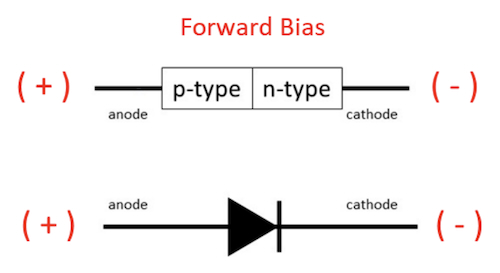
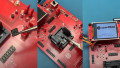
Electrical connections to LDs.
For quantum sensing and cooling applications, the integrated grating provides wavelength stability and narrowband output entirely through internal feedback, without the need for tunable filters or external gratings. This means a smaller system footprint, fewer optical components to align, and substantially fewer drift mechanisms to compensate or stabilize.
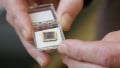
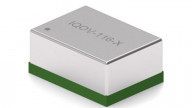
The TO-56 hermetic package houses the laser die with integrated optics and passive thermal management, reducing assembly burden for quantum system manufacturers. Hermetic packaging maintains optical alignment and wavelength stability across temperature fluctuations, a requirement for cryogenic quantum systems where thermal gradients run steeply. Integrated packaging also improves reliability and mean time between failures compared to discrete, open-beam architectures common in research labs.
Supply Chain and System Integration
The ELA350028 removes a significant engineering bottleneck from trapped-ion quantum computer design: system architects no longer need to dedicate optical benches or external cavities to cooling light generation. Cooling light can be integrated directly into compact ion-trap modules, accelerating the path toward scalable, modular quantum processors with a minimal optical footprint.
Indie Semiconductor doesn’t release new products frequently, so this UV DFB laser source seems like a deliberate market entry, reflecting growing demand from trapped-ion quantum system manufacturers evaluating commercial supply chains. The availability of a domestic, commercial-grade UV DFB source reduces reliance on research-grade or international alternatives and strengthens the U.S. quantum computing supply ecosystem.
The ELA350028 joins Indie's existing quantum portfolio at a time when quantum computers are moving from laboratory prototypes toward pre-commercial systems, and the need for reliable, integrated photonic components is becoming more pressing. So, while this single-product release may be modest, it addresses a genuine gap in the quantum photonics supply chain.
All images used courtesy of Indie Semiconductor.