Facebook
 Google
 GitHub
 Linkedin
The Gilbert Cell
The Gilbert cell is an unusual and brilliant idea: Take two current mirrors and connect them differentially. Run the inner pair at a higher current than the diode-connected transistors and you get gain, roughly in the ratio of the currents.
The first form of the Gilbert cell is shown in Figure 18-1.
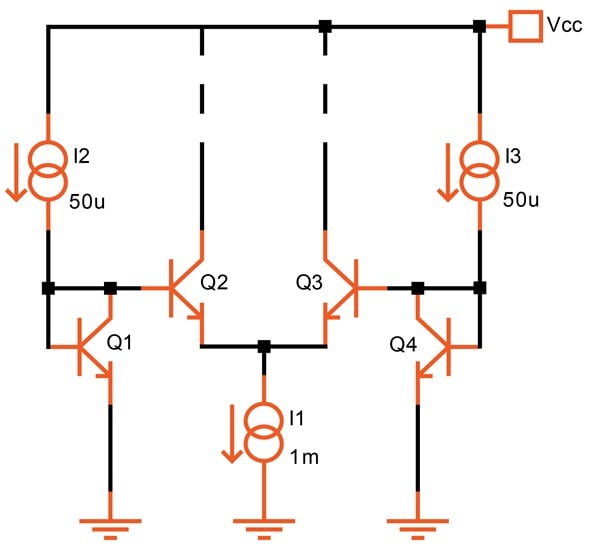
Figure 18-1. The first form of the Gilbert cell.
In the above circuit, I2 and I3 are modulated. The collector currents of Q2 and Q3 are the outputs. Since this is a current in/current out scheme, the cell is fast (no Miller effect).
In the second form of the Gilbert cell (Figure 18-2), all three currents flow to the negative rail. This allows stacking of the transistors.
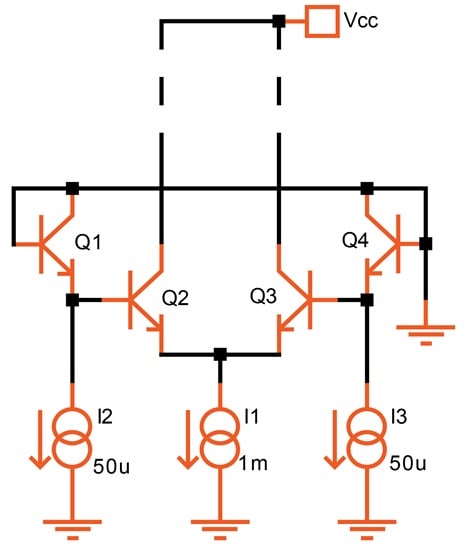
Figure 18-2. The second form of the Gilbert cell.
The collector currents are used as inputs for the next cell in the stack. Each subsequent cell is biased at a higher DC potential to avoid saturating any of the transistors.
In both forms we've examined, there is a small error due to the base currents. This is largely eliminated in the third form (Figure 18-3).
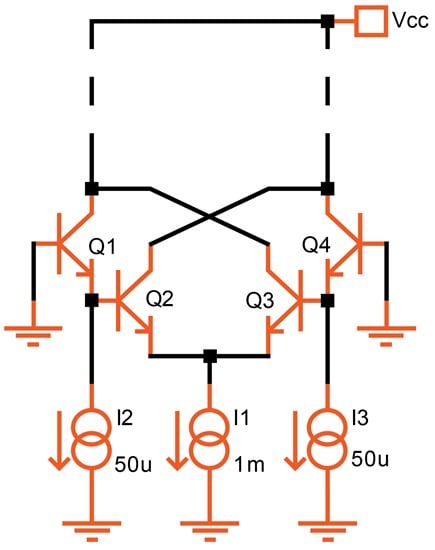
Figure 18-3. The third form of the Gilbert cell.
A Gilbert Cell With Voltage Input
Unfortunately, it is very rare that you start out with a differential current input. In most applications there is an input voltage—a single-ended one, at that. To use the Gilbert cell, you need to convert this voltage into a differential current. One way to do this is with a differential pair, as shown in Figure 18-4.
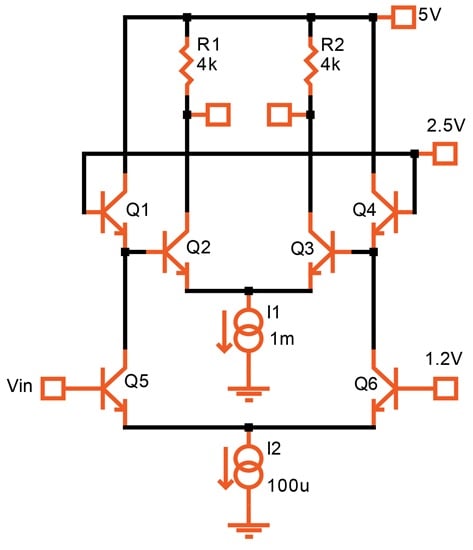
Figure 18-4. A practical application of the Gilbert cell.
And here is where the Gilbert cell falls down. As shown in Figure 18-5, a differential pair actually has a higher gain and wider frequency response (if operated at I1) without the Gilbert cell.
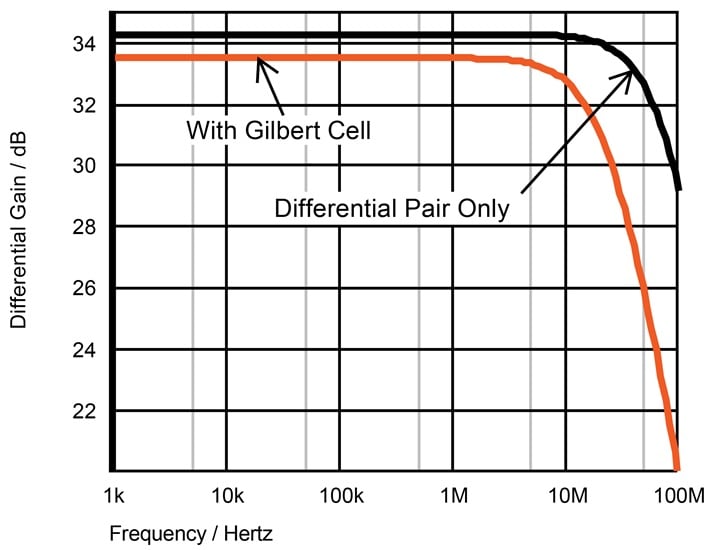
Figure 18-5. In most applications, the Gilbert cell does not actually enhance performance.
For that reason, the Gilbert cell is rarely used. This is not due to the fact that the current is converted into a voltage at the output (which puts the Miller effect right back in the picture), but simply because Q1 and Q4 need to run at a lower current.
This problem is made worse by stacking several cells, requiring a wide range of current levels. In today's power-conscious and low-voltage environment, the Gilbert cell has become outdated.