Ever wanted to find out more about Class D amplification? Here's a handy breakdown.
Ever wanted to find out more about Class D amplification? Here's a handy breakdown.

Whether for cooking or reflow soldering, a thermocouple is often the best choice for a high temperature sensor. The…
Whether for cooking or reflow soldering, a thermocouple is often the best choice for a high temperature sensor. The MAX31855, a PICAXE-08M2, a serial LCD, and a few lines of code will do the trick.

If you're looking for a cool weekend project, you've found it. This is not only a digital clock: it also measures and…
If you're looking for a cool weekend project, you've found it. This is not only a digital clock: it also measures and displays the temperature and the relative humidity of your room periodically.

Use Python's scientific toolbox to determine the natural response of a real thermal system and plot the results for…
Use Python's scientific toolbox to determine the natural response of a real thermal system and plot the results for visualization and further analysis.

With the help of a DIY thermocouple measurement system, you can use a cheap toaster oven to accurately reproduce a…
With the help of a DIY thermocouple measurement system, you can use a cheap toaster oven to accurately reproduce a reflow-soldering temperature profile.

The buck converter is a ubiquitous DC-DC converter that efficiently converts a high voltage to a low voltage efficiently.…
The buck converter is a ubiquitous DC-DC converter that efficiently converts a high voltage to a low voltage efficiently. Efficient power conversion extends battery life, reduces heat, and allows for smaller gadgets to be built. The buck converter can be used in lots of cool applications.

This article contains practical PCB layout tips that can help your PCB projects work correctly and reliably.
This article contains practical PCB layout tips that can help your PCB projects work correctly and reliably.

An inexpensive PICAXE microcontroller makes it easy to read a temperature sensor, compare the temperature to a setpoint,…
An inexpensive PICAXE microcontroller makes it easy to read a temperature sensor, compare the temperature to a setpoint, and turn a heater or cooler circuit on or off.

Control a fan based on the current temperature with a Raspberry Pi!
Control a fan based on the current temperature with a Raspberry Pi!

This article demonstrates how to use the built-in die temperature sensor on the nRF51. The die temperature is not the…
This article demonstrates how to use the built-in die temperature sensor on the nRF51. The die temperature is not the same as ambient temperature, but can be calibrated to ambient temperature by using a correction factor.

How to add BLE capabilities to a wireless ceiling fan by incorporating the nRF51 in the remote control. Part of our…
How to add BLE capabilities to a wireless ceiling fan by incorporating the nRF51 in the remote control. Part of our series on the nRF51.

Handling heat in electronics. Which components create heat, which components suffer from heat. Basics of heatsinking.
Handling heat in electronics. Which components create heat, which components suffer from heat. Basics of heatsinking.

How to interface a Raspberry Pi to an I2C temperature sensor (TMP102) and then publish the data to a Google sheet and graph.
How to interface a Raspberry Pi to an I2C temperature sensor (TMP102) and then publish the data to a Google sheet and graph.

The TDK Corporation has unveiled a new sensor element that can measure temperatures up to 1202°F (650° C), combining…
The TDK Corporation has unveiled a new sensor element that can measure temperatures up to 1202°F (650° C), combining high precision with high endurance.

The LM35 is an ideal temperature sensor for measuring ambient temperature. It provides a linear output proportional to…
The LM35 is an ideal temperature sensor for measuring ambient temperature. It provides a linear output proportional to the temperature, with 0 V corresponding to 0 degrees C and an output voltage change of 10 mV for each degree C change. LM35s are easier to use than thermistors and thermocouples because they are so linear and require no signal conditioning.

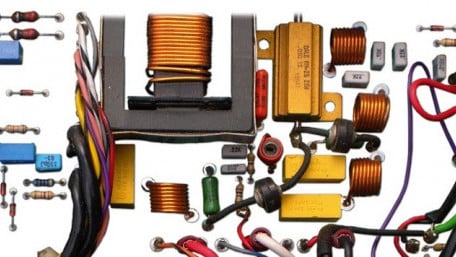
Inductor design characteristics are defined in terms of various parameters. Inductor winding is made of a conductor…
Inductor design characteristics are defined in terms of various parameters. Inductor winding is made of a conductor material which may be a single round wire or a unique multi-stranded conductor known as Litz wire. Litz wire has the main advantage of reduced skin effect. Inductor design characteristics are defined in terms of various parameters which are discussed in this technical article.


 Facebook
 Google
 GitHub
 Linkedin