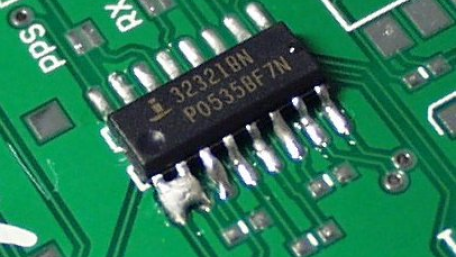
Learn what solder bridges are and how to avoid them.
Learn what solder bridges are and how to avoid them.

Where can EEs use Python in their day to day? Here's a look at the applications where Python excels.
Where can EEs use Python in their day to day? Here's a look at the applications where Python excels.

The advantages and disadvantages of ever-shrinking components.
The advantages and disadvantages of ever-shrinking components.

A quick walkthrough of how to analyze data from a custom precision sensor system.
A quick walkthrough of how to analyze data from a custom precision sensor system.

Learn about the process of identifying and eliminating noise in data capture.
Learn about the process of identifying and eliminating noise in data capture.

When working with high-precision sensors, it's crucial to consider housing. In this article, we discuss an approach to…
When working with high-precision sensors, it's crucial to consider housing. In this article, we discuss an approach to designing a custom board holder for an inclinometer subsystem.

This article goes over the design of firmware for a custom PCB project: a precision inclinometer subsystem.
This article goes over the design of firmware for a custom PCB project: a precision inclinometer subsystem.

So you have a schematic. How do you lay out your custom board? In this article, we'll go over the challenges and…
So you have a schematic. How do you lay out your custom board? In this article, we'll go over the challenges and solutions I came across in designing a custom PCB for an inclinometer subsystem.

This project series details the design and construction of a precision inclinometer based on the Murata SCA103T-D04. This…
This project series details the design and construction of a precision inclinometer based on the Murata SCA103T-D04. This article looks at schematic design considerations.

Learn the design steps for creating your own custom inclinometer PCB.
Learn the design steps for creating your own custom inclinometer PCB.

What is reflection noise? What effects can it have on the functionality of your custom PCB? How can you mitigate it with…
What is reflection noise? What effects can it have on the functionality of your custom PCB? How can you mitigate it with better design practices?

How much do you really know about vias, one of the building blocks of PCB design?
How much do you really know about vias, one of the building blocks of PCB design?

Why you should care about even small amounts of inductance.
Why you should care about even small amounts of inductance.

This two-article series presents an overview of circuit symbols and also provides some information on the components themselves.
This two-article series presents an overview of circuit symbols and also provides some information on the components themselves.

This two-article series provides an overview of circuit symbols, along with some information on the components that they…
This two-article series provides an overview of circuit symbols, along with some information on the components that they represent.

Learn what ground bounce is and how you can avoid it with design decisions from PCB layout to programming.
Learn what ground bounce is and how you can avoid it with design decisions from PCB layout to programming.

High-speed signals don't follow the path of least resistance; they follow the path of least impedance.
High-speed signals don't follow the path of least resistance; they follow the path of least impedance.

Circuit board stacks of four or more layers often have through vias that attach to pads on layers where there is no…
Circuit board stacks of four or more layers often have through vias that attach to pads on layers where there is no electrical connection. Should those non-function pads stay, or should they go? This article presents the problem and provides resources.

This article will discuss what rigid-flex PCBs are, the advantages of using them, and the rules for designing with them…
This article will discuss what rigid-flex PCBs are, the advantages of using them, and the rules for designing with them for an application.

This article will review the common FPGA resources that allow us to efficiently generate and distribute clock signals…
This article will review the common FPGA resources that allow us to efficiently generate and distribute clock signals throughout a system.


 Facebook
 Google
 GitHub
 Linkedin
